Source image: Pixabay
Predicting viscosity in an undrilled panel of a deep-water field in West Africa
Traditional models predicting fluid properties often consider only biodegradation for shallow reservoirs. This has proven inadequate in certain geological contexts. Here, we introduce a new model that considers the intricate geological history of an offshore field in West Africa, where multiple charge episodes and the competing processes of biodegradation and gas stripping are required to explain the observed trends in oil quality. This subsequently de-risked an undrilled fault panel of the field

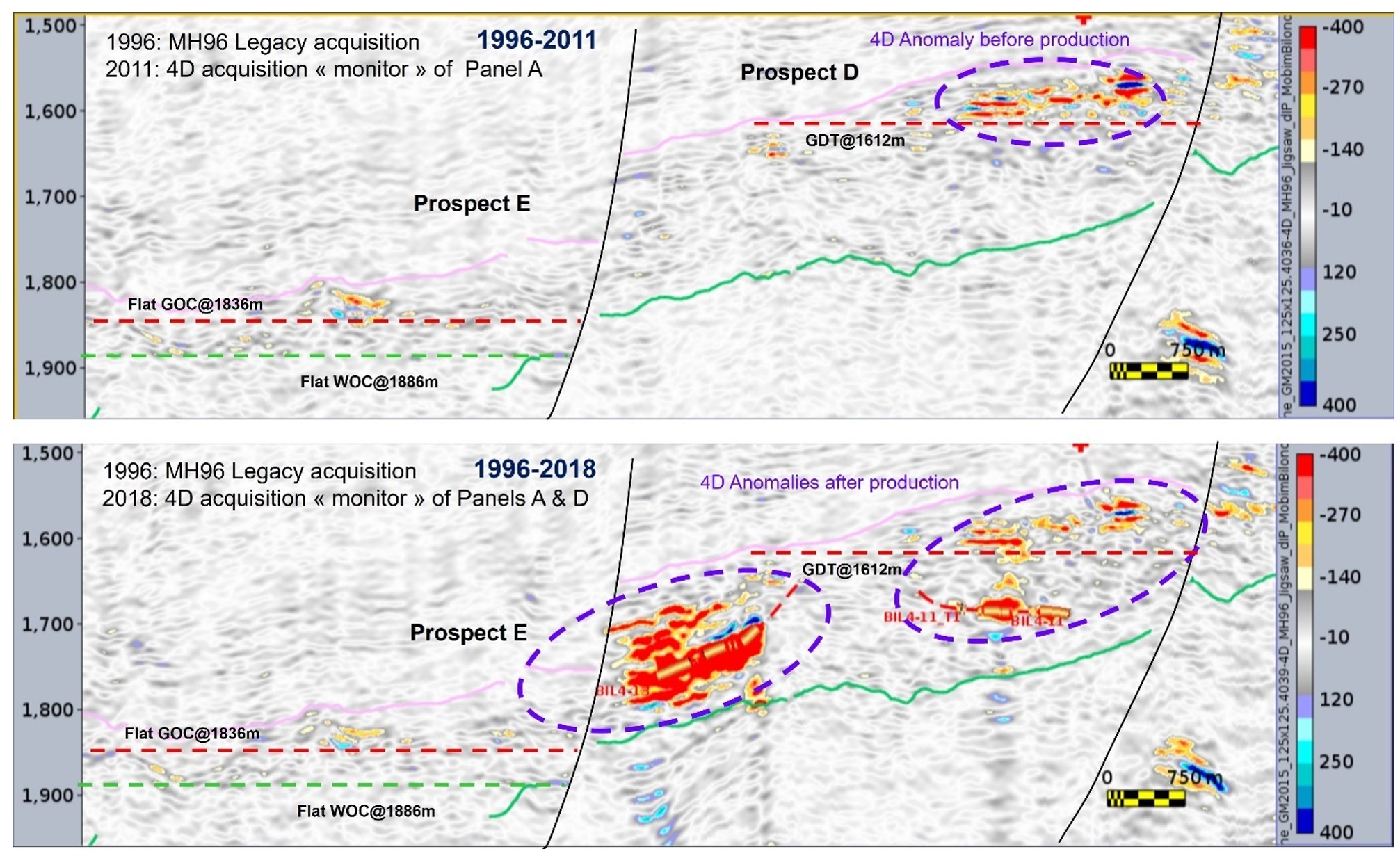
In 2023, the rapid oil production decline from the Bombadil Field (fictitious name), deep-water West Africa, triggered the necessity to develop additional resources. This is the moment prospect E appears on the radar, which is likely to host hydrocarbons in the same mid-Miocene turbiditic reservoirs as the remainder of the field. A clear DHI event suggested an OWC in the fault block as well. However, before drilling a well into prospect E could be justified, the observed viscosities in the producing field needed to be better understood.
The Bombadil field reservoirs are relatively shallow, with temperatures around 60-70° C, which means that biodegradation is a risk. However, in contrast to what would be expected in such a scenario, the development wells D1, D2, D3, A-1 and A-2, drilled in 2015, indicate that this model did not work as expected. Namely, fluids with the highest viscosity were observed at the crest of the structure, far away from the OWC where biodegradation should be most prevalent. What is going on?
First of all, oil family interpretation demonstrated that the Bombadil Field has multiple mature source rocks, ranging in age from Upper Cretaceous to Eocene, giving rise to fluid mixing and multiple phases of oil generation. As such, the presence of multiple episodes of charge, paleo-biodegradation, followed by recharge from the same or another younger source rock is therefore a plausible scenario. In turn, this provides a good mechanism for improving oil quality over time and works well in panel A where low-viscosity oil is produced from well A-1.
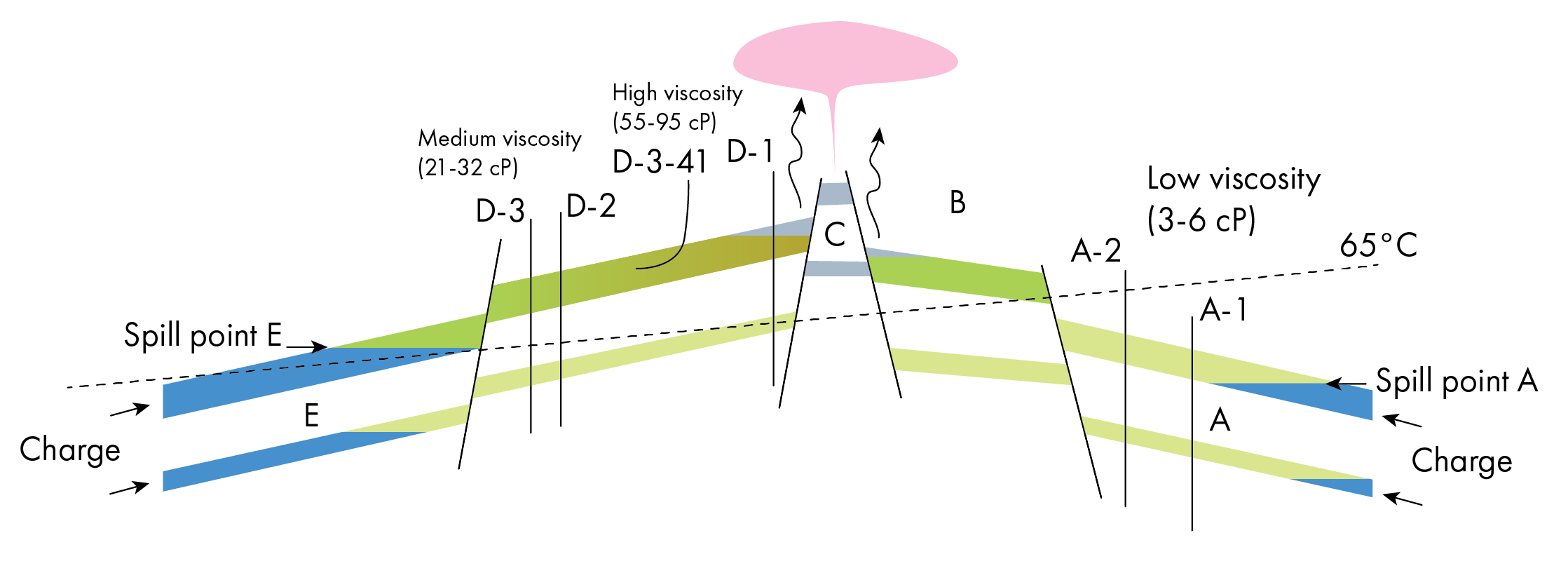
Another explanation as to why viscosities in the deeper parts of the field are lower than at the crestal regions is the particular depth range it finds itself in. A plot of fluid density and fluid viscosity versus burial indicates a break around 1,160 m burial between “good oils” with no or limited biodegradation and “medium to poor oils” showing high to severe biodegradation. This burial limit is also marked in associated gas that is clearly biodegraded above this burial depth. The fluid temperature indicates that the limit for biodegradation is about 65° C, and it just so happens that the 65° C runs through the field at the present day.
There is yet another explanation as to why the viscosity trends in the Bombadil Field, especially in Panel D, are opposite to what can be generally observed. It could also be explained by a spectacular gas chimney observed right above the panel D crest, and the gas stripping it may cause. Seismic reflection and 4D seismic interpretation indeed suggest active gas production and repeated gas leaking out of the D panel.
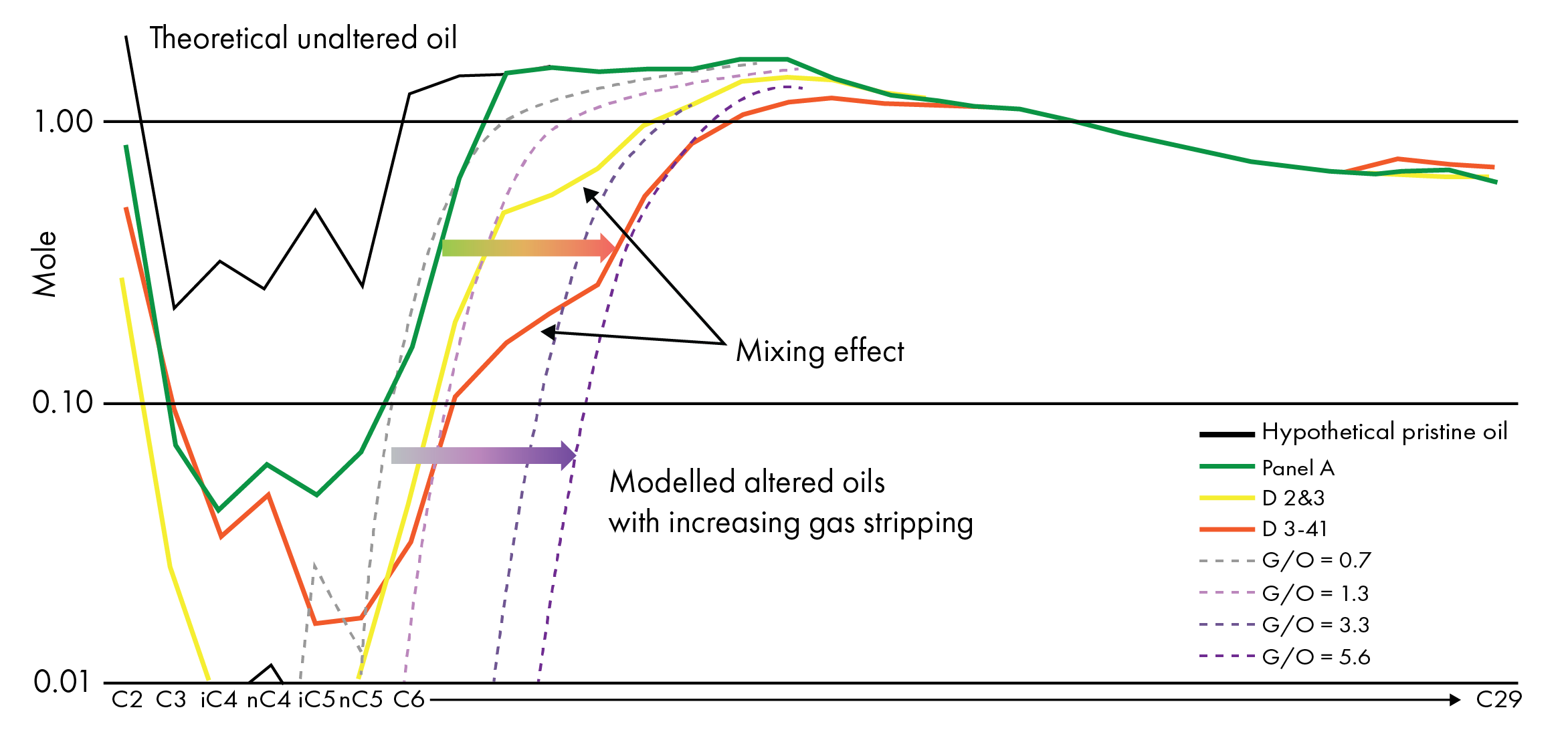
A gas stripping effect has been modelled for a typical fluid – composed of three oil families – from the A panel. It suggests progressive depletion in light molecular compounds and the alteration of heavier components with increased gas stripping. However, the real component profiles of these three families do not fit a pure gas stripping distribution, suggesting a more complex, mixed origin. However, the observed profiles can be mimicked by mixing gas stripped oils with various amounts of “fresh” and slightly biodegraded oil.
Current geological model for viscosity prediction
We conclude that the fluid properties of the Bombadil Field are controlled by the complex multi-charge history and competing biodegradation and gas stripping processes. Applying a model that includes a mixture of biodegraded oil and fresh recharged oil in various quantities, the following charge history could be proposed.
In Late Miocene times, reservoir charge is taking place from early mature Cenomanian source rocks, and oil is trapped as soon as the top seal is deposited. Because of the shallow depth of burial at the time, oil alteration starts immediately with bacterial activity (20-50° C), causing biodegradation. Also, the methane that is being generated in the process leaks away through the poorly developed top seal, further enhancing biodegradation through gas stripping.
The second phase, which takes place during Pliocene and Pleistocene times, is the period when the individual fault panels of the current field come into existence. Hydrocarbons continue to charge the reservoirs with late mature Cenomanian and early mature Upper Cretaceous – Paleocene / Eocene source rocks, which reduces the viscosity of the accumulation. However, active biodegradation continues at the same time, with continuous gas leakage and gas stripping.
At the present day, as burial continues over time, the field is now in a particular depth range. Biodegradation is still active in the shallower reservoir, but progressively stops in the lower reservoir below the 65° C isotherm. Strong oil alteration by intense gas stripping in response to gas leakage localised at the crest of the D panel is continuing until today, resulting in the huge gas chimney.
Based on this proposed model, it looks likely that the fluid properties at Prospect E would be similar to panel D2&3 with medium viscosity. An alternative scenario, with a better oil quality like panel A with low viscosity, is also possible. A DHI, including a flat spot, observed in Prospect E further indicates that the closure is compatible with a fill to spill scenario. This implies that the residue of the biodegraded oil from the first charge close to the OWC will be continuously swept out from the reservoir, leaving only freshly re-charged oil with slight biodegradation, similar to panel A.
ACKNOWLEDGEMENT
We would like to express our sincere gratitude to TotalEnergies for allowing us to publish this article.