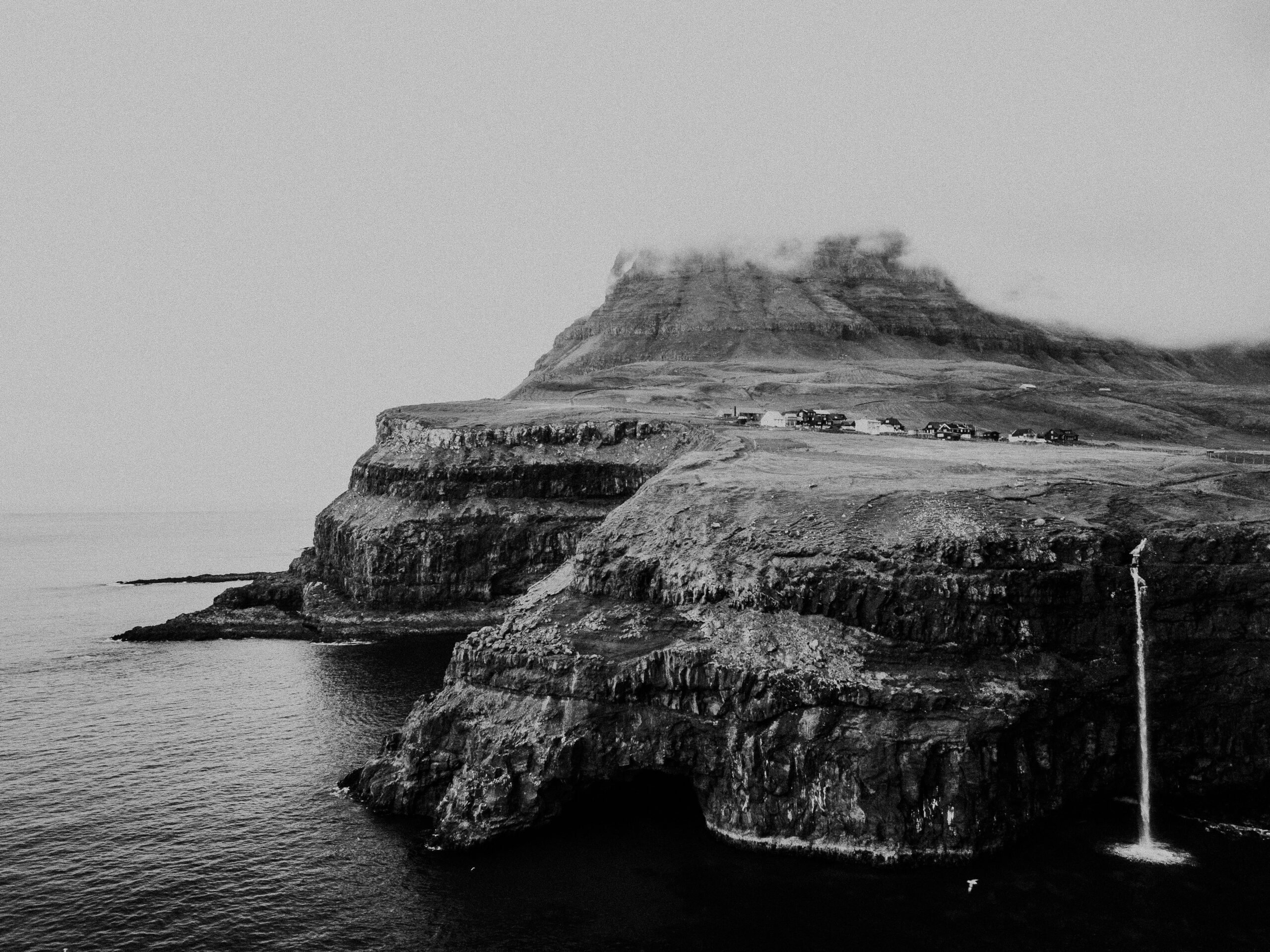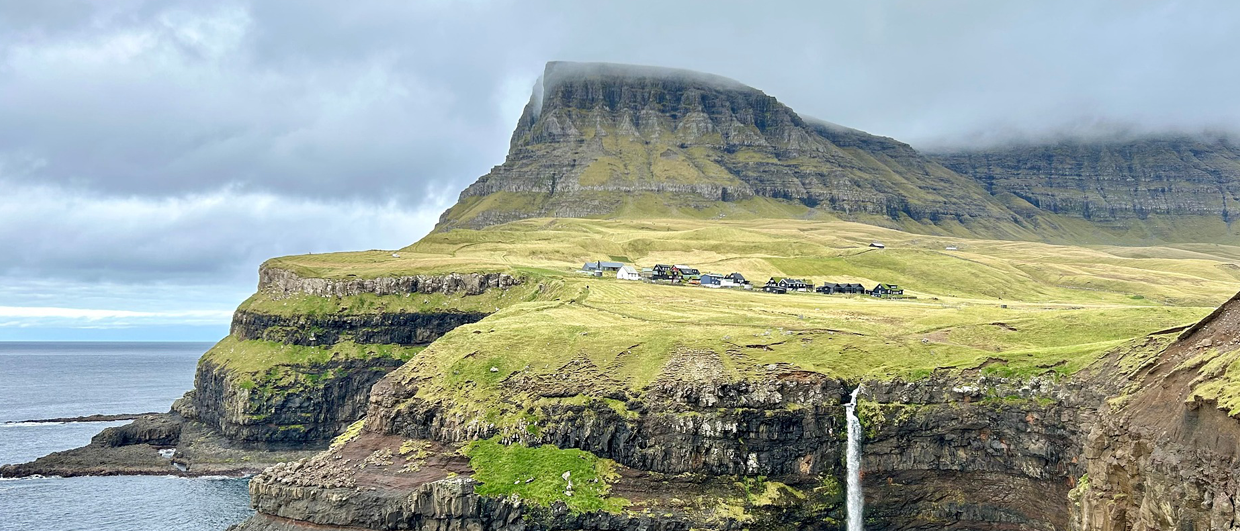
Mullafossur waterfall, Faroe Islands. Photo: Emil02050 via Pixabay
The Faroese offshore is back on the exploration radar

After years of quiet, a bit of exciting news emerged from the Faroe Islands this week: Atlantic Petroleum, through a new company that is currently being set up, applied for an exploration licence in the Faroese offshore sector.
The timing is interesting. At first glance, one may think that it is a bet on the UK government approving the Rosebank oil field development. This project is just a stone’s throw away from the acreage now applied for, and once the green light has been given for Rosebank, the neighbouring area in the Faroese sector becomes more attractive when it comes to future export routes. It might even become better when the Cambo oil field development is also going ahead.
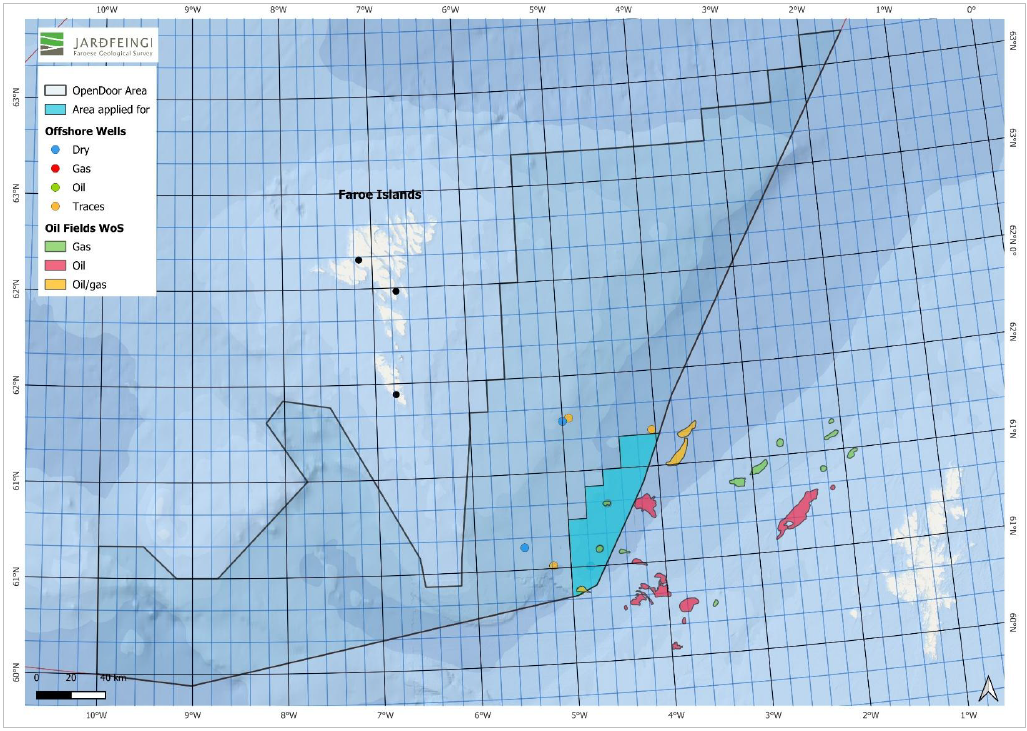
However, the Rosebank development is probably of secondary importance here, because in Atlantic’s Q2 report, the company announced a change of strategy following the cessation of production of the only asset that generated cash-flow; the Orlando field in the North Sea. In order to keep future production on the horizon, no matter how distant that may be, it seems that the company needed to change strategy quickly. And this is the result. A re-focus on an area that has been looked at before.
But how likely will it be to find a partner and drill a well? That may require considerable effort. The sector is known for its thick basaltic successions that are hard to drill through. An expert on the region also shared that the area is likely to be in a migration shadow when looking at the kitchen in the UK sector. However, previous wells have shown that hydrocarbons did reach the area, so there is a way.
The next time I meet with the always-enthusiastic people from Jarðfeingi – the Geological Survey of the Faroese Islands – I know what I’ll start the conversation with.