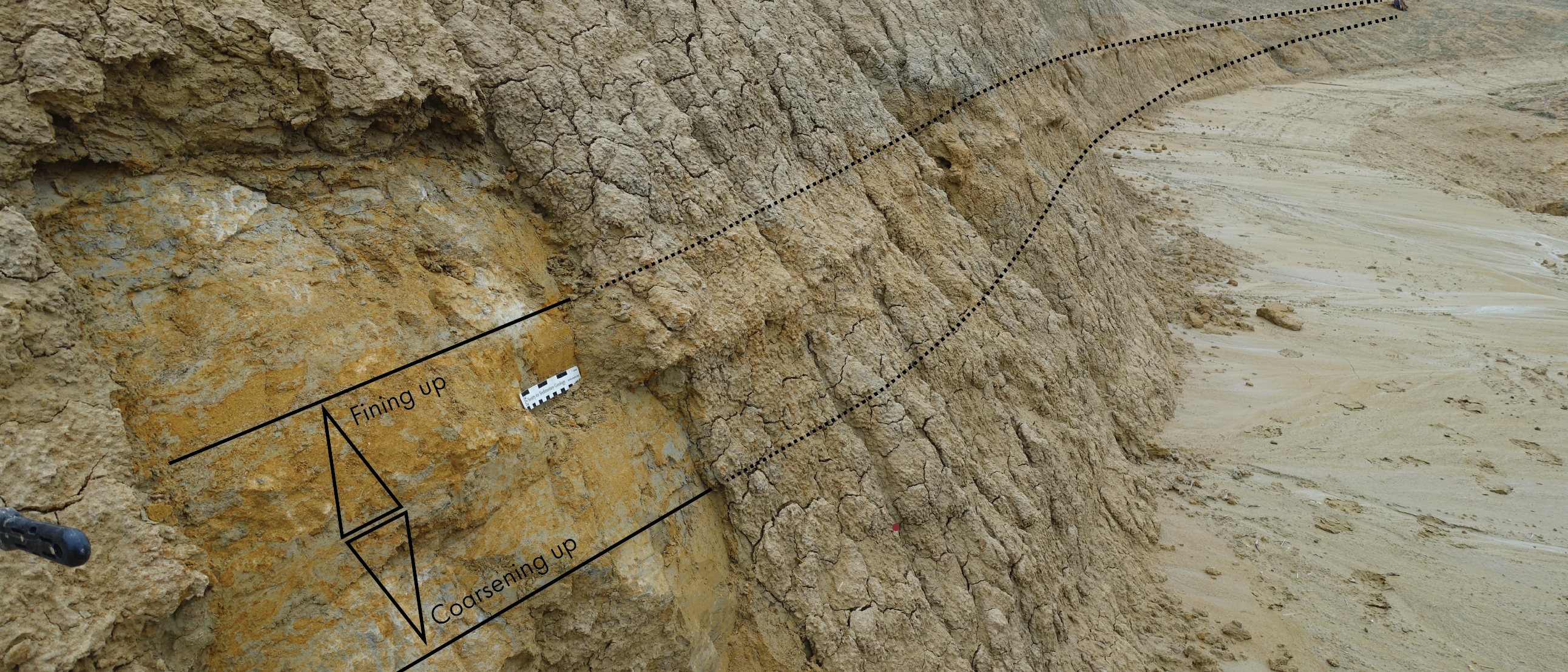
Photo: Wouter de Weger.
The 1-meter sand that made the decisive call

“Multiple depositional systems can be responsible for creating the same sedimentary facies,” explains deepwater sedimentologist Wouter de Weger from the Earth Science Institute in Granada, Spain. “For that reason, when looking at an outcrop with a group of specialists, who all bring a different background to the table, it is not surprising to see that there is no immediate consensus on what a certain depositional facies an outcrop represents.”
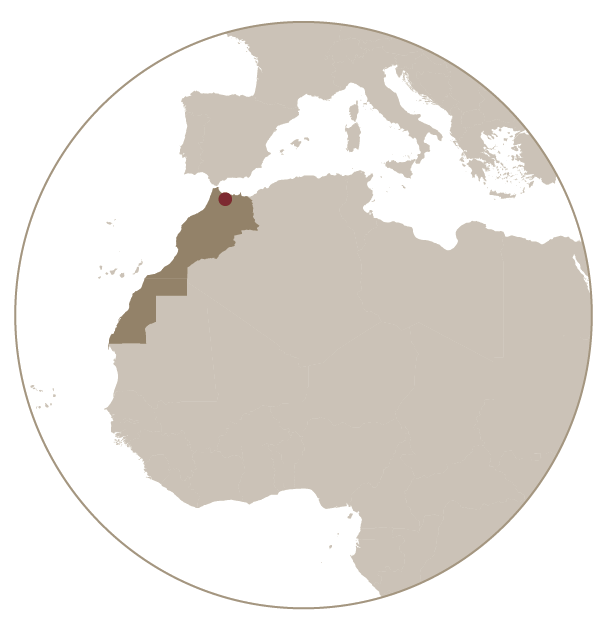 Wouter recalls a field trip to the northern part of Morocco with a group of sedimentologists. It was the area he spent a lot of time in during multiple field campaigns. “The aim of the trip was to see if the group would be able to agree on our interpretation of contourites being responsible for what we saw,” Wouter explains.
“There was no agreement amongst the members of the group,” Wouter said, “until we visited the last site on the final day of the field trip. There, in what is not a particularly large outcrop, we found a 1 m bed that clearly showed a bi-gradational succession. In other words, from the base of the unit one can observe a progressive increase in flow rate and associated increase in grain size, followed by a decrease or fining up. That is commonly regarded as diagnostic for contourite deposits, following seminal work published by Gonthier in 1984. When we inspected this outcrop together, everybody in the group agreed that we are dealing with the deposits of a contourite system.”
Once the group had reached consensus, observations of traction structures made during the previous days of fieldwork also fell into place; these fit well into the model of bottom currents.