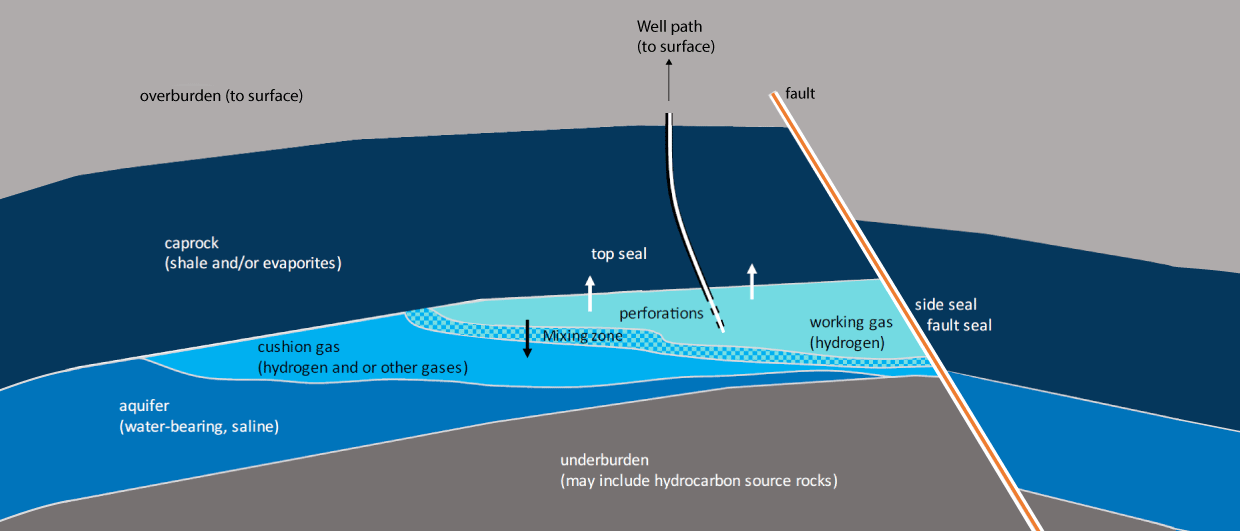
To balance intermittent renewable energy generation with grid demand, green hydrogen can be produced and stored in the subsurface at times of surplus energy generation, and subsequently used to supplement the grid during periods of high demand.
Underground hydrogen storage is not a novel concept; in the 1960s, ‘town gas’ was stored in salt caverns and depleted gas fields to ensure a reliable supply and manage fluctuating demand. Town gas, produced through coal gasification, contains up to 60 % hydrogen, along with methane and carbon monoxide. Countries like the UK, Germany and the USA utilised town gas before natural gas became widely available in the 1970s. The geological storage of town gas demonstrated that hydrogen-rich blends could be safely and successfully managed, with only minor issues reported.
Nevertheless, the International Energy Agency was cautious and commissioned additional research to ensure safe and effective operations throughout the storage lifecycle, from initial construction to eventual decommissioning and abandonment.
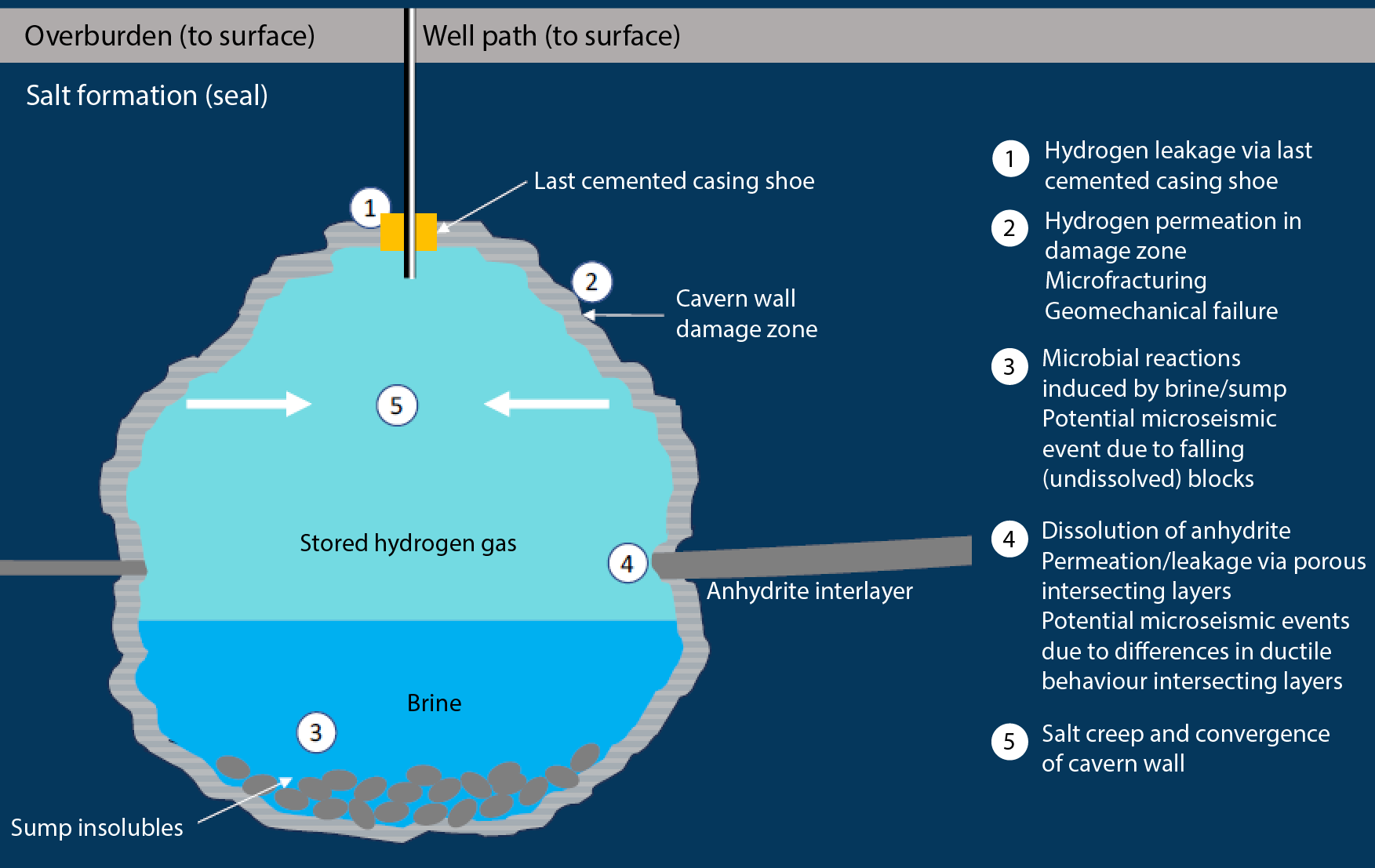
Hydrogen behaves differently in the subsurface compared to natural gas; it is more mobile and reactive and serves as a feedstock for microorganisms. Therefore, before hydrogen is injected into a reservoir, it is crucial to identify potential issues. For instance, can the reservoir seal contain the small, mobile hydrogen molecules? Are there minerals present that could react with hydrogen and produce unwanted byproducts? Or will microbes feast on hydrogen, reducing its concentration and creating contaminants like hydrogen sulphide? The conclusion is that by selecting the right reservoir and implementing specific measures, these problems can be minimised for both salt cavern and porous reservoir storage sites.
The primary challenges arise during storage design and construction because depleted gas reservoirs and salt caverns cannot be directly repurposed for hydrogen storage. Hydrogen is corrosive and can embrittle steel, requiring specialised materials for hydrogen-related projects. Additionally, legacy wells in depleted gas fields are often unfavourably located, and hydrogen storage requires larger diameter wells to achieve the necessary flow rates. Ideally, storage sites should be located near or onshore, as fully offshore sites, including the surface processing facilities, would incur significantly higher development costs.
In conclusion, while geological hydrogen storage does not have major drawbacks, the associated costs and the current absence of a functioning hydrogen market mean large-scale underground storage remains a pipe dream for now.
(1) TCP-Task 42 Final Report is available here.