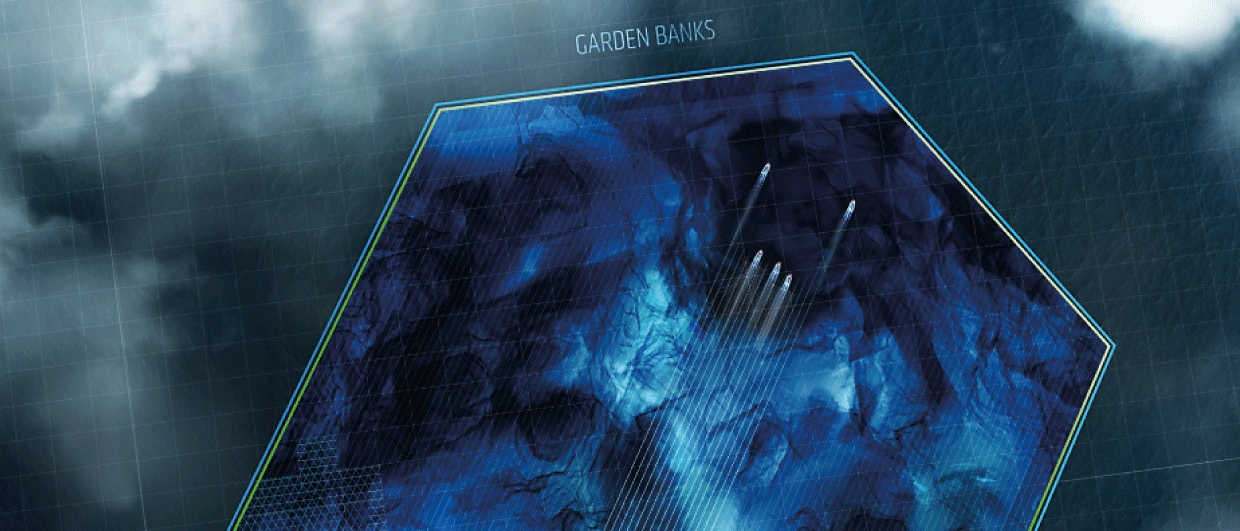
Illuminating challenging areas
PGS’s new full azimuth survey design can illuminate challenging deepwater areas of the Gulf of Mexico like never before

No one has ever conducted a multiclient survey like this in the Gulf of Mexico.
Petroleum Geo-Services (PGS) has developed a unique survey design, which it has utilized in the most advanced MultiClient survey ever conducted in the Gulf of Mexico – its Triton survey. The survey design ensures that the most challenging, but also most promising areas in the Garden Banks and Keathley Canyon will now benefit from imaging of significantly better quality. The company has used an unparalleled full azimuth (FAZ) approach to acquisition and its industry-leading dual sensor GeoStreamer® acquisition technology to optimize the results that can be achieved in this project.
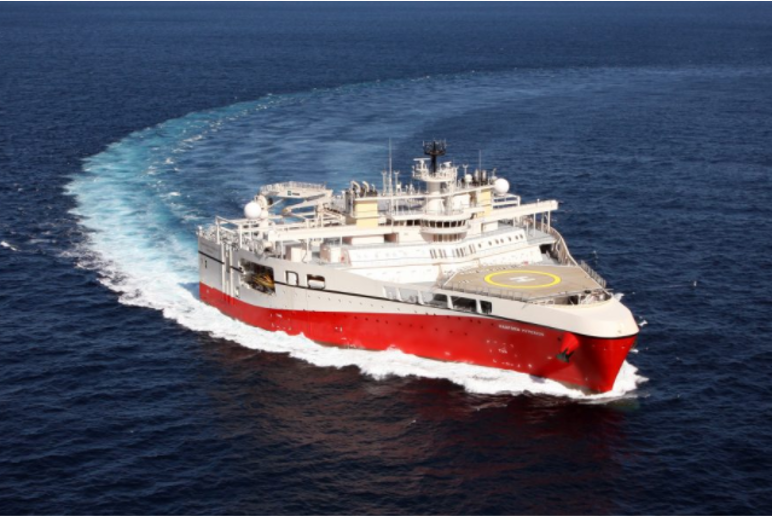
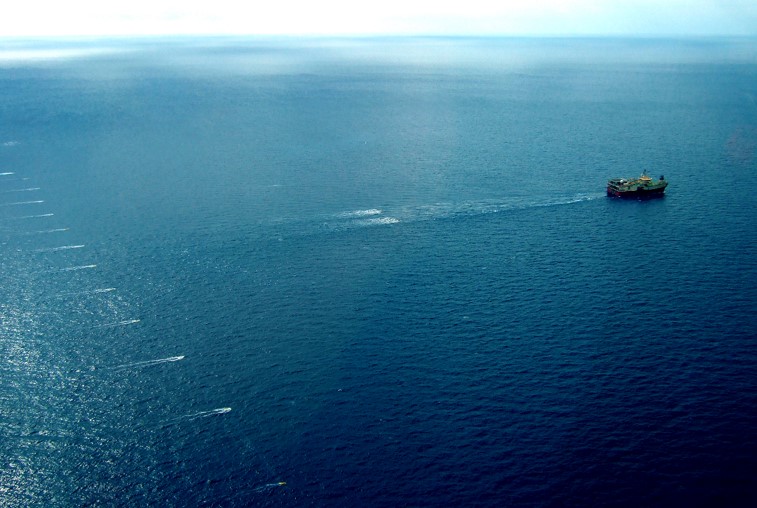
Triton represents the next important advance in tailored acquisition design and state-of-the-art depth imaging. For this survey, a previously unseen approach to acquisition has been developed that utilizes a total of five vessels in the unique PGS Orion™ configuration. This combines two high-capacity streamer vessels, each towing ten 8 km GeoStreamer dual-sensor cables, in combination with three independent source vessels in a simultaneous long-offset (SLO) configuration, to achieve effective far offsets in excess of 16 km.
GeoStreamer provides enhanced signal-to-noise and superior low-frequency response for all offsets, and is particularly relevant for this survey because it helps to extend exploration options by enabling better geological modelling, as well as improved prospect definition and identification. Images generated from this data help place wells with greater precision through more accurate estimation of reservoir and overburden properties. Its unique ability to record complementary wavefields has enabled the development of revolutionary imaging technologies that exploit both primary and multiple energy, allowing the generation of reservoir images of unparalleled clarity and reliability.
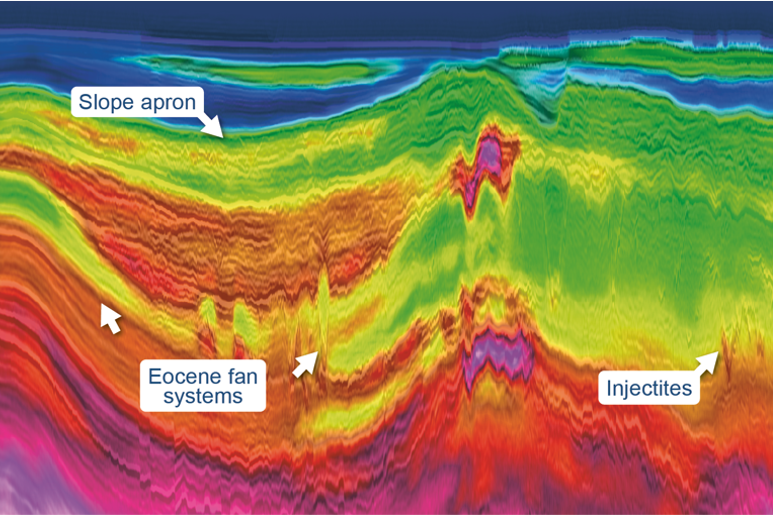
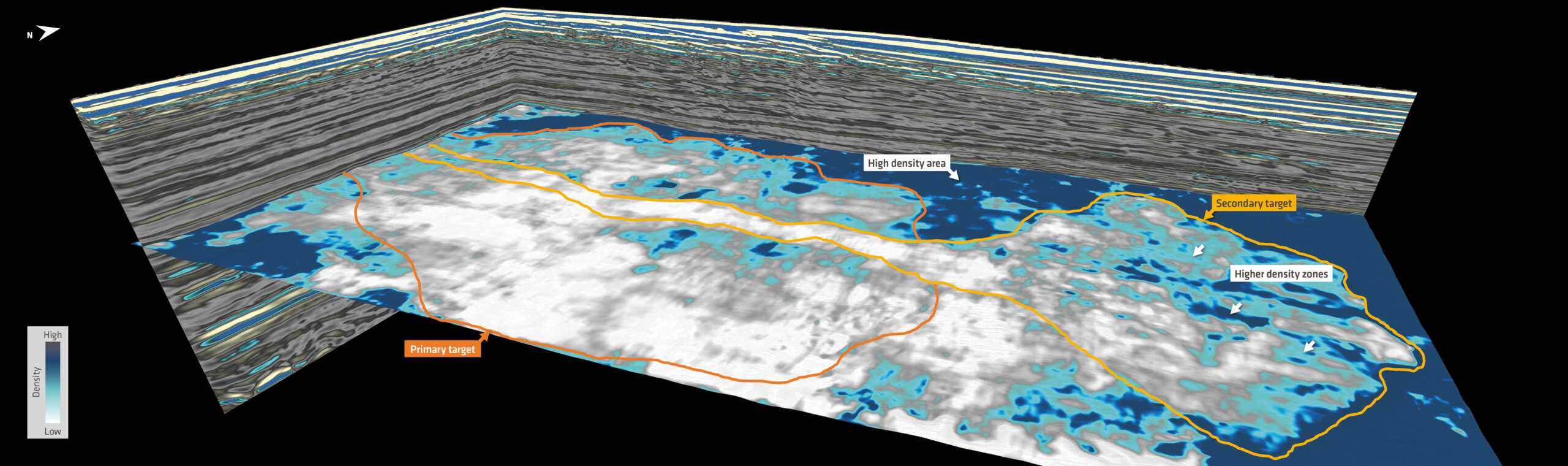
The survey design and the use of unique PGS technology ensure that Triton will reveal the structures obscured beneath the salt with high fold, long-offset, dual sensor full azimuth seismic data.
Exciting Areas
The survey in this exciting area of the Gulf of Mexico is progressing well – by the end of March, the company expects the survey to be approximately 60% complete. Acquisition began in November 2013 and Triton covers 10,000 km2 and 390 OCS blocks, many of which are coming available for license or farm-in opportunities in the near future. Acquisition is expected to continue through Q3 2014.
Triton is being acquired in the central western area of the Gulf of Mexico, a region which has proven to be highly prospective for hydrocarbons in recent years. The Keathley Canyon and Garden Banks areas, in particular, have hosted BP’s sub-salt Tiber discovery in Keathley Canyon 102; several significant wildcat wells, including BP’s Gila well in Keathley Canyon 93; and Cobalt’s North Platte discovery in Garden Banks 959, to name a few.
Once the data has been acquired, the imaging workflow will include velocity model-building, leveraging the full suite of PGS model building tools, including the proprietary PGS hyperTomo technology. To create the best possible image, TTI RTM (tilted transverse isotropy reverse time migration) with 3D angle gather output will be used, allowing for image optimization and pre-stack data access throughout the model-building sequence and for final image optimization. The company is also in discussions with several clients about other aspects of imaging output as the survey progresses.
Triton represents a serious investment of intellectual capital for PGS and also an investment in the most effective applica tion of technology given the structural conditions of the geology within this area. It is the next step forward in a long journey of industry-leading innovation for the company, with the aim of achieving the best image quality possible in the most exciting areas for exploration.