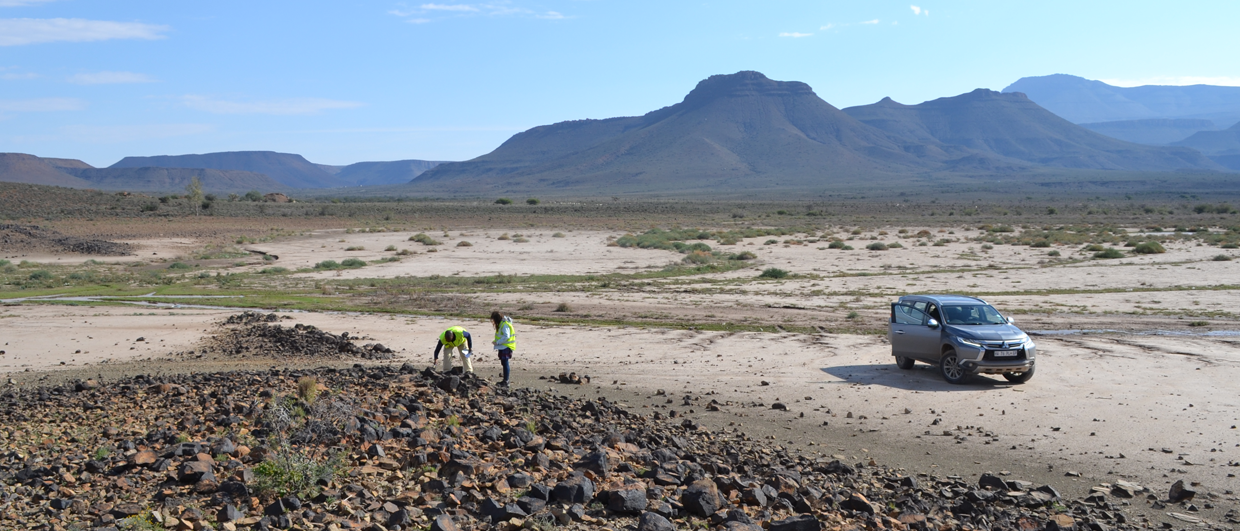
Open plains at Beaufort West. Photo: Sean Johnson.
Hydrocarbon seepage in the Karoo: South Africa’s Shale Gas Project reveals potential
A conversation with Sean Johnson, Chief Geoscientist and acting COO for Resource Evaluation and Operations at the Petroleum Agency of South Africa, and nominee for the Africa Oil Week 2026 Exploration Award

 South Africa’s Karoo Basin has long been known for scattered gas shows, oil‑stained fissures and occasional methane emissions from water boreholes. Yet the basin’s broader petroleum potential has remained uncertain. The Shale Gas Research Project, carried out by the Petroleum Agency of South Africa (PASA), was designed to provide a clearer, scientifically grounded picture. Its results offer an understanding of hydrocarbon occurrence in the southern Karoo and highlight several prospective areas.
Sean Johnson was in charge of the soil-gas survey design and overseeing its execution. With nearly three decades of experience across South Africa’s mineral and upstream sectors, Johnson describes the project as an important step in establishing a baseline for both resource evaluation and environmental monitoring.
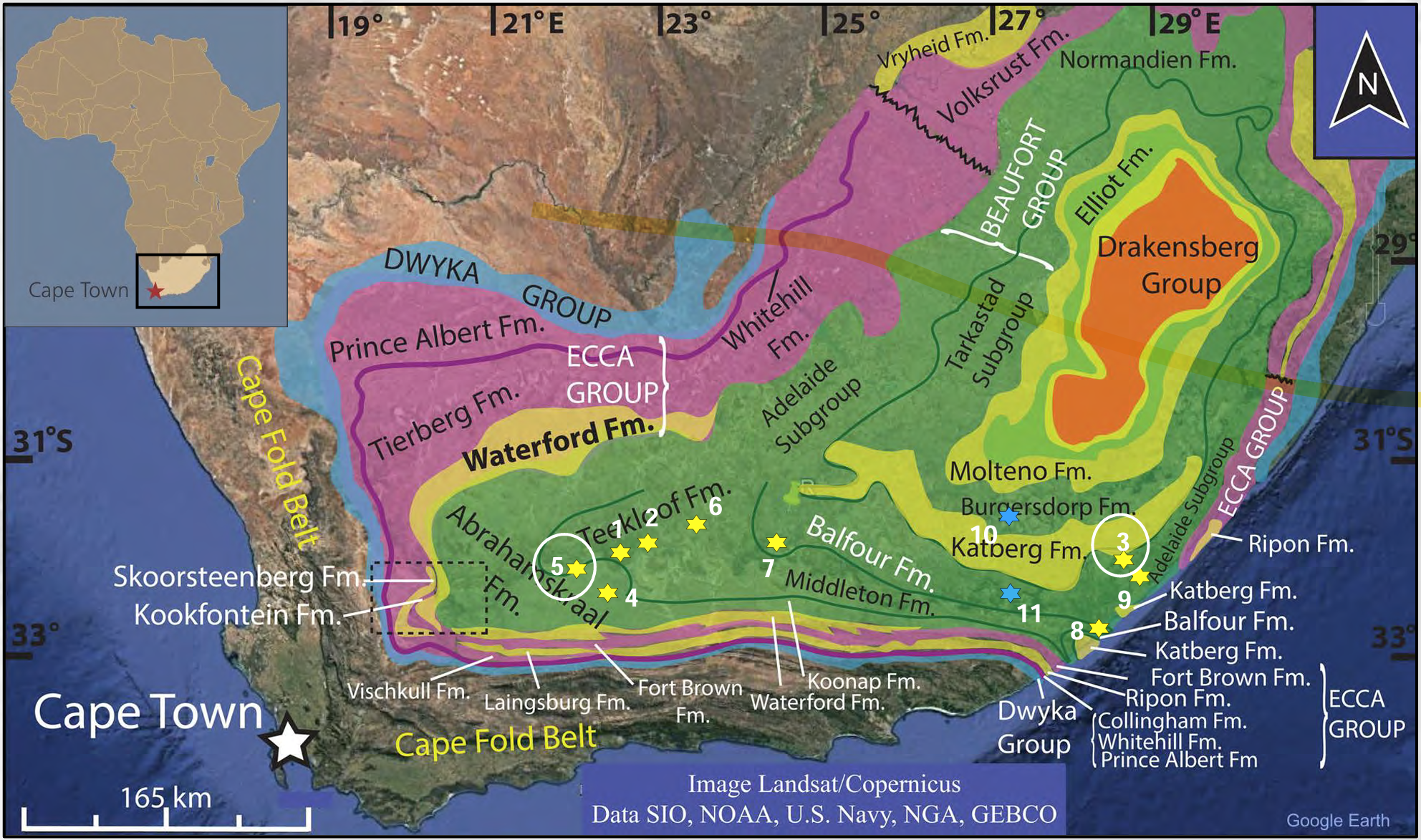
The PASA deployed roughly 2,500 soil‑gas samplers across eleven areas in the Western and Eastern Cape. Seven surveys were centred around legacy exploration wells and the other four covered sites with reported hydrocarbons shows from farm boreholes. The samplers were buried for about three weeks to adsorb trace hydrocarbon vapours migrating from depth. Laboratory analysis checked for 86 organic compounds.
Hydrocarbon‑rich signatures were detected in all survey areas. Johnson says: “Nine of eleven surveys came back with defined leads, tight, consistent hydrocarbon signatures.” The results indicate the presence of both gas‑phase and liquid‑phase hydrocarbons. Light and mid-range hydrocarbons were commonly detected near dolerite margins. The hypothesis is that as the dolerite cooled, it fractured, and those fracture networks are allowing gas generated at depth to migrate up and concentrate near the margins.
“The soil gas survey extends the evidence for an active, liquids-bearing petroleum system well beyond the oil shows previously documented in the northern Karoo Basin.”
In contrast, liquid hydrocarbon signatures dominate in surveys unrelated to dolerite intrusions. The thick sedimentary succession in the Karoo Basin likely buried shale to depths within the oil maturation window. Oil shows have historically been documented in the northern Karoo, the new data now indicate that liquid‑phase hydrocarbons also occur in southern parts of the basin.
Johnson emphasises that these findings should be interpreted for what they are. “This kind of survey doesn’t prove there’s a commercial field waiting to be drilled,” he says. “It shows where hydrocarbons are migrating to the surface right now, and the strength and pattern of that signal can point us toward a likely reservoir rather than just a mature source rock. But confirming an actual accumulation still takes a well.”
The primary value of the dataset lies in its ability to guide future work. In frontier basins, seepage surveys are often used as a screening tool to help prioritise areas for seismic acquisition or more detailed geochemical studies. The Karoo results provide a clearer indication of where active hydrocarbon generation and migration are occurring, reducing uncertainty for subsequent exploration phases.
The Shale Gas Research Project was also designed to establish a geo‑environmental baseline before any future development. This baseline will allow regulators to distinguish between naturally occurring hydrocarbons and any future anthropogenic impacts. Johnson views this as an essential part of responsible resource stewardship. He argues that robust baseline data and transparent regulatory frameworks are key to building trust with both investors and communities.
For PASA, the findings feed directly into its mandate to manage South Africa’s petroleum data and promote exploration acreage. The results have been presented at industry conferences to provide potential investors with a more detailed understanding of the basin’s subsurface setting. The Karoo remains a frontier basin, but it is now one with a clearer scientific foundation on which future decisions can be built.