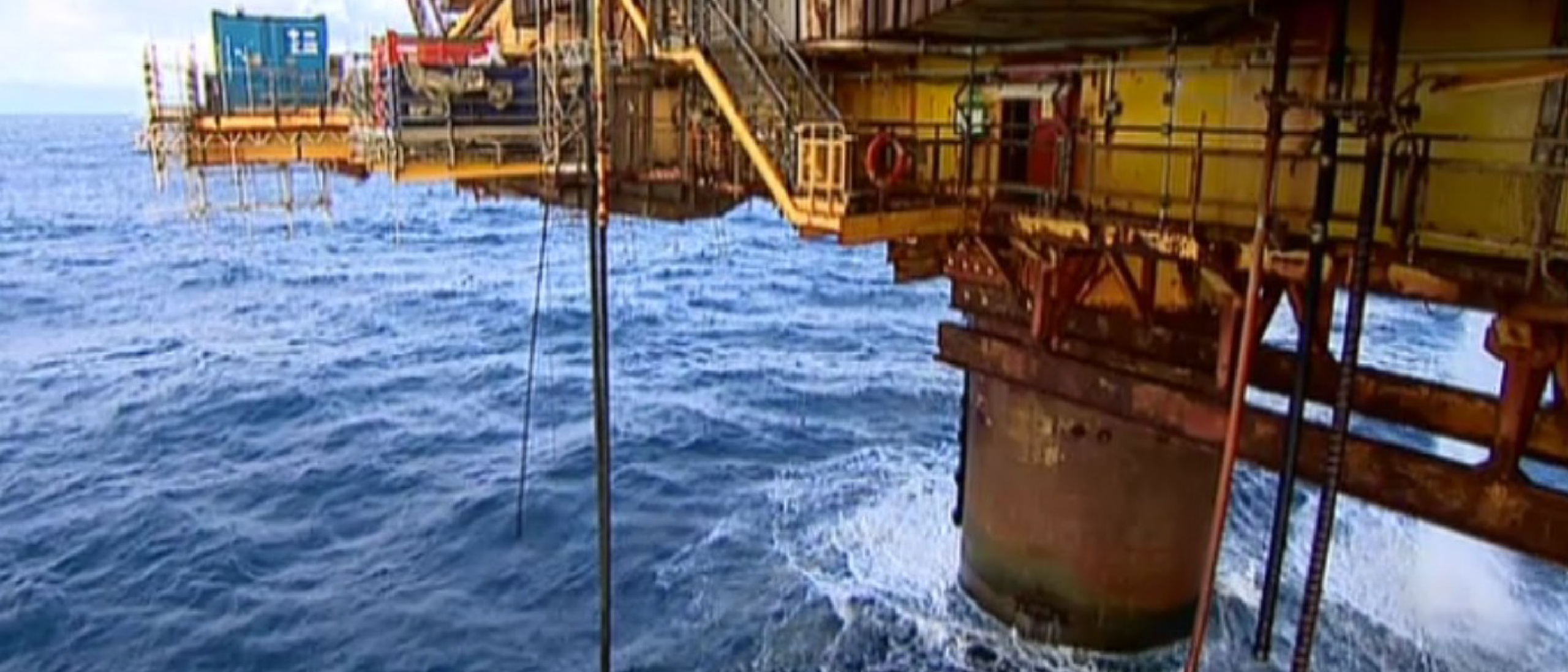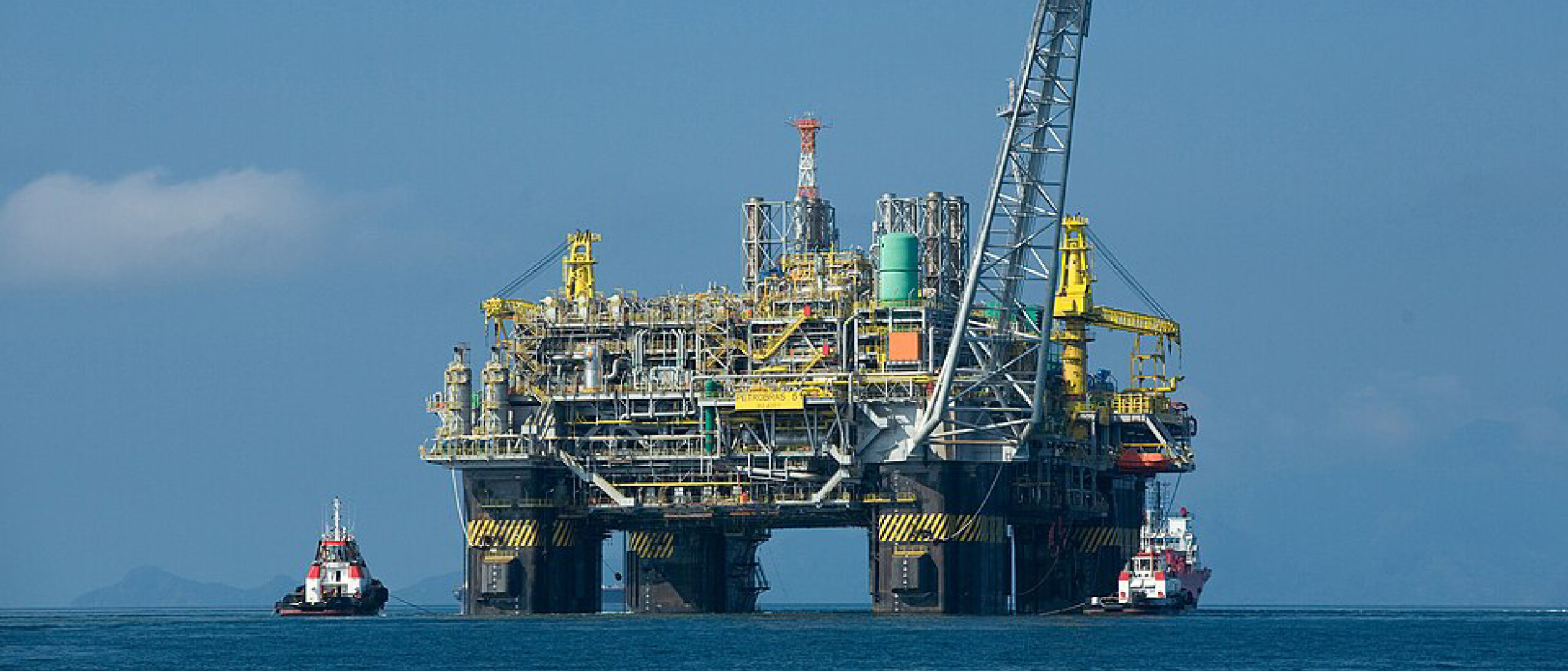
Petrobras’ P-51 platform in the Marlim-Sul field, offshore Brazil, where production continues alongside the decommissioning of older infrastructure. Photo: Wikimedia Commons.
Decommissioning and discovering at the same time
The post-salt Marlim field is one of Brazil’s first deepwater developments. The giant field is currently being decommissioned, but that does not mean it’s at the end of its life. Because with the old platforms going, two new FPSOs have recently arrived. And at the same time, exploration drilling doesn’t stop either, with an additional pre-salt discovery recently announced

The Marlim field was discovered in 1985, on the back of the first proper exploration drive to test the potential of Brazil’s deepwater Campos basin. Oil was found in Oligocene post-salt sands, mostly thanks to a pronounced seismic anomaly. The initial discovery had more than 6 Bbbl in place, with an estimated recoverable volume of 2.5 Bbbl. Production from Marlin started in the 1990’s, overcoming many technical challenges related to deepwater production.
Now, many years later, with the post-salt reservoir being mature, and bearing in mind that the original plan was to cease production in 2025, the time has come for a reassessment. But instead of just decommissioning the infrastructure, operator Petrobras (100 %) decided to give the field another lease of life. The company estimated that the revitalisation project could add an additional 860 MMbbl of oil equivalent. Two new FPSO’s – installed in 2023 – are part of that story, whilst the original nine platforms are now being dismantled. By February this year, three of these platforms had actually been removed, with six more to go. With the FPSOs in place, the field is now expected to produce up to 2048.
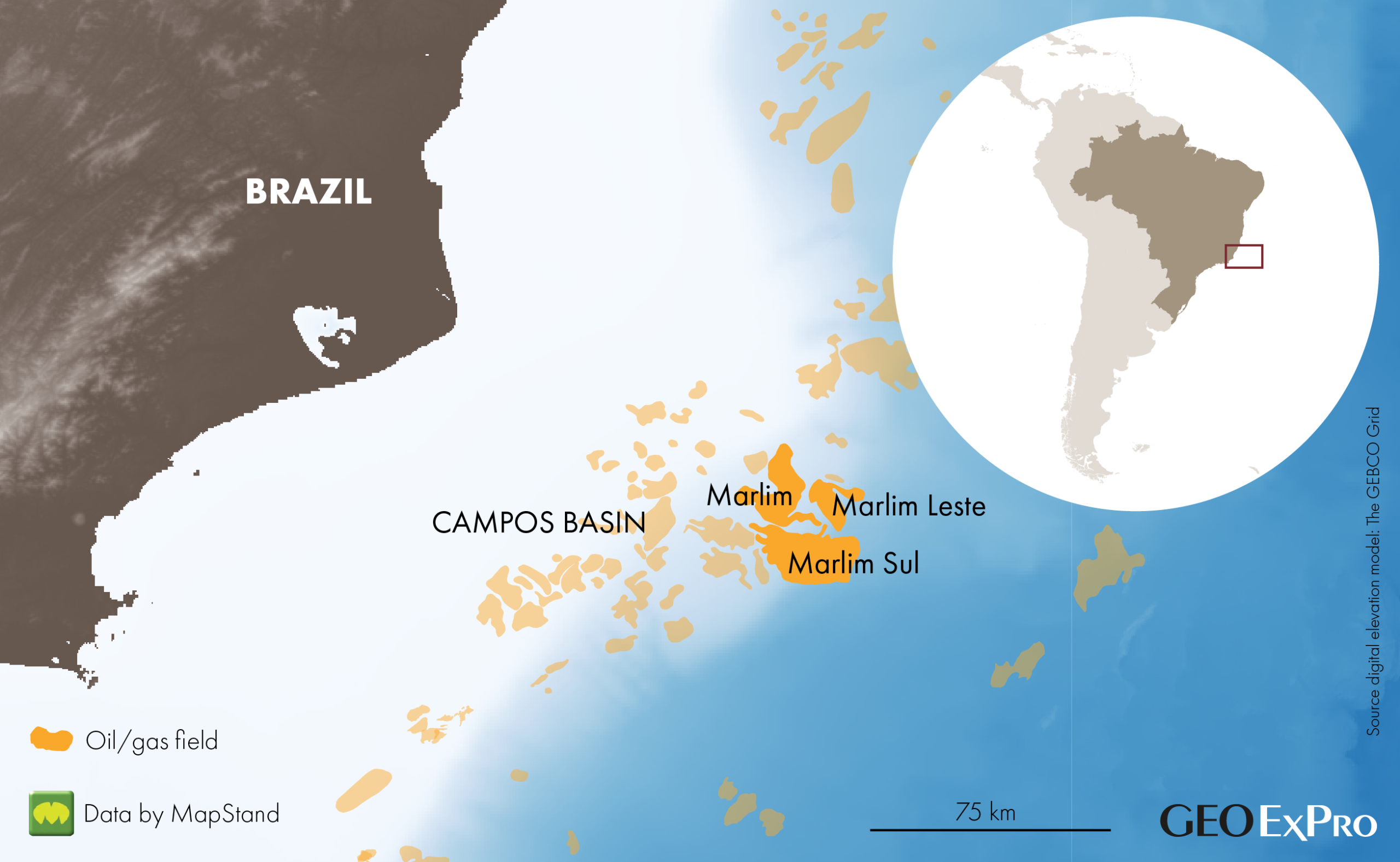
Part of the continued potential in Marlim is the additional opportunities offered by the deeper pre-salt play, probably in Lower Cretaceous carbonates. An article published in 2024 describes that a total of 72 post-salt and 3 pre-salt wells will ultimately be producing from Marlim as part of the revitalisation project. In other words, deeper reservoirs are already part of the mix.
But that’s not where the story ends. Only very recently, operator Petrobras (100 %) announced another discovery in the southern part of the Marlim field, in pre-salt reservoirs. In other words, with the production that is already coming from previous pre-salt finds in the area, Marlim is a perfect example of how giant fields continue to attract new drilling opportunities as well…