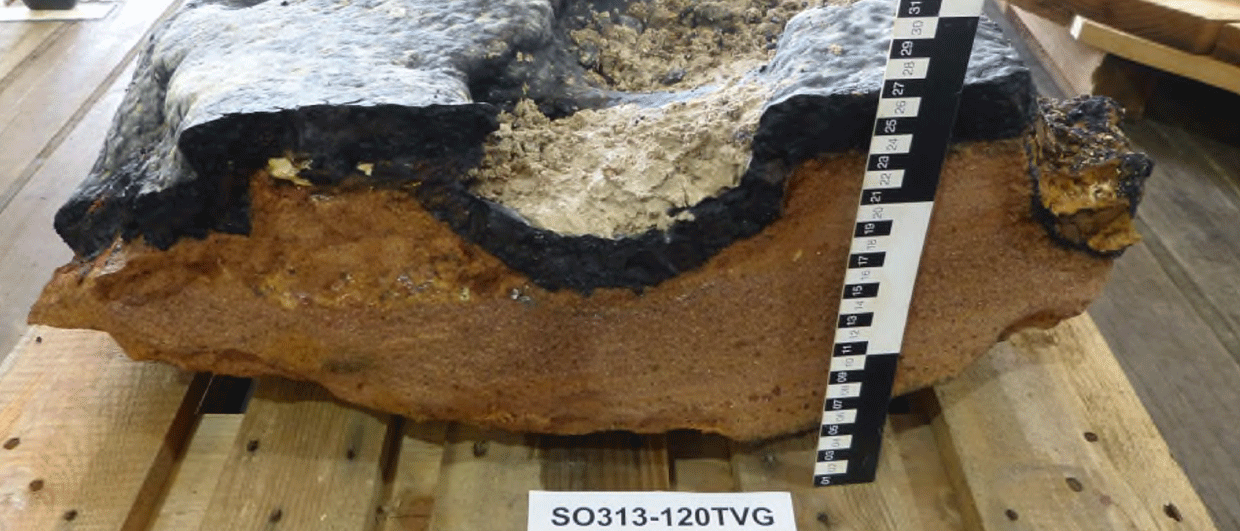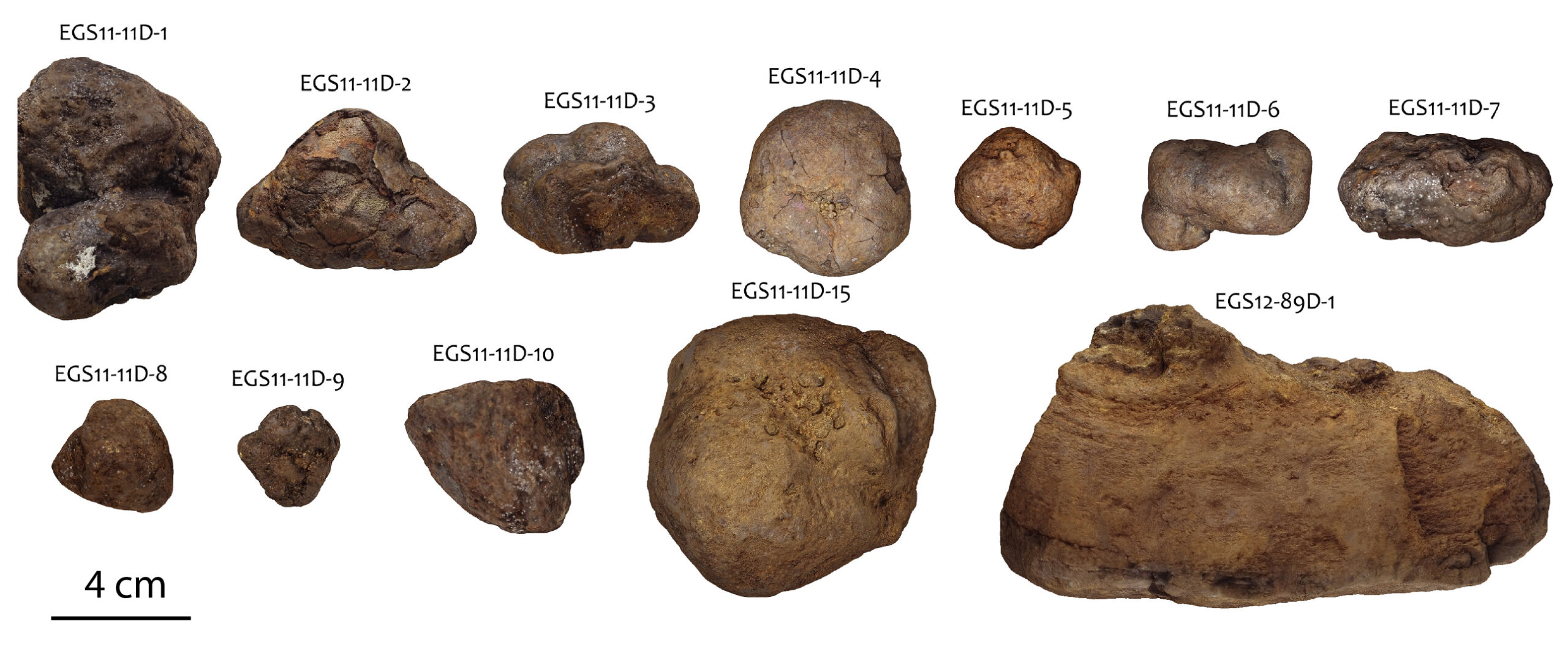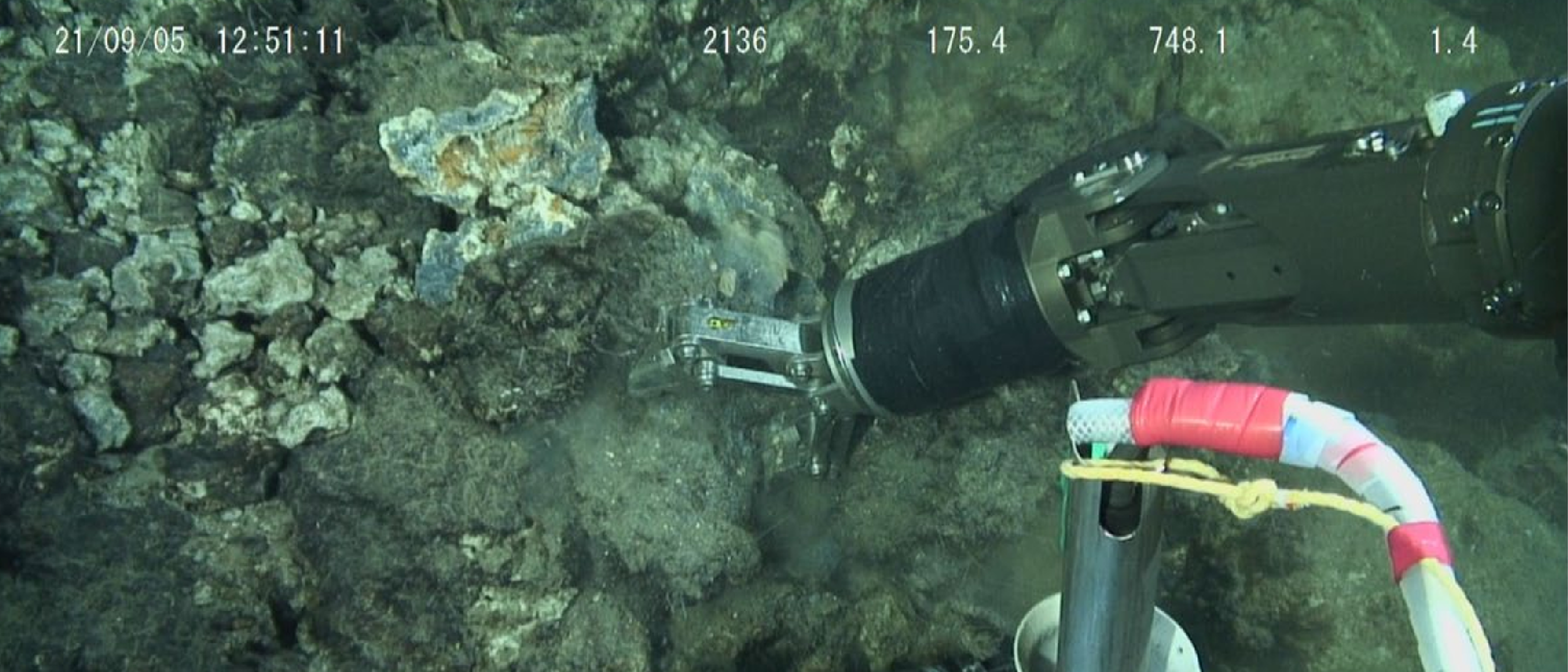
ROV sampling of the Higashi-Aogashima knoll caldera. Credit: Morishita et al. 2026.
Invisible gold discovery in Japan
Pyrite is commonly called “fool’s gold” due to the mineral’s metallic luster and brass-yellow colour that resembles the precious metal. However, a discovery in Japan really had researchers fooled; pyrite in the Higashi-Aogashima knoll caldera contains the highest ever measured concentration of gold

The tiny volcanic island of Aogashima, located 360 km south of Tokyo, consists of Quaternary extrusive rocks and experienced its last eruption in 1785. 12 km from its shores is a submarine caldera, aptly named Higashi-Aogashima, which literally means “east of Aoga island”. The oval-shaped caldera measures 7.5 km by 6.5 km and has three active hydrothermal fields with black smoker chimneys and sulphide mounds.
Japanese researchers have discovered gold-enriched pyrite in the active zones (Morishita et al., 2026). The concentrations are so high that they report some results in weight per cent (wt.%) rather than the more commonly used parts per million (ppm). One sample yielded as much as 1.9 wt.% gold, or about 19,000 ppm, the highest concentration ever recorded in pyrite.
Although that is a decent amount of gold, it doesn’t mean it is visible, not even under the microscope. The gold isn’t present as nano-sized inclusions or particles; instead, the gold atoms are incorporated into the pyrite crystal structure.
How does this invisible gold end up in pyrite? Pyrite forms from hydrothermal fluids at various stages of the black smoker’s life cycle. In this case, the pyrite deposits with the highest gold concentrations have a colloform texture. This rounded mineral texture is indicative of rapid precipitation, which is the result of the large temperature difference between the upwelling hydrothermal fluids and the surrounding seawater. The hydrothermal fluid is quenched as it exits the vent, and this results in quick crystallisation of pyrite on the outer wall of the chimney. The upwelling fluid is enriched in gold and other trace metals, and the quick nucleation of pyrite gives the opportunity for abundant impurities, such as arsenic, lead and copper, to be incorporated into the FeS2 crystal lattice. The researchers found a general positive correlation between the total amount of lead, copper and arsenic in colloform pyrite, and the gold concentration. The replacement of iron and sulphur distorts the pyrite crystal lattice and creates space for gold atoms to be incorporated too.
Even though pyrite is the most abundant sulphide mineral in submarine hydrothermal vent systems, in terms of economic potential, the key metric is the grade of the deposit as a whole rather than the concentration within individual minerals. Still, the findings are noteworthy; the bulk-rock gold grades in Higashi-Aogashima range up to 275 ppm, with an average of 102 ppm, far exceeding the 0.01 – 43 ppm range typically reported from seafloor massive sulphide deposits worldwide.
Another factor relevant to potential future development is the depth of the deposits. The hydrothermal field lies in water depths of about 700 to 820 m, relatively shallow compared to many other seafloor sulphide deposits. However, as of yet, there is no talk of commercially exploiting this invisible gold deposit, and Higashi-Aogashima knoll caldera remains of scientific interest only.