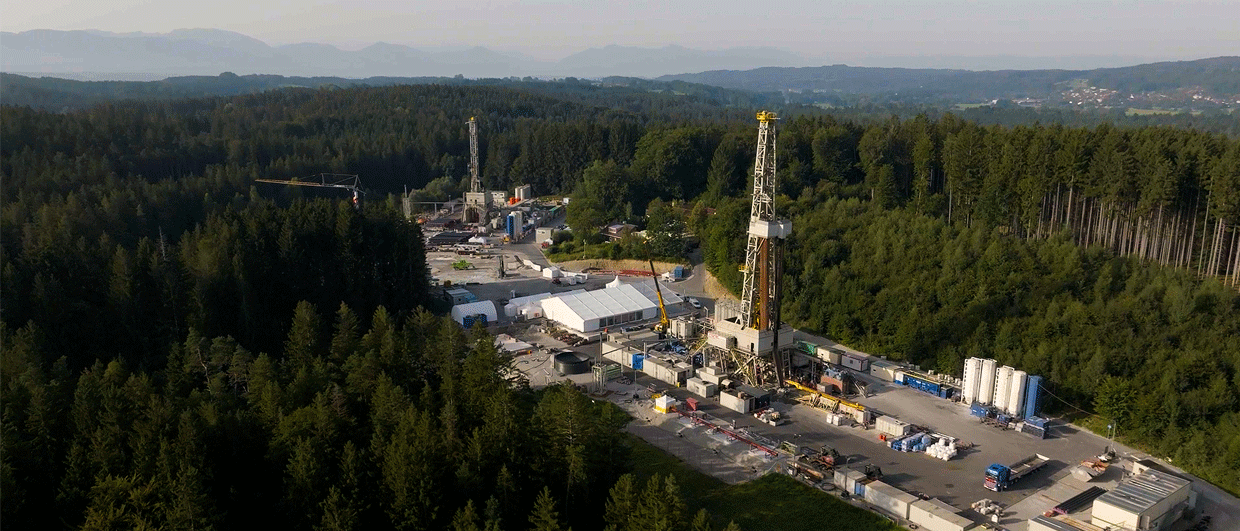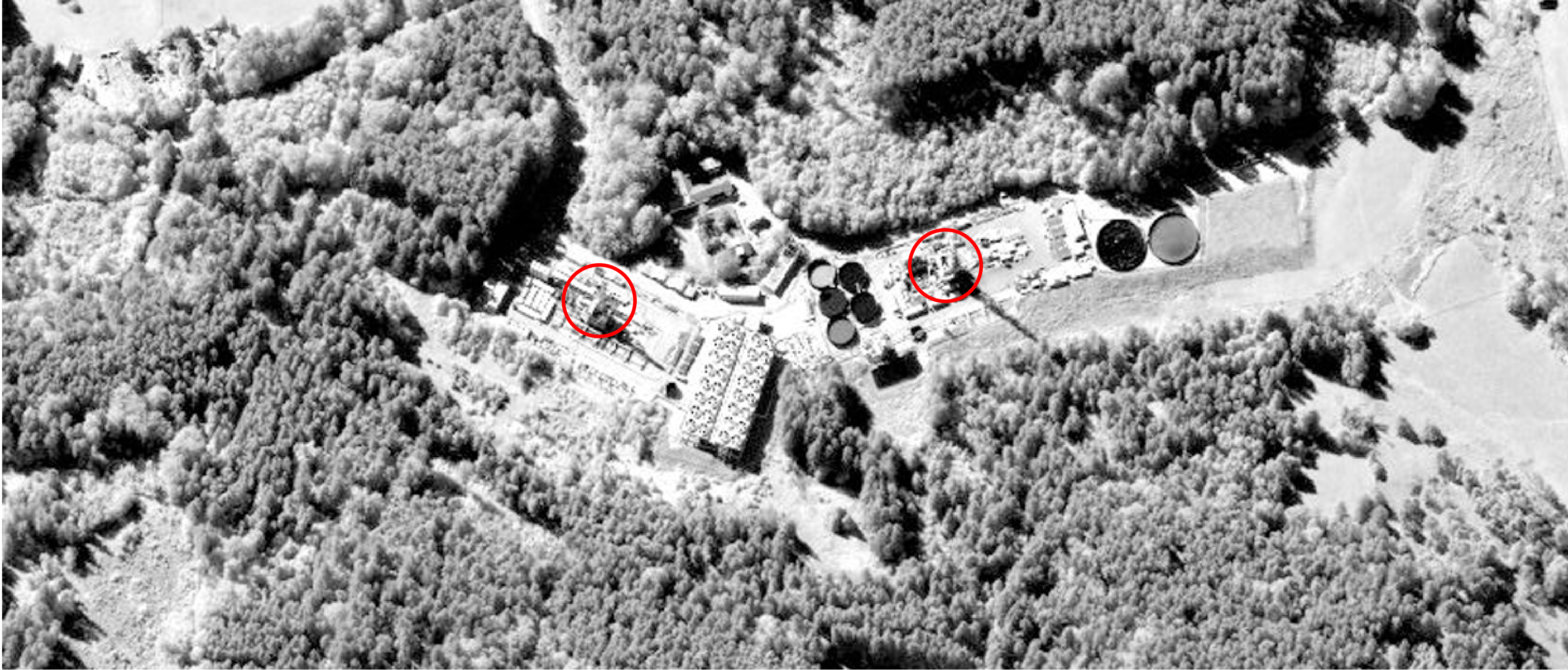
Satellite image from the Geretsried drilling site, early September 2026. The rigs are still there, shown by the red circles. By mid October, Eavor announces that the rigs have left the site. Source satellite image: SkyFi
The end of Eavor?
With the rigs having departed from Geretsried and the Hannover project cancelled, what remains of the Eavor project pipeline?

A feat of engineering. That’s how the Eavor loops in Geretsried could be described. But that’s about it. When it comes to contributing to the energy transition, and the advance of geothermal energy, I think Eavor has not achieved much. With the recent announcement that the two rigs at Geretsried have left the project site, and the cancellation of the upcoming Hannover project in northern Germany, the moment has arrived to draw a conclusion.
I think there is no future for Eavor in Germany, and possibly also beyond. The reason is simple; the energy these deep closed loops were going to produce has always been marginal at best, and only in those cases where everything works. And when it comes to drilling at depths of 4 km and over, it is rare that everything goes smoothly. That’s also what the loops in Geretsried demonstrate – only three to four out of six loops allow circulation.
Imagine the site, with a complex of turbines ready to spin. Only for there to be hardly any steam; just enough to power the plant. It’s a carcass, and I think it will remain just that. Sure, Eavor maintains that it continues to look for ways to progress with drilling the second set of loops, but let’s call a spade a spade, who is going to operate and finance that?
It is interesting how the company shared the news about the rigs having left the Geretsried site. There is no press release on the website, nor a news item. When I emailed the company about the rig situation just weeks before I read the news on the Think GeoEnergy website, I received no answer. Instead, I bought some satellite data that demonstrated that the rigs were still there indeed. But then came the news, and what I had expected all the time was confirmed. It turns out that Eavor informed a “selected number” of news outlets about the rigs. We were clearly not on that list. That’s fine.
The Hannover project in the north of Germany had been on the cards for a few years, and was supposed to be the second site where Eavor would start drilling after Geretsried. I have always been surprised that the city committed itself to this even before Geretsried was even up and running. As if it was an off-the-shelf solution they had chosen. We have now seen that there was nothing off-the-shelf about it.
And with all of this happening in Germany, one can only ask, why did this all happen in Germany? In my view, the political situation in Germany created the perfect circumstances for Eavor’s business development team to get a foot in the door. When the Geretsried project took shape near the end of 2022, energy-poor Germany had just found itself in a situation where cheap gas from Russia was not a given anymore. In what must have been and continues to be a manic search for alternatives, and a naïve belief that the energy transition could be realised quickly, this created the perfect template for the Eavor pitch to land on eager ears.
Money didn’t seem to be a big stumbling block, with the EU contributing 92 million euros alone. Together with the data that were already available from the Geretsried area from a previous drilling attempt, and with the nearby Munich region being a geothermal hot spot, it made sense to land the project where it landed. But the Germans have finally woken up, and are no doubt bruised by the promise of baseload energy that has not arrived; I hope that an element of real scrutiny will now prevail when it comes to future energy transition projects.
So what’s next for Eavor, which now positions itself as a technology company? Japan? The company seems to have triggered some interest there, even though that may have originated from the time before Geretsried came online. The company also has people on the board with ties to the country. Of course, temperatures will be higher when drilling in one of Japan’s volcanic areas, but with that comes a much more challenging subsurface setting, including fractures, varying stress fields and diverse lithologies. In all honesty, I would be surprised if Eavor finds an operator to drill another pair of crazily expensive loops. Maybe there will be a new attempt in 30 years, when we have all forgotten about Geretsried. For now, I would not be surprised if there will be no project for a while.