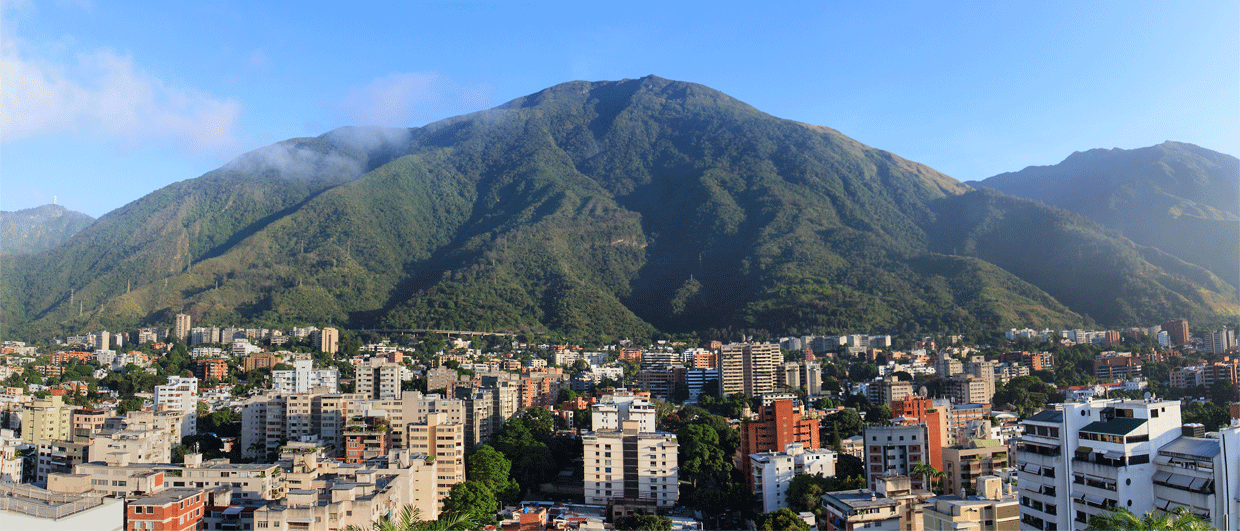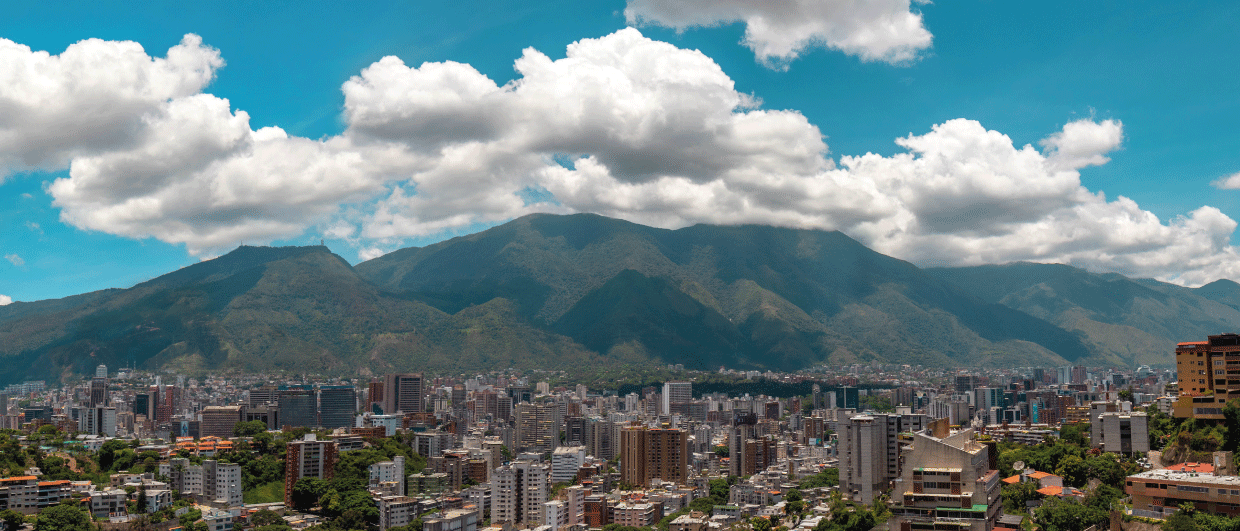
Vista panorámica de Caracas, Venezuela. Photo: Yaikel Dorta via Adobe Stock.
A game changer for Venezuela?

After President of Venezuela Hugo Chávez passed away last year, the risk of increasing political instability and the potential effects on the country’s oil sector and global oil prices was recognized. This month, street protests against President Maduro’s government flared into sporadic violence. Part of President Chávez’s domestic popularity was due to the massive use of oil money to boost public spending and provide heavily subsidized fuel for the population, while he gained regional approval by providing a significant amount of crude oil and refined products to neighboring countries at below-market prices.
Vulnerable economy
Oil accounts for around 97% of the country’s total exports and Chávez benefited from high oil prices in recent years, but his expensive public spending programs redirected money away from the oil industry. Venezuela’s production has dropped by 24% since Chávez came to power due to mismanagement, natural declines and lack of investment. Now the country needs an oil price of more than the current $110/ barrel to balance its budget, versus $70/barrel just six years ago. This dependence on oil makes the economy highly exposed to a sharp fall in oil prices, which in turn could put political stability under pressure and increase the risk of further unrest, in a vicious circle.
The death of Chávez could become a game changer for Venezuela in the longer term. A new president might lead to a new opening to the international market, helping PDVSA ramp up production once again. This does not seem very likely at the moment as the country has spiraling inflation, consumer goods shortages, power cuts and the world’s highest crime rates. Much of Venezuela’s future production has been sold to generate funds to help win the recent national election, maintaining the Chávez-era habit of treating PDVSA as a national piggy bank for financing social spending projects.
New challenge from US shale
Venezuela faces new challenges going forward. The country’s conventional crude oil is heavy and sour by international standards, so much of its oil production goes to specialized domestic and international refineries. Today 40% of its oil exports go to the US, but with increasing shale oil production US import needs will fall, so Venezuela needs to find new buyers for its oil. One of the fastest growing destinations for its crude oil exports is China, which imported 230,000 bopd from Venezuela in 2011, up from only 19,000 bpd in 2005 (EIA). Expect to see more Venezuelan barrels moving eastward in the future.