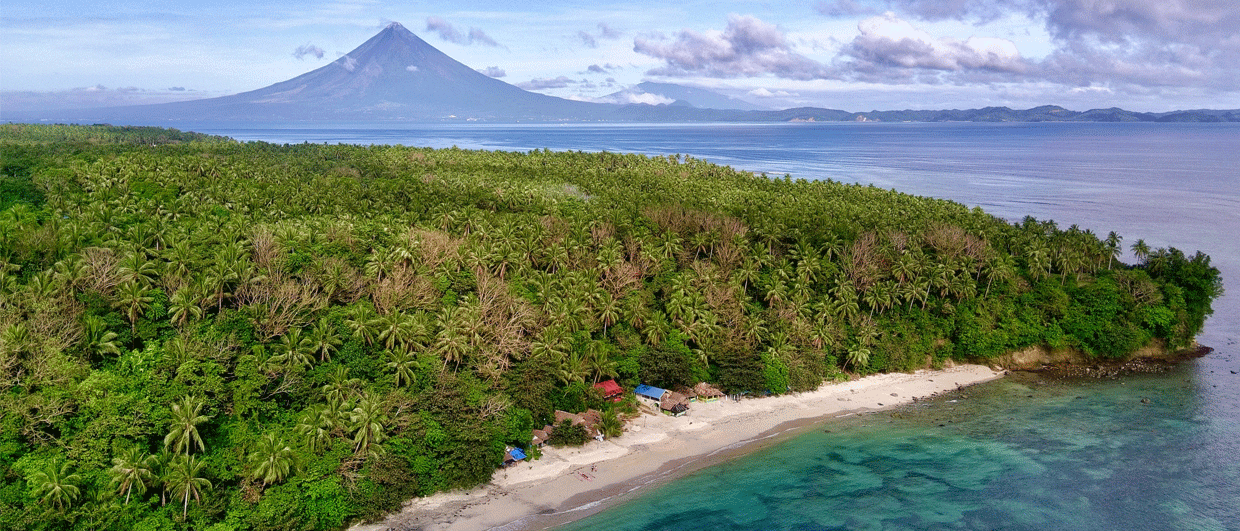
Mayon Volcano with a beautiful landscape and white sand beach, Philippines. Photo: Cristan via Adobe Stock.
The jewel in the crown
And other exciting upstream updates from the Southeast Asia region

The Philippines’ upstream sector is seeing a resurgence, bolstered by Prime Energy’s successful wells at Malampaya East-1 and Camago-3 just ahead of the recent SEAPEX Conference and Exhibition in Manila. Together with a string of recent concession awards, this has broken a long-standing lull in activity. With an attractive fiscal regime and a proactive Department of Energy (DOE), the country is now ripe for investment.
A number of standout underexplored areas were highlighted by speakers at the conference. In the Sulu Sea Basin, Triangle Energy is targeting Miocene turbidites and deeper carbonates across SC 80 and SC 81, whilst in East Palawan, Ratio Petroleum has identified a large Miocene frontal splay complex in SC 76. PNOC is pursuing multiple play types in SC 79.
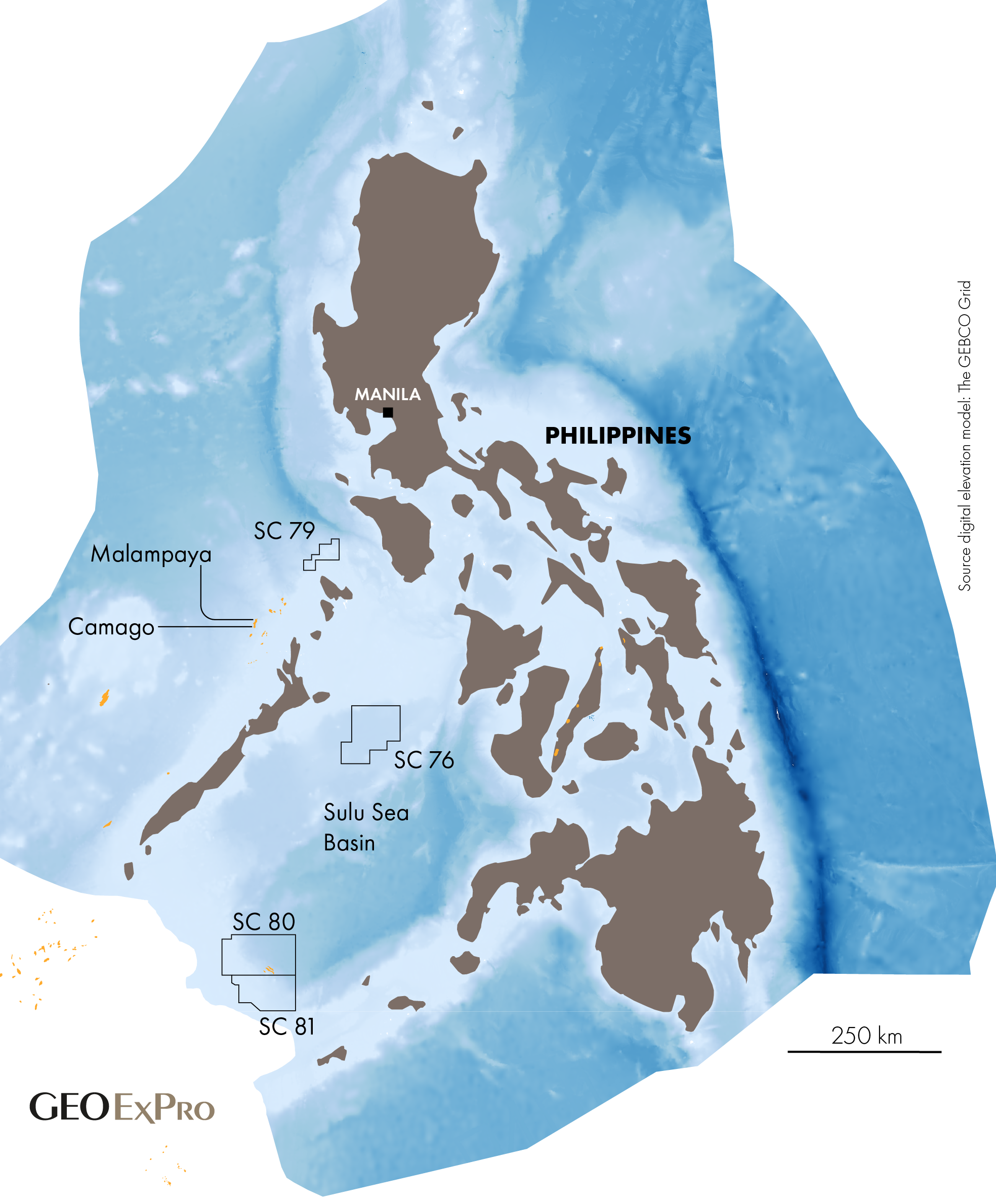
Searcher also shared critical insights on the structural connections between the West Palawan, Southern Sulu Sea, and East Palawan basins. Several speakers highlighted the potential of the Philippine Arc. This area contains numerous oil seeps and was targeted for early onshore exploration, which resulted in only minor discoveries. A re-evaluation utilising modern geochemical analysis to refine concepts could stimulate new exploration ideas.
Malaysia remains the regional “jewel in the crown,” with its vast potential and regulatory body Petronas serving as a global benchmark for the industry. The Malaysian Bid Round 2026 (MBR 2026), launched in February, offers a mix of exploration blocks and Discovered Resource Opportunities (DROs). TGS presented significant deepwater prospectivity off Sabah, using new MC3D datasets to showcase recent oil discoveries, such as Megah-1, in the Oligo-Miocene carbonate play, and their implications for the Layang-Layang Basin. Technical discussions also identified new play types, including pre-Tertiary carbonate targets.
Elsewhere in the region, Timor- Leste’s National Petroleum Authority (ANP) is undertaking broad fiscal reforms, with revised terms expected ahead of the 2027 licensing round. High priorities include the Greater Sunrise project, with operator Woodside looking to expedite development, and the appraisal of Kelp Deep – a multi-TCF fractured Permian limestone feature. Looking ahead, Finder Energy and Sunda Energy are expected to coordinate joint offshore drilling campaigns in 2027. The vast “running room” of the Island of Papua was showcased through deeper plays in Indonesia’s Bird’s Head and numerous opportunities across Papua New Guinea. Cambodia is also drawing eyes; operator EnerCam plans to drill the country’s first-ever onshore well (Kirirom-1) later in 2026, with reported oil seeps in Block VIII seemingly demonstrating a working petroleum system.
The sense of regional optimism was cemented by news of Eni’s giant deepwater gas discovery at the Geliga-1 exploration well in Indonesia’s deepwater Kutei Basin, off East Kalimantan. Preliminary estimates indicate in-place resources of approximately 5 Tcf of gas and 300 MMbbl of condensate – a fittingly high-note conclusion to the conference.