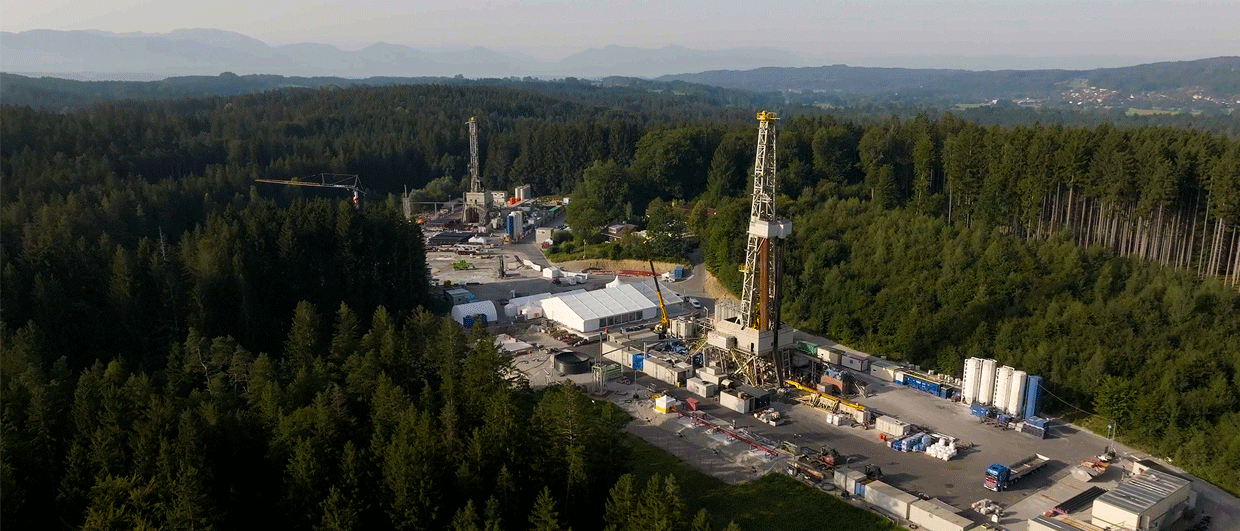
The Geretsried drill site. Photo: Eavor.
Eavor stepping away from operator role in Geretsried
That’s what Eavor’s CEO Mark Fitzgerald said during an exclusive interview with us that addressed the company’s recent project in Germany as well as the new strategy it has now embarked on

Fair play. I have published about Eavor before, and I’ve been critical not only of the level of secrecy surrounding the company and its operations, but also of the concept they have applied in the German town of Geretsried by drilling a series of deep closed geothermal loops.
But two weeks ago, I was invited for an interview with Mark Fitzgerald, the new president and CEO of Eavor, who took up the seat in October last year. That was an interesting change of approach of the company that I have sent many messages to in the past.
“We want to become more transparent in how we communicate our work,” is what Mark told me during the 45-minute conversation we had yesterday in Eavor’s office in Calgary, Canada. What follows here will be the key things we touched on.
Change of strategy
The first thing we talked about was the plan on how to proceed with completing the Geretsried project. At the end of the day, the original idea was to drill four injector-producer pairs with the associated loops branching off. So far, the company has completed one injector-producer pair, with six horizontal loops connecting the two holes – instead of the planned twelve loops.
The most important shift is that the company has decided to step away from being the operator of the project. Even though there is no formal change in the ownership structure of the entire project, the implication of this decision is that Eavor is now having to find a company that can take on the role of operator. “We see ourselves as a technology provider,” said Mark, “as we believe that other parties may be more capable of the operational side of things.”
Eavor wants to find this new operator soon. “We are in talks with potential candidates already,” said Mark, without being able to mention any names. The two rigs that drilled the initial wells are still on site, which is one of the reasons why the company is trying to find a new operator swiftly.
This change in strategy, being the shift from operator to a technology provider, is also behind Eavor’s recent decision to create a leaner organisation. It has reduced its headcount from 147 people before the recent reorganisation to 80 at the present day.
Net or gross
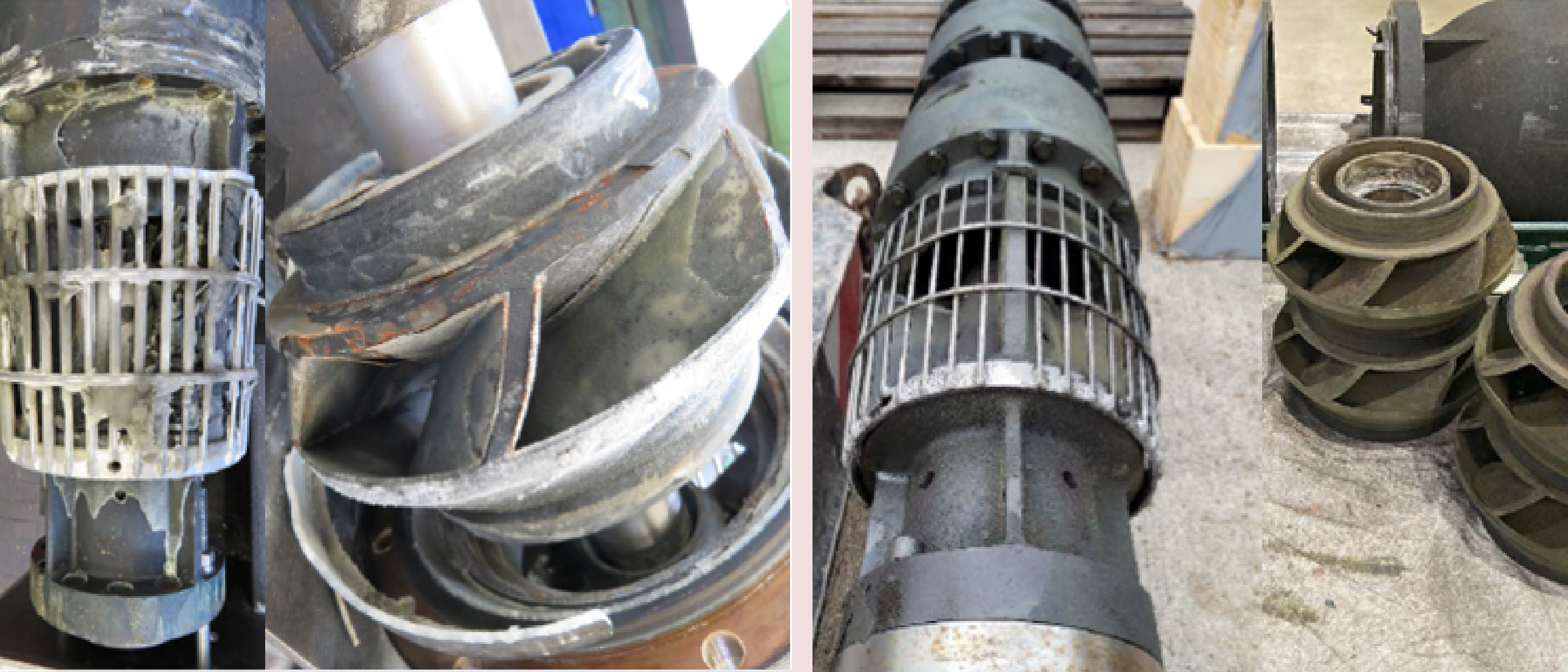
Let’s get back to currently operational part of the Geretsried project. As described above, it is already widely known that the company only completed six loops instead of the planned twelve. What was new to me was that it is actually 3 to 4 loops that are contributing to flow. Two loops experienced clogging by rock fragments to such an extent that the cleaning operation could not alleviate the problem. The third loop is only contributing to a limited extent.
Overall, as we reported before, the current energy output hovers between 0,5 and 1 MWe. What I was keen to know is if this represents gross or net output, taking into account the operational power demand from the plant. “It is gross,” confirmed Mark. With the power demand of the plant being around 0,5 MWe, the project does not deliver power to the grid most of the time.
“It must be said that in the current circumstance, with a limited number of loops contributing, the efficiency of the plant is very low, sitting at only 2%,” added Mark. “When more loops would become operational, the efficiency would ramp up to 14%,” he added.
Will this translate into the confidence of the market to embark on more projects of this kind? That is the key question for now.
Follow-up projects
“We are aware that we have to make money now, and we are actively looking for projects that have the potential to make that a reality,” said Mark.
What the company is looking to do is go deeper than the 4,5 km-deep Geretsried wells in order to tap into hotter rocks, as well as completing at least twelve loops per injector/producer pair. “We see potential in multiple places in Germany,” Mark said.
Whether this place is Hanover, the city in northern Germany that was originally going to be the next location Eavor would land its rigs, is not a certainty anymore. “The subsurface in the Hanover area is complex,” said Mark.
All in all, Eavor’s CEO remains upbeat about the potential of his company’s closed loop technology. “We believe that we have proven the concept. We now have to prove commerciality,” is what he reiterated a few times during the conversation.
Cautious
Personally, I believe it is too early to call the Geretsried project a proof of concept. Granted, the team managed to cut drilling times for each consecutive loop that was completed, and has demonstrated that circulation through the loops does not require additional energy supply such as a submersible pump. But given that this demonstration project has not delivered meaningful energy yet, has basically spent the budget that was initially available (EUR 350 M) to an extent that there is no money left to complete the rest of the planned three boreholes and the associated loops, and is planning to go deeper than where it’s ever been before for a potential follow-up project, is enough reason for me to take a cautious approach.
The opportunity to talk to Mark Fitzgerald is much appreciated though.