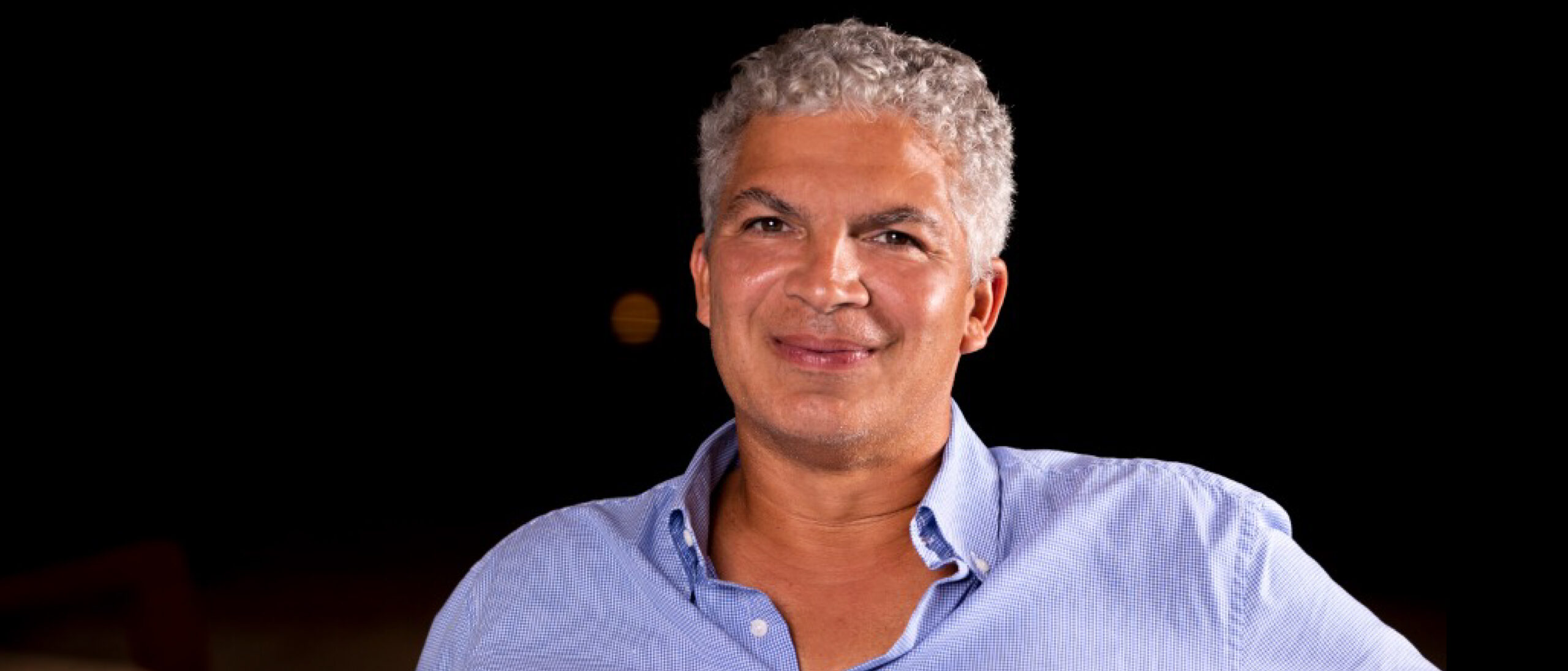
Ivan Sandrea. Photo: Private archive.
The story behind Mexico’s biggest discovery in decades
The story of Ivan Sandrea

What does it take to make the biggest discovery a country has seen in decades? How do you do that as a newcomer? You do that because you see things coming. Because you are prepared. Because you did the groundwork first.
All these things led to the discovery of Zama in 2017. And which company made that discovery? Not one of the majors. It was a small outfit called Sierra Oil and Gas. How did they win the block, and how did they manage to raise the capital to drill the well?
That’s the story Ivan Sandrea, the founder and CEO of Sierra, will share in this interview. A story that starts in Venezuela, takes us to colder climes in Norway, Vienna and London, but ultimately leads to Mexico, where Ivan still lives today.
It is a story of the power of data, the power of networks, and the power of being a first mover. That’s the returning themes of Ivan Sandrea’s career as a Geoscientist, as an Explorer, as a CEO and as an Author.
The start – Venezuela
“I grew up in Venezuela in a family of petroleum experts,” says Ivan. “My dad, Rafael Sandrea, was and continues to be a prominent figure in the industry. But also my sister, as she stood at the foundations of Jason Geosystems in the Netherlands.”
Initially, Ivan embarked on a mechanical engineering course at Baylor University in Texas in 1993. But when he was told to prepare a talk on a subject of choice, he decided to do it about the Orinoco Delta, a mighty river he loves. “Why don’t you go and study geology?” his professor asked. “I switched,” says Ivan, “and I never looked back.”
And whilst still studying, Ivan had an experience that he drew upon for the rest of his career. “I worked as a summer intern at Petroleum Information in Houston, the predecessor of IHS,” he says, “when Venezuela was opening up as a country to foreign investment. I saw how an intelligence company was getting ready for it, as well as my own family members, with my dad and sister being heavily involved.”
Soon it was his own turn, as Ivan moved straight back to his home country after finishing his bachelor’s degree in Geology in Texas. He was quick in securing a job with bp, as the company saw opportunities in the country, especially after the success it had in neighbouring Colombia.
“All bp’s top explorers and leaders were in Venezuela,” Ivan says, “and I had the opportunity to work on regional screening of the entire country, as well as drill the very first exploration well by the private sector in Venezuela since the apertura.”
“It was a crazy time,” says Ivan, who also realised that he benefited from being Venezuelan and having a network that was working for him. “One day,” he says, “I was sent to Maturin to present our well programme to the government to obtain the drilling permit. There I was, as a 23-year-old, surrounded by all these bp senior people who were flown in to help make the case to get these wells approved. When the door opened for the meeting, the government director who was sitting there turned out to be the godfather of my brother and a close friend of my dad!”
The surprise on the faces of all the bp people was clearly visible, and the rest of the meeting went in a much more informal way whilst Ivan presented the technical case for drilling the first well on the Guarapiche block. A few weeks later, we got the go-ahead,” he laughs.
Learning the ropes of finance in oil
By his mid-twenties, Ivan had already been recognised as being a potential leader, as he was selected as part of bp’s class of recruits to follow a special trajectory within the company. As such, Ivan moved to Norway in 1997, where he was part of the team discovering the giant Ormen Lange field. A year later, he moved back to Venezuela, where he continued his job with bp.
Following a Master’s and MBA programme in Edinburgh, as well as another international project for bp in Egypt, Ivan saw himself moving to London in 2001 when a global oil recession had impacted his career prospects in the industry.
“I moved into investment banking with Meryl Lynch,” he says, “where I became part of the equity research group doing the upstream models of European companies, including deepwater oil and gas investments.” That’s where he learned that data forms the backbone of financing, a lesson that would stay with him throughout his subsequent endeavours.
At Meryl Lynch, he led the technical research and production models for major European companies. It was also the start of a series of publications about insights into the top-50 global deepwater projects. “It wasn’t very common in those days,” Ivan says, “but for me, it was second nature as I had seen my dad working on databases for Venezuela all the time.”
Apart from databases, another important thing Ivan learned during those years in banking was to interact with people from outside the financial world. “My life has revolved around explaining technical information to non-technical people,” he says.
In that capacity, he also invited the secretary-general of OPEC, who happened to be a Venezuelan, Alvaro Silva Calderon, to come to London to give a talk. And so he did, in 2004.
These invites also turned out to be good for Ivan’s personal career, as a few months after the talk, he got a call from OPEC, asking him to apply for the role of head of oil supply. It made him move to Vienna in 2005. “It was amazing,” he says, as he was to find out about a true turning point in the industry.
The onset of shale
“In May 2006, I reported to the OPEC research team that the decline of onshore US production had stopped,” Ivan says. “In the years prior, the decline used to be around 0.5 MMbbl/yr.”
The team wondered why this was happening; are they drilling more stripper wells, or is there something else at play here? It turned out to be the very beginning of the shale revolution. No one was talking about this at the time yet.
“When I included in my monthly report that the growth of non-OPEC supply was going to ramp up by MMbbl/d, it caused astonishment and turmoil to the OPEC research team and the Economic Board,” Ivan says.
But it did not result in an immediate reaction from OPEC countries, as Ivan’s team also saw that China was ramping up its oil imports to fuel the country’s economic expansion at the time. Rather than putting measures in to try and regain market share, Ivan was asked to build a database on OPEC spare capacity expansion plans. An interesting task given what was unfolding in the USA.
Around 2007, Ivan’s position at OPEC became complicated. In Venezuela, Hugo Chávez was becoming more extreme in the pursuit of his communist agenda, and being the highest-ranking Venezuelan in OPEC, whilst not a supporter of the regime, it was time for him to move on.
Ivan became the head of international upstream strategy and business development at Statoil, now Equinor. The company he joined was still very much focused on the North Sea, and had drilled around 300 dry wells in the area over a period of ten years. Something needed to change, whilst Ivan also noted that there were no geoscientists in the top leadership team. “There was a sentiment that we needed to capture reserves and we needed to grow,” says Ivan.
As such, Statoil was the first company to embark on an international joint venture in shale gas, besides moving to Canada, Brazil and the Gulf of Mexico at the same time. “Trust me,” Ivan says, “there was a desire to move into many more international opportunities, including Turkmenistan for example. My team’s role was to scrutinise these opportunities using a data-grounded approach and make sure that we didn’t touch the white elephants out there.”
But was shale a bit of a white elephant in the end as well? “I now believe that shale is a good reserve machine,” says Ivan, “but it’s not the money machine that we might have expected it to be.” Statoil divested most of its shale assets again, maintaining only a small non-operated share in the Marcellus shale.
“What I also pushed in those years was deepwater exploration,” says Ivan. “Remember, apart from the deepwater hotspots like Angola, Brazil, the GOM and Nigeria, there was no real driver yet to explore more deepwater regions. Instead, companies focused on the Arctic at the time; that’s where many expected the next wave was going to be.”
In 2008, something else happened that would shape Ivan’s career. Statoil sent him to Mexico to evaluate opportunities to enter the country. Even though it was too early to make the move – the country had not opened up sufficiently – he made some observations that proved to be critical for what would unfold just a few years later.
“I saw that most international oil companies thought that Mexico would open up through Pemex,” he says. “All of them had people in the country signing MoUs with the state oil company. But even at that time, years before the country really opened its doors for foreign investment, I realised that was not the way to do it.”
Before we get to how Ivan would do it instead, there is one more episode in his career that is also worth sharing because it helps us understand why he had success in Mexico later.
The midwife of OPEC
In the summer of 2011, Ivan made another interesting career move. He was asked to become the CEO of Energy Intelligence. And that is an interesting fact, because the roots of the company go back to Wanda Jablonski, the journalist who single-handedly established Petroleum Weekly, the publication that was read by everybody in the industry who wanted to stay informed about oil developments. In fact, it was Wanda Jablonski who played an instrumental role in bringing the people together who were at the basis of the formation of OPEC.
“It was my first experiment as an entrepreneur working with investors, in an environment I was very much at home in, surrounded by data and analytical tools,” says Ivan.
“Another thing I really focused on in my role was to boost Energy Intelligence’s competitor intelligence service and country risk,” Ivan continues. It did not take long before it turned out that these things would become very useful in what was to unfold.
It was 2012. Where Mexico was still very much closed for opportunities four years earlier, when Ivan went there with Statoil, now he clearly got a sense that things were moving. “It made me decide to become more serious about it,” he says. It also meant that he decided to leave his role at Energy Intelligence and started to gradually embark on the adventure that led to the discovery of Zama in 2017.
Building up the picture
It was a bold move for sure, but Ivan had done his own competitor analysis. “I knew that the country was still completely dominated by Pemex, and I also knew that even abroad, nobody had the knowledge that would enable them to move faster than I would do,” he says.
And Ivan had another advantage. His dad. Rafael Sandrea was an established figure in Mexico as the founder of the petroleum engineering graduate programme at UNAM University in Mexico City. In other words, he had name recognition, and it came with a few ways to build connections in the country. Connections that did not rely on a relationship with Pemex.
Ivan started in a way that was familiar to him now. With the help of some people he involved in his venture, he started building databases and knowledge. Not through Pemex, but through academic work such as scouting through doctoral theses, PhD dissertations and publications.
Initially, Ivan wasn’t sure that he would start an oil company himself. He was also playing with the idea of marketing his Mexico database to potential newcomers once the country announced the first licensing round.
But no matter how his work was going to be used, Ivan was convinced of its competitive advantage, also because he had seen the value of data not only in his previous positions in London, but also in Venezuela when the Apertura unfolded just as he started with bp. And this was a position he wanted to be in.
“In this industry, you need to have something that sets you apart from the rest,” Ivan says. “It’s one of the foundations of successful entrepreneurship and winning as a business. With Mexico, I was convinced that I was in the right place.”
And he knew people who could help him. Mark Shann, his life-long business partner, had already spent time in Mexico for bp. Ivan also enjoyed the support of two people who had just retired from the industry in Mexico and had proven to be real explorers and geoscientists: Raoul Gonzalez and Mario Limon. They were happy to fill Ivan in, especially through the stories they shared.
So for about a year, whilst he still had a job with EY in London, Ivan managed to build an overall picture of the petroleum geology in Mexico with the help of all these people. Then, by December 2013, when the momentum behind the country’s opening up increased further, he decided to go for it more seriously. He started contacting some investors.
Initially, this wasn’t met with a lot of enthusiasm. “Why do you need to do all this research?” was the question he received multiple times. Others were telling him it was too early. Yet, he managed to raise a bit of funding, which kept his small project going.
From a million to a billion
Then, as 2014 arrived, and his team had grown to around twelve people by springtime, Ivan was invited by the Encap Fund in Houston. After presenting his case, he was asked how much money he needed. “Around 3 million,” he said. “What if we give you 500 million?” they replied.
Once back in London, Ivan went to meet his investor friends at the Riverstone Fund, and they recommended him to talk to Jim Hackett, the former boss of Anadarko, who also worked for Riverstone. So a week later, Ivan flew back to Houston and met with Jim, who immediately invited him to come to New York to meet the Riverstone leadership team.
To cut a long story short, following his visit to New York, Ivan had secured 1 B in capital, with an equal amount provided by the two funds he had been talking to. By that time, the financial foundation for the company was in place, so in September that year, Ivan and 15 others signed the paperwork that heralded the official start of Sierra Oil and Gas.
But let’s be clear. Even by that time, still nobody had an idea yet how and when Mexico was going to open up.
The leading independent
Ivan laughs when he shares the tagline of Sierra: Mexico’s leading independent. “Of course,” he says, “there was no independence yet, so what were we leading?” But regardless, the company rapidly grew to around 25 people during the second half of 2014, just in time as things really started happening.
When it became clear that the opening was going to be organised in early 2015, Ivan had already started to talk to potential partners, and found those in Talos and Glencore. “However,” he says, “it was the start of the downturn, and some companies got into financial trouble. Glencore was one of them, and they pulled out.”
Sierra needed a partner like Glencore, because one of the requirements for a valid bid was to have one partner with a balance sheet of 1 B. Talos only had 20,000 bbl/d of production; Sierra had none.
“So, within a month of the bid submission date, we had to find a new partner to replace Glencore,” Ivan says. “It was probably one of the most stressful periods of my career.” But, he managed and brought in Premier Oil, whilst Sierra maintained leadership and the largest share in the partnership.
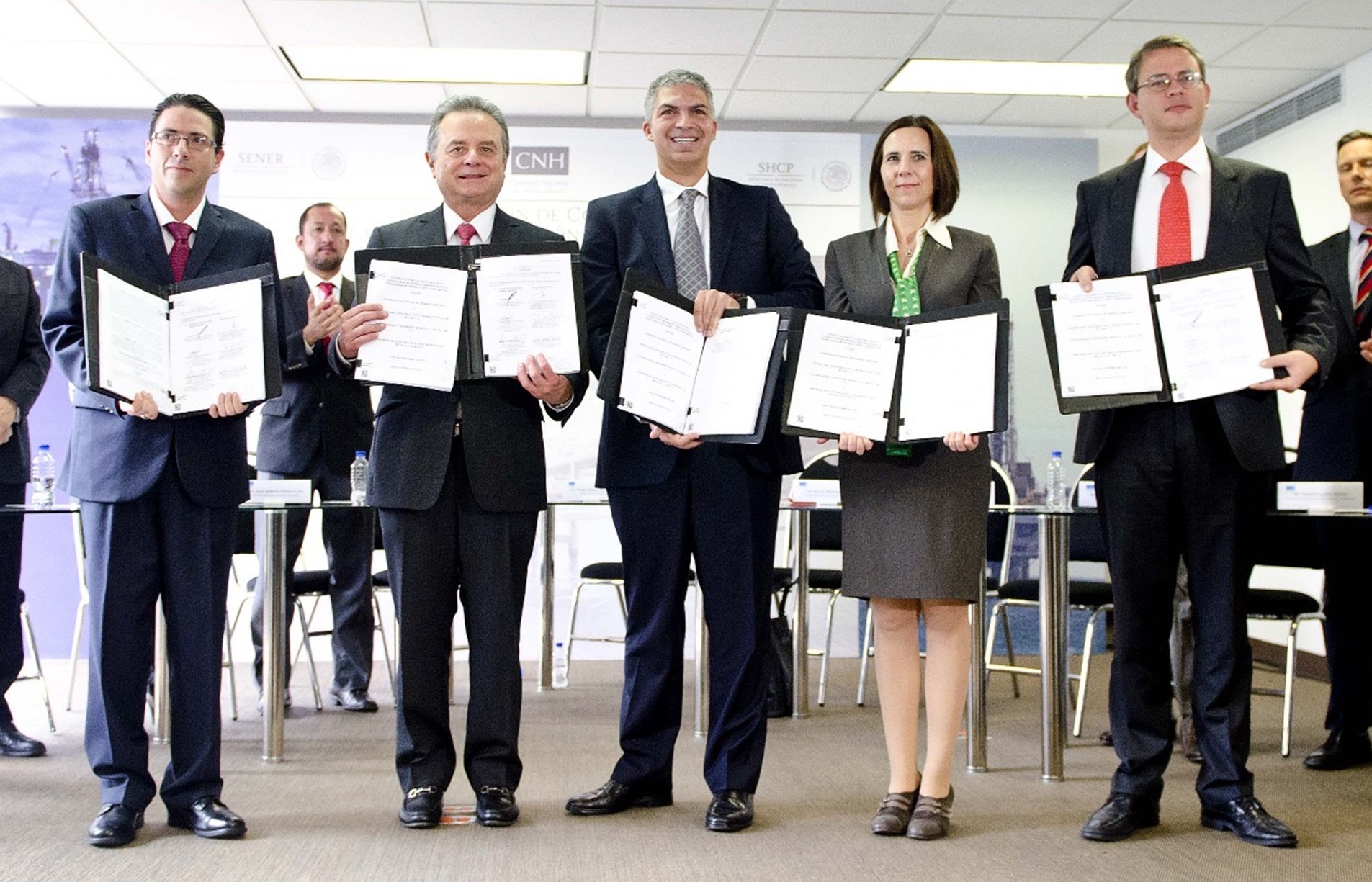
Ivan handed in the bid himself, after having spent the night in a “secret” hotel to minimise the risk of getting intercepted. The team prepared two versions: One fake and one real. When he arrived at the office where he needed to hand over the documents, he found himself surrounded by the major companies that were there to do the same: Statoil, ENI, Hunt Oil and ONGC.
But what happened? Sierra became the winner of the only two blocks awarded during that first round, outbidding Statoil by just 1 %. It was a big moment, because finally, Ivan could justify the company’s tagline: The leading independent.
Competitor analysis
What made Sierra’s bid the winning bid? “The process was very transparent,” says Ivan. “It was a combination of a minimum work programme as well as the royalties and government take we would offer.”
“Let’s go back to the time we had to produce the bid, and remind ourselves that oil prices were very low. That’s why our competing bidders offered a low government take of around 40 %. We offered 68 % instead, whereas Statoil offered 65 %.”
“We even went as far as hiring game theory specialists to better understand and anticipate how our competitors were going to bid for the blocks. My background in competitor analysis also came in very handy. We knew that some companies were more inclined to drill wells than to commit to government take,” Ivan explains.
Statoil was not happy with Sierra winning the Zama block, especially because they were outbid by just a few points. They also had identified the flat spot at Zama, which ENI had also done. Ivan heard that Statoil even started conversations with the government, arguing that Sierra was not capable of carrying the burden of the partnership, and made the case that a big international operator should do it instead.
The real kick-off
Once the team had won Block 7, in which they had identified the Zama prospect, the moment to buy all the subsurface data they could get their hands on to be ready for future rounds had arrived.
At the same time, people at the ministry called in to the office to enquire who Sierra Oil and Gas actually were. “At the end of the day,” says Ivan, “even though we were the leading independent now, we were still small for international standards.”
Together with Talos and Premier Oil, Zama-1 was drilled in 2017. It was a major discovery, with around 2 billion barrels of oil in place and an estimated 800 MMbo recoverable. And that with the first ever offshore well drilled by an independent company in Mexican waters in 70 years.
“Apart from the flat spot in the seismic, it also demonstrated that it paid off to focus on the shallow water area first, instead of moving into deepwater straight away,” says Ivan. It was a huge moment for the company, the partnership, and the country of Mexico.
“We had a party every time we won acreage in the five licensing rounds we participated in,” says Ivan. “But you can imagine the atmosphere during the party that followed the discovery of Zama was something that will stay with me forever.”
And Sierra did more. “We drilled ten exploration and appraisal wells with a 67 % success rate,” says Ivan. “80 % of the discoveries made in the last ten years were made in the acreage Sierra originally owned.”
“And why did Pemex not drill Zama before, given the flat spot in the seismic?” I ask. “Because Pemex does not drill flat spots,” says Ivan. “The state oil company drilled 14 dry holes in the Zama area before we came in.”
“Pemex is not a typical exploration company,” Ivan continues. “The company outsources seismic interpretation to service companies and outsources drilling to service companies. If Pemex was a good explorer, they would not be in the situation they are in today. They drill wells, but they are not explorers, that’s the best way to summarise it.”
The decision not to wait for Pemex until the opening was announced in 2015 was a crucial one. “In fact, says Ivan, “until today I have never had a formal meeting with Pemex. Sure, I meet them at conferences, and have nothing against the people working there, but there was no need to “partner” with them to learn where the sweetspots were. In fact, I’d say it was even better not to listen to them because it would take you on their line of thinking, which is not very much exploration-driven.”
“Pulling together the data ourselves was the best thing we could have done,” Ivan continues. “And write about it. Because that was another major surprise. In a country with a 100-year history of oil and gas exploration, there was no book available about the petroleum geology. So we decided to do it ourselves. We kept it short, but it covered the basics. How come Venezuela had thousands of books when the Apertura happened in the 1990s, but there was nothing of quality in Mexico? It is a question that still puzzles me.”
After Zama
What happened after the Zama discovery? “We had created value, now it was about managing that,” says Ivan. As the political mood was shifting again in favour of a more nationalistic approach, the funds backing Sierra were getting a little bit concerned. What if something like Venezuela would happen? They started to test the water for buyers in 2018 and ultimately sold the entire Company in 2019 to DEA, who had been scouting around for acreage in the country for a while.
But there is another side to the success of Sierra, too. Ivan is open about that. As the company got established, he ended up in hospital due to a stress-related illness. In addition, he and his partner separated and continued to live in different parts of the world. “Building a business often comes at a significant personal cost,” says Ivan, “and I am no exception to that.”
But the sale of Sierra did not mean Ivan took a back seat. In fact, he continued to use his talent for finding opportunities and investments, this time investing in Caribx, an exploration company with a large offshore license in Honduras and joined the board of Havfram, a Norwegian offshore service company that was looking to convert itself into an offshore wind business during the pandemic. “Nobody wanted to do oil and gas investments for a few years,” says Ivan, “so the timing was right to venture into wind. I helped secure an investor with $800 million for them, shared the leadership team, and then left that business again.”
Ivan’s spell in wind was relatively short-lived. He always kept an eye on oil and gas, and in 2022 founded Westlawn Americas Offshore (WAO) with interests in Brazil, GoM, and Peru with private capital. During his leadership, WAO, deployed over $1.5 B in offshore assets and is now an important non OP parter to several companies including Oxy, Chevron, Brava and Beacon.
One of the most exciting things Ivan is currently working on is Honduras, where he bought some acreage in 2020. “It was a licence Shell divested when they bought BG,” says Ivan. “We’re about to farm out soon, after which we’ll hopefully embark on a massive exploration drive there, on a scale that nobody has done in the country yet. I think of Honduras as having the potential to be the next Suriname or a mini Guyana.”
In addition, Ivan also reveals he is working on something big in Latin America, and has raised over $2.5 B for it. What that will be, we have to be a little bit patient, but now knowing Ivan’s skills and eye for opportunities, it will certainly be interesting to keep an eye on what he is going to pull off.
The author
“I write every day,” Ivan says at the end of our conversation. “Memos to myself and papers that I don’t finish.”
“I’m also working on a manuscript called The Next Wave, as I want to put down my thoughts on how this industry is moving forward and will keep on producing 100 MMbbl/d for decades to come.”
“A shift from public to private ownership in the industry is probably going to be an important part of that, including a shift from accountants running the companies to more engineers and geoscientists. We also need more entrepreneurship and leadership willing to take risks, and willing to drill wells and explore.”
“Today, that is all very hard. The share price goes down as soon as you announce you’ll drill a well, because it means you’ll spend money. What I see is that there are a lot of good companies out there, but their value is a fraction of what they actually represent,” Ivan says.
Is the wave of privatisation already happening? “Yes, see for instance Carlyle and ADNOC wanting to privatise Santos. But it’s not many,” he admits, mentioning that he is only aware of one company in Europe, as well as Continental in the US, where the owner, Harald Hamm, took the company private. But there are not many who dare to do it.”
Consolidation is what we see in Norway, in the GoM, in Canada. Everywhere, the number of companies operating in these well-established petroleum plays has come down significantly, as take-overs are seen as a way to expand the reserve base.
“Of course, it is an expression of the level of maturity in these areas,” says Ivan, “but even more so, it is an expression of the lack of balls to go out there and find yet another Johan Sverdrup.”
That’s why Ivan is a strong supporter of the return of the risk-taking but yet well-informed explorer.
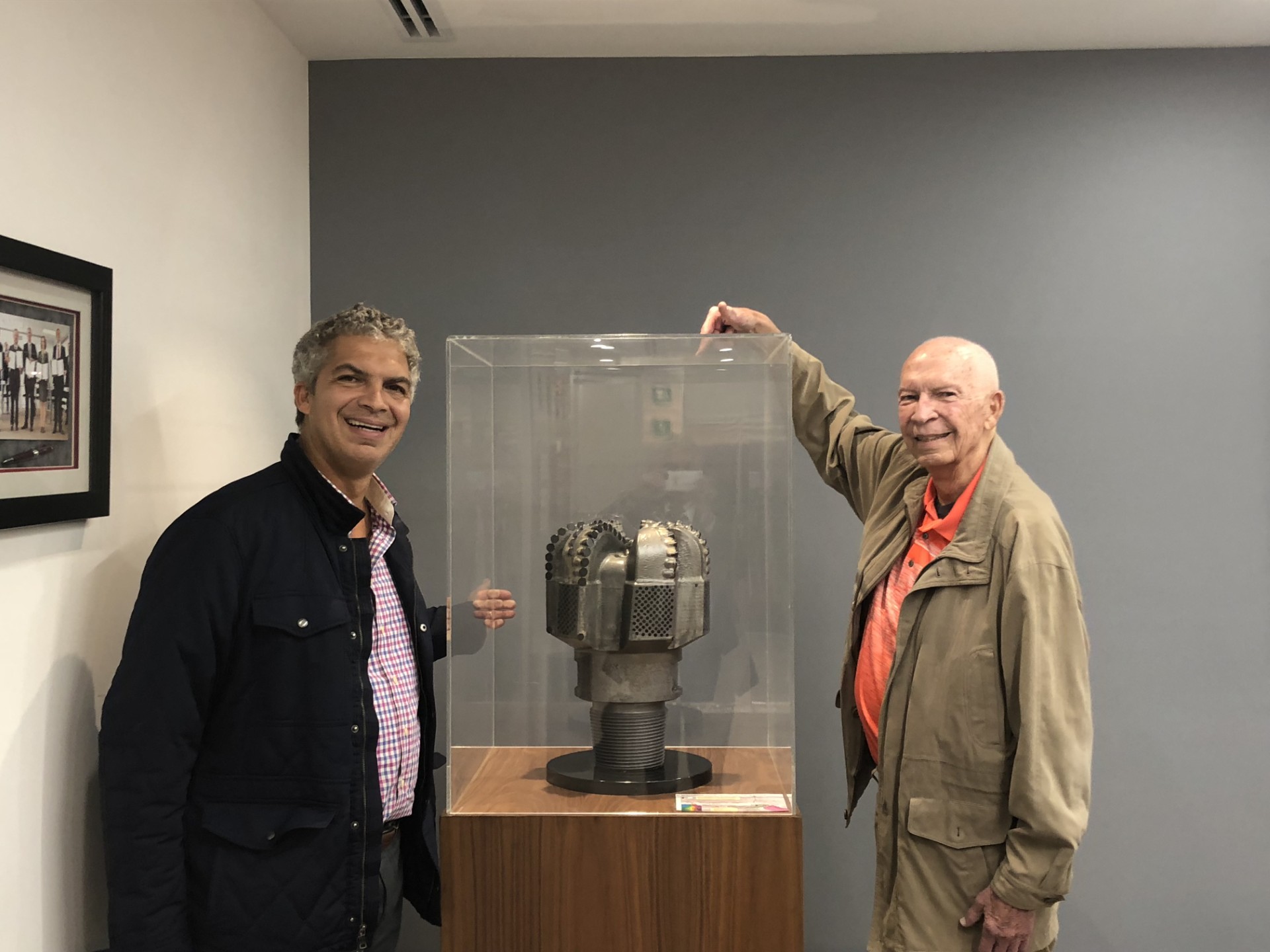
He shows me the drill bit that was used for the Zama discovery well. It is on display in his house in Mexico, like a genuine museum piece with a glass cover on top. Will we see more drill bits ending up in this room over the next few years? I’m sure that Ivan is planning on doing so.