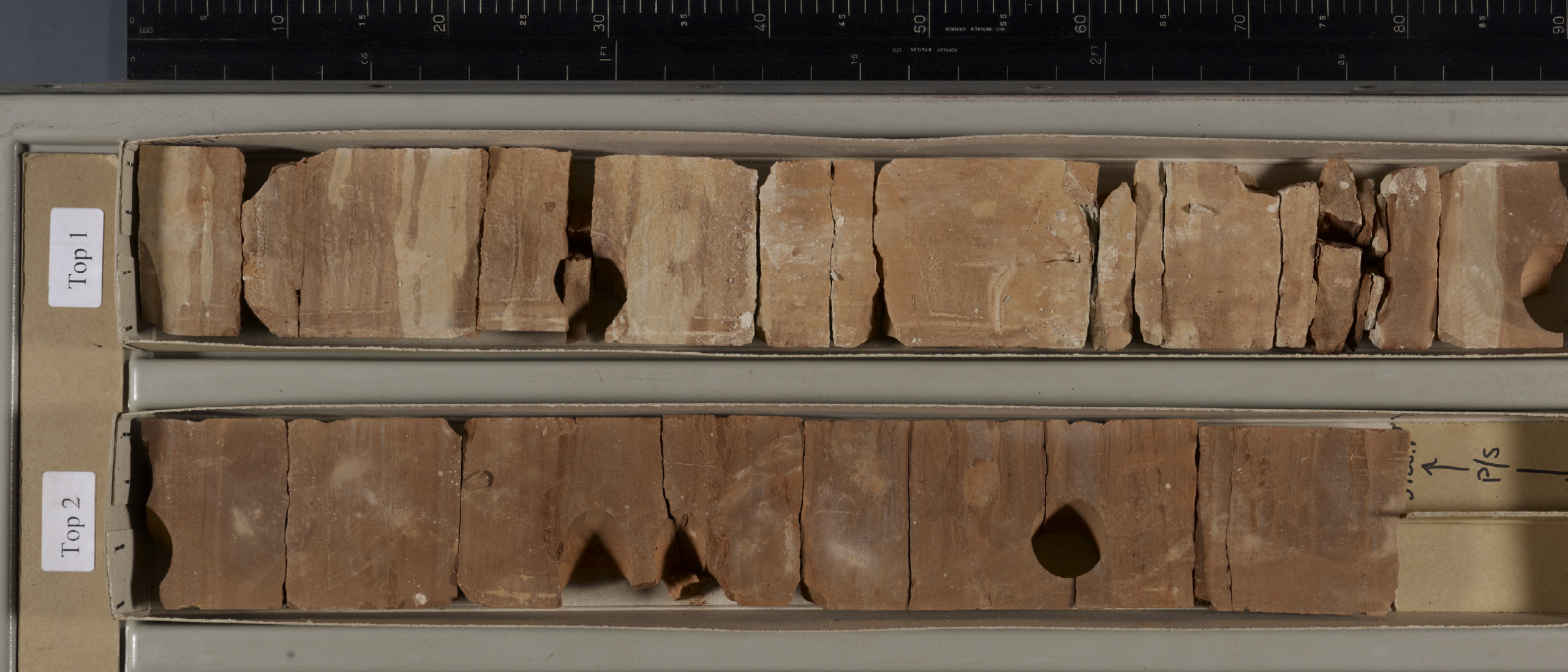
Rotliegend Sandstone, well 50/26a-2. Source: www.bgs.ac.uk.
Finding hydrogen is not the problem; producing it is…
But that is what Tellus Energy Solutions is trying to tackle

The natural hydrogen community is coming to the realisation that finding large free gas, hydrogen reservoirs might be rare, or might not be on the cards at all.

Instead, consensus is growing that ‘aqueous hydrogen’, hydrogen dissolved in aquifer water, is a more natural state for subsurface hydrogen to occur in. Both HyTerra in the USA and Gold Hydrogen in Australia, two of the most active hydrogen exploration companies, have only found aqueous hydrogen reservoirs to date. Like opening a bottle of soda, these wells may release gas when the reservoir is first exposed, but go flat soon after. Hence, large volumes of water need to be produced, gas separated, and wastewater reinjected, a process that reduces the production rate and drives up the costs.
However, with the acceptance that aqueous hydrogen reservoirs are most common, one can turn this challenge into an opportunity. Tellus Energy Solutions is the frontrunner and has come up with a simple yet innovative idea. “Don’t go for high-risk, high-reward prospects like free gas accumulations, which are not supported by data like pressure measurements or reliable production tests, but develop a production mechanism which lowers the subsurface risks dramatically,” says Jürgen Grötsch, co-founder and CEO at Tellus.
Rather than only focusing on separating hydrogen from aquifer water, Tellus aims to produce geothermal energy in addition. According to Jürgen, this does not complicate exploration: “With a bit of geological knowledge and a play concept in mind, hydrogen can be found in many favourable places.”
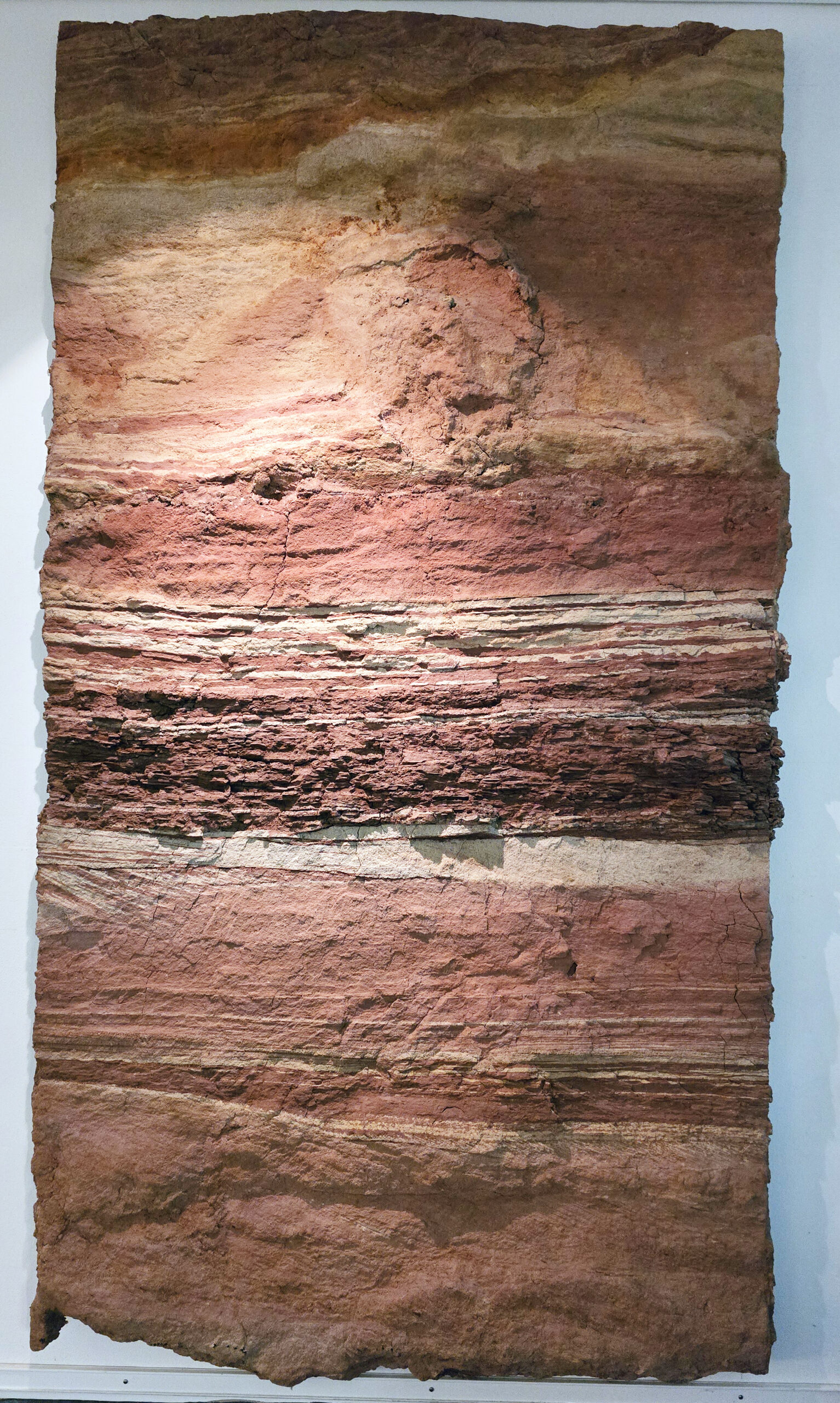
By combining play concept with regional geology, Tellus landed on Northern Bavaria in Germany for its demonstrator project. The region is underlain by Bunter Sandstone, an up to 550 m thick, lower Triassic fluvial succession. In Bavaria, the Bunter serves as an aquifer, where the favourable porosity and permeability make it an ideal low-temperature geothermal reservoir.
As for hydrogen, a large set of soil gas samples collected over thousands of square kilometers reveal high concentrations in the region. Jürgen: “Aquifers act as baffles for hydrogen; they are not complete barriers.” Hydrogen is generated in the ultramafic basement underlying the basin and partially trapped by the aquifer as it migrates to the surface.
Tellus Energy Solutions has coined its field development concept ‘Triple H’, pointing to the co-extraction of hydrogen, heat and potentially helium. The extent of the Bunter aquifer in Bavaria allows for a decentralised approach when selecting well locations, producing heat and hydrogen where it’s most convenient for the market. By drilling open-loop systems, water is produced to the surface, where membrane technology separates geothermal energy and hydrogen before reinjecting the cool water back into the Bunter. Costs will be recovered by geothermal energy production, making even low hydrogen production rates profitable. Tellus is supported by regional government authorities, local utility companies and private investors. The demonstrator project is expected to start in the second half of 2026 with the acquisition of a 3D seismic survey.