MOROCCO’S GEOLOGICAL HISTORY IN A SNAPSHOT
During Triassic times, a series of extensional basins developed along the future continental margin and in the Atlas rift system. In the Jurassic,
the basin evolved into a passive margin, marked by the development of a widespread carbonate platform. During the Early Cretaceous, the margin witnessed a major sea level fall with the uplift of the hinterland, which led to the formation of major river systems and development of basinfloor fans in the deepwater domain. A major transgression occurred during the Cenomanian-Turonian, followed by Atlantic compression as a result of the Alpine inversion from the Late Cretaceous onwards.
From a hydrocarbon potential perspective, working and effective petroleum systems have been documented in both onshore and offshore basins through oil seeps and hydrocarbon shows and accumulations encountered in wells. In the northern offshore area, a Tertiary petroleum system was proven by the recent Anchois discovery. In the Tarfaya offshore area (southern offshore), the heavy oil discovery at Cap Juby in 1969 (CJ-1), although undeveloped, confirmed the presence of active Jurassic-Jurassic and Jurassic-Cretaceous petroleum systems. The main reservoir facies tested were carbonate build-ups from the Lower and Middle Jurassic, but oil and gas shows were also encountered in Lower Cretaceous and Cenozoic sandstones. Further to the southern part of offshore Morocco, the CB-1 well, drilled late 2014, encountered gas accumulation in Lower Cretaceous turbidite systems.
Paleogeography and reservoirs
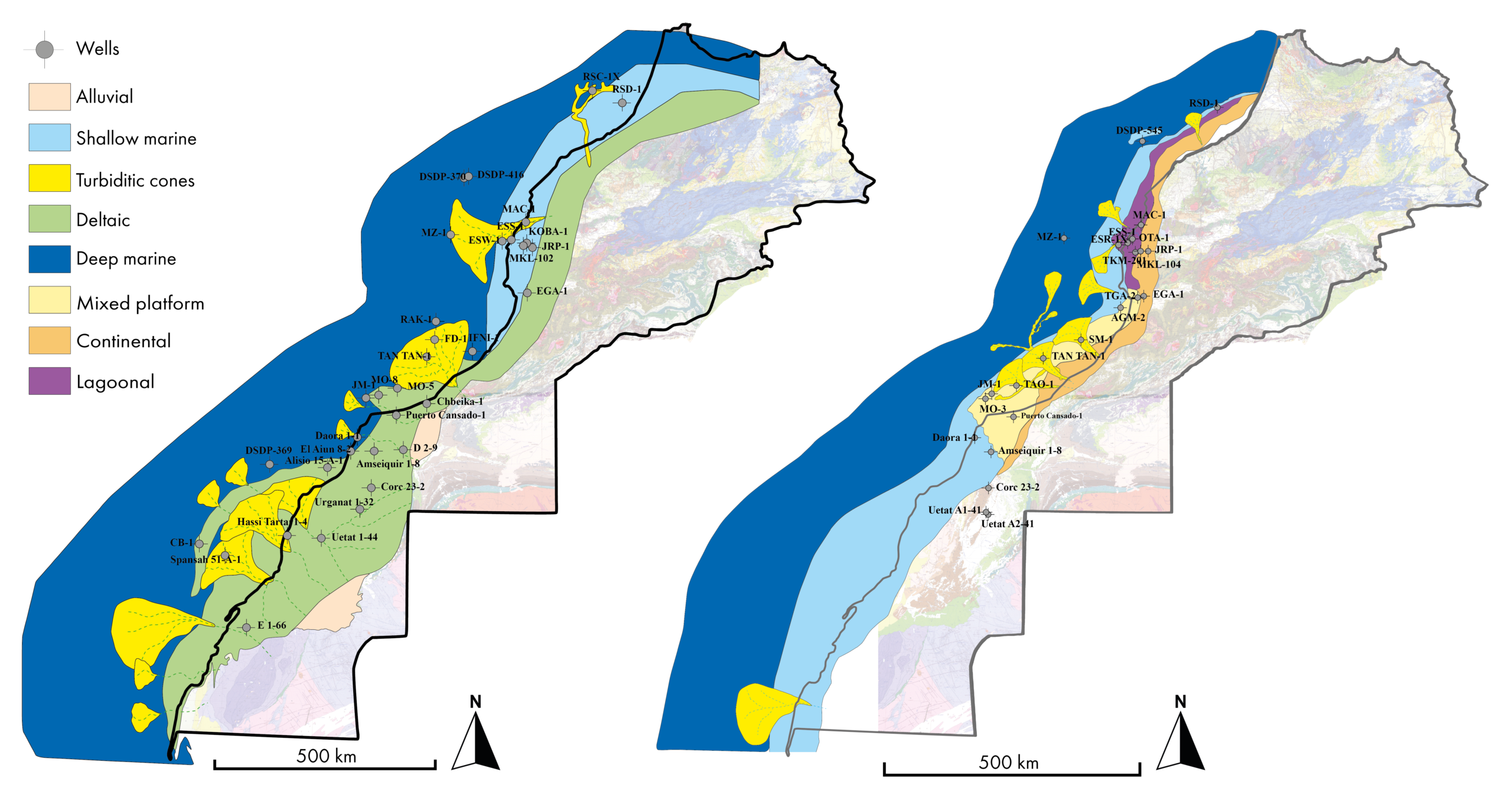
The early post-rift evolution of the Central Atlantic is recorded in the Lower and Middle Jurassic of the Moroccan Atlantic margin. Marine environments prevailed during this period, and a mixed carbonate ramp with siliciclastic shelf systems started to develop (Figure 2).
Local Reef buildups formed on the shelf edge as well as associated environments developed in the inner platform areas, with the narrow shelf acting as preferential entries of clastic sediments into the basin.
The Lower Cretaceous is marked by relatively rapid thermal subsidence, followed by the progradation of mega deltaic systems across the shelf (Figure 2). Further west, Lower Cretaceous distal sandy turbidites are either exposed in outcrops on Fuerteventura Island or were penetrated by DSDP wells.
In addition, deep-water turbidite sequences are present at Jurassic, Cretaceous, and Tertiary intervals in the Atlantic passive margin. Seismic attributes and reflector patterns support the existence of these deep marine turbidite successions.
Source rocks
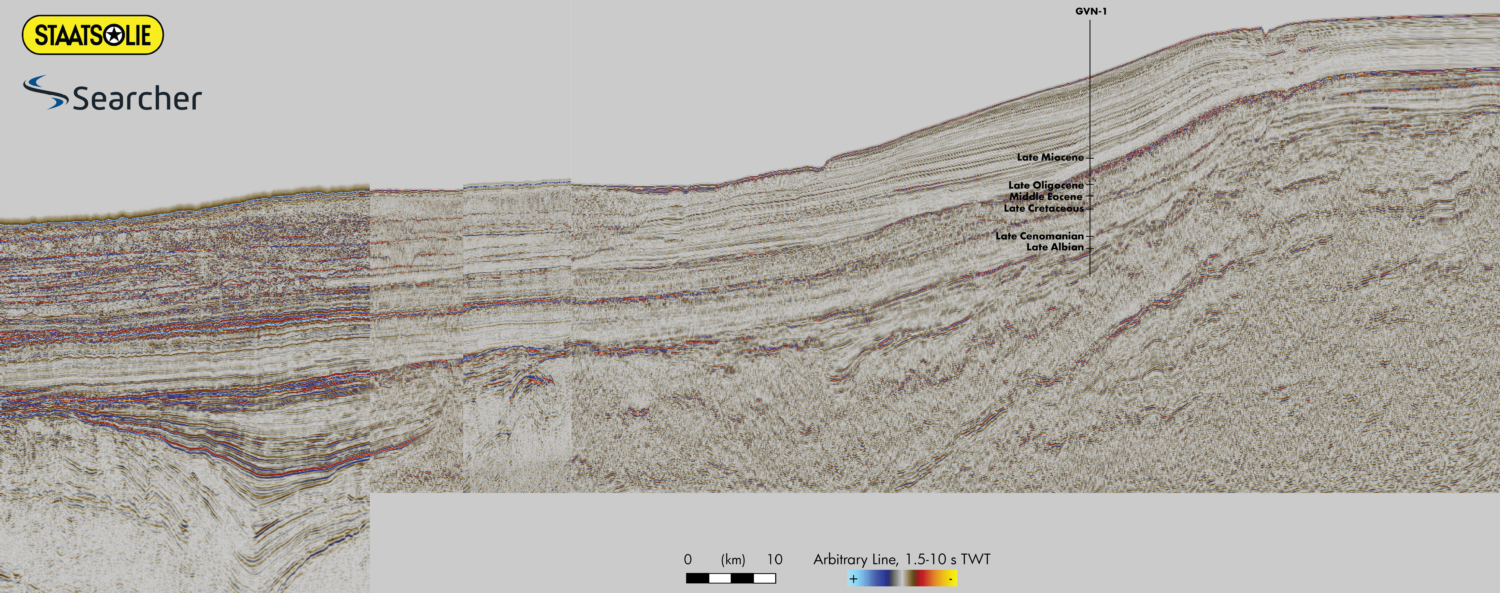
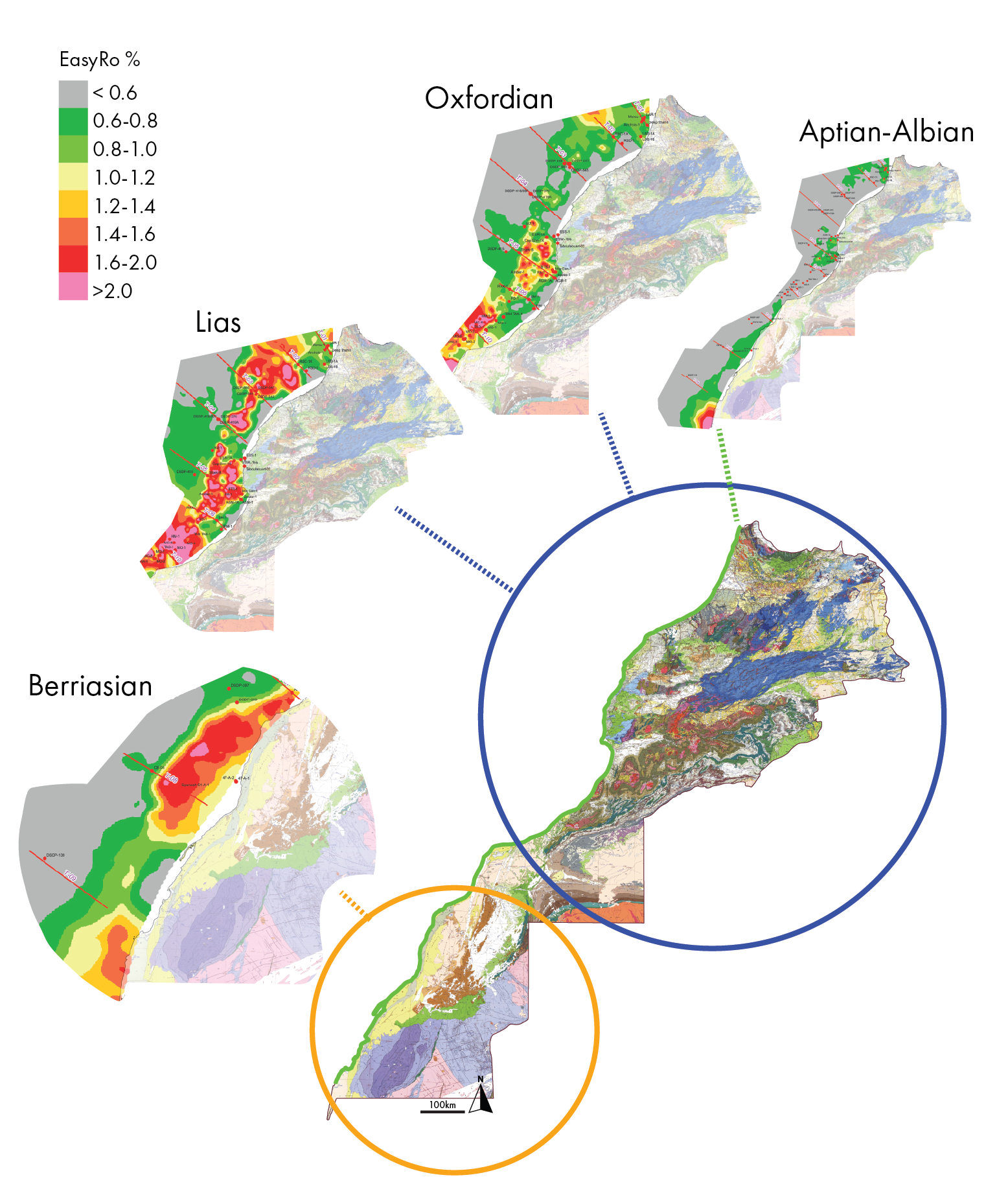
Five potential type II/III source rock intervals have been identified in the Eocene/Miocene, Cenomanian-Turonian, Aptian-Albian, Callovian-Oxfordian and Pliensbachian-Toarcian. Geochemical modelling indicates that the Jurassic source rocks are in the wet to dry gas window, those of the Aptian-Albian are in the oil window while the Cenomanian-Turonian SRs are marginally mature to immature depending on the subsidence of the area. The Eocene ones are regionally immature, however the Miocene could potentially have reached the oil window in the north through burial below the melange complexes “nappe” (Figure 3).
The growth of salt diapirs and the emplacement of the Rifan nappe had an impact on source rocks maturities in the northern segments of the margin. In the southern offshore, deposition of the Boujdour delta system has particularly affected Callovian-Oxfordian and Pliensbachian-Toarcian source rocks through increased burial.
Furthermore, the Berriasian has recorded a maximum flooding surface, providing the ideal boundary conditions for the deposition of a potential source rock with good maturity at the platform, outboard settings, and in the oceanic domain.
Plays
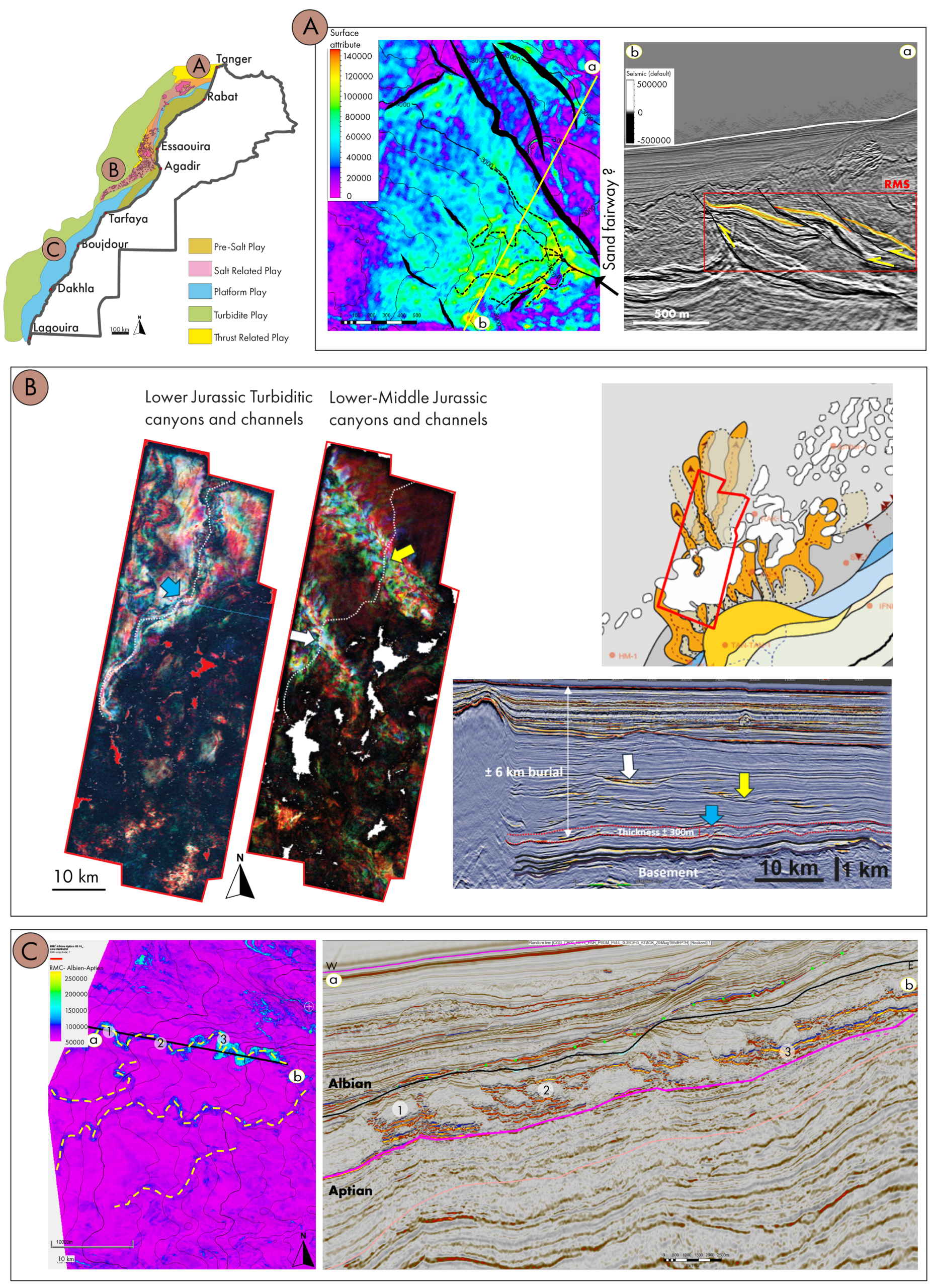
Various exploration plays have been identified along the offshore Atlantic margin. These plays have been developed thanks to intensive 2D and 3D seismic acquisition, processing and reprocessing over the past two decades. They are mainly associated with turbidite systems, carbonate platforms, thrust belt movements (nappe), and salt tectonics. The latter has also led to the formation of a large salt province (Figure 4).
The thrust-related play is identified in the northern part of the Atlantic margin, where the dominant structural traps are related to the Alpine Orogeny. In fact, RMS amplitude anomalies extracted from seismic data within the nappe highlight channelised features and sand fairways indicative of potential hydrocarbon reservoirs. These anomalies, along with structural features such as thrust-bound traps and imbricate thrust sheets, suggest favourable conditions for hydrocarbon entrapment. The observed patterns support the presence of reservoir deposition in a deep-marine setting, further substantiated by petrophysical data from surrounding areas such as the Gharb Basin, which demonstrate high porosity and permeability in Miocene sands.
Post-nappe targets were successfully tested by the Anchois discovery.
The main targets in the Pre-salt play are folded Paleozoic and faulted Triassic deposits. This play represents an extension of the onshore basins, where Triassic and Jurassic fields are producing oil and gas.
The salt-related play is well developed, particularly in the Safi – Agadir segment, where several salt-related structures have been positively tested by previous wells, indicating oil and gas shows. The salt features include salt diapirs, canopies and toe thrusts.
The deepwater turbidite systems, mainly of Tertiary and Cretaceous age, have also been successfully tested by the CB-1 well in deeper settings in the southern offshore. This well encountered 14 meters of gas net pay in the Valanginian-Berriasian interval.
The carbonate platform play, where the primary target is of Jurassic age, has been positively tested by several wells along the Atlantic Margin. A secondary objective of Hauterivian age, consisting of reef build-ups, has been identified in the Boujdour offshore area.
WHO ARE WE?
ONHYM, the national agency for hydrocarbons and mining in Morocco, plays a central role in promoting and developing the country’s energy resources. Through strategic partnerships, high-quality geoscientific data, and a reliable investment framework, ONHYM offers a stable and attractive environment for upstream exploration in Morocco and direct access to high-value subsurface data by organising free data rooms upon request. It contributes actively to strengthening national energy security and advancing regional energy cooperation. Through its sustained efforts, ONHYM is contributing to Morocco’s emergence as a regional partner of choice in Africa’s upstream sector, fostering South-South cooperation and energy integration.
For discussions related to the country’s legal, fiscal and investment framework, as well as asset promotion and management, connect with:
Mr. Amrouch – Director of Investments Promotion and Assets Management amrouch@onhym.com
For data access, technical exchanges and exploration-related discussions, connect with:
Ms. Benarchid – Petroleum Exploration Director benarchid@onhym.com