
“When we start shaving off millions of each well, then we are talking business,” says Iain Whyte from Islay Subsurface. “That’s the prize we’re all after.”
But how to win that prize? That’s what Iain and his colleagues have looked into recently, through a collaboration with the Net Zero Technology Centre (NZTC) in Scotland.
“First of all,” Iain says, “we need to be increasingly aware that a proper subsurface evaluation is key to making sure isolation plugs are set where they really should be. What I mean by that is that not all sands need to be isolated from one another. There has to be potential for sustained flow, and often stringers with little or no connected volumes can be shown to have limited potential in that regard. That is the first part of the abandonment puzzle; only emphasising the zones that really require isolation.”
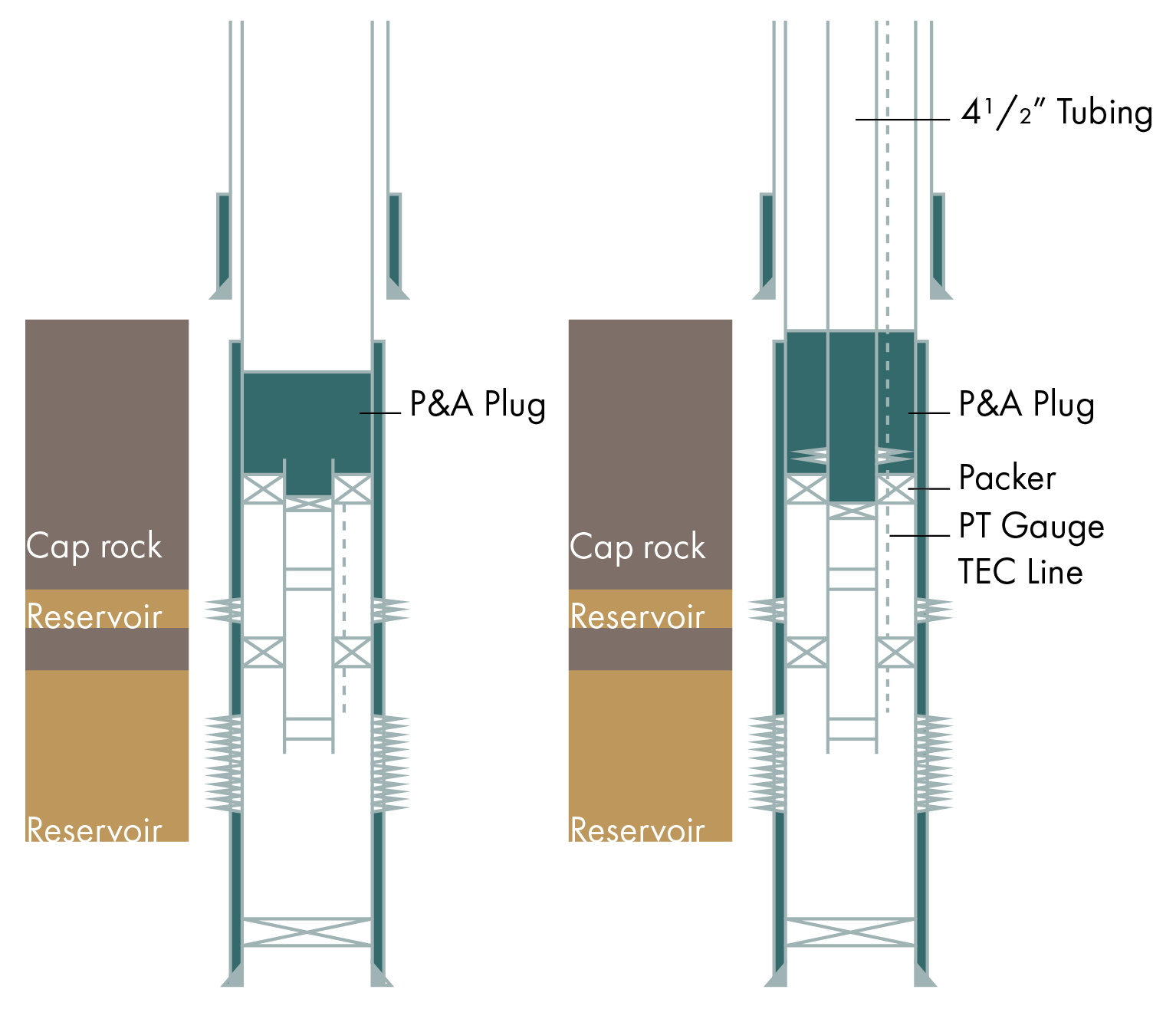
Then there is the technology part of well abandonment, which centres around the question if there is a tool that enables companies to look behind casing whilst running it through the production tubing. The prize? “If we can show that the cement is properly sealing the formation behind casing, we might be in a position where the plug can be set through the tubing itself,” explains Iain. “That way, we eliminate the need to pull the tubing out of the hole.”
And because of the implied cost savings for leaving the tubing in place, a range of companies have embarked on developing a tool that can do exactly this, from the established major service companies to new kids on the block.
“We identified eleven companies that are active in this realm, even ones that had no previous downhole tool experience,” Iain says. “The first phase of our project was to make a “Market Landscape” evaluation of the different technologies used by these manufacturers, varying from acoustic, nuclear, electromagnetics to X-ray, and how they process the data.”
Then, a subset of the vendors was selected to be tested in a test well in Norway, where markers had been placed on the outside of the casing at unknown depths for the tools to pick up. “Some of the log responses are far superior to the conventional methodologies out there,” says Iain, who is not yet in a position to share the results of the tests. The tools detected synthetic and natural defects behind the casing, and the Top of Cement. This was performed through both centralised and decentralised tubing strings in the test well.
“Let me put it this way,” he says. “The advancement of this technology helps enable Through Tubing Abandonment, which can save a lot of money, time and complexity. Suddenly, not everything needs to be done through an offshore rig. Rather, a lighter intervention vessel can be used. In the case of a 84 wells decom project in West Africa, we went USD 492 M to USD 342 M as a result.”
“Can you now imagine why I’m saying that this approach can make you look like a hero?” Iain asks rhetorically.