
Two things came together for bp in the late 1980s and the early 1990s. First, there were significant oil discoveries in Colombia. Then came the Apertura in Venezuela in the early 1990s, a government drive to bring in international oil companies to revive oil production following a period of nationalisation. “What if we can replicate the success in Venezuela?” bp executives must have asked themselves at the time.
It led to a hopeful entry into a country known for its ubiquitous hydrocarbon resources. bp was awarded exploration acreage in the eastern part of the Orinoco Delta, as well as a field that had been in production but had significant redevelopment potential – Pedernales. But did it become the success that was hoped for? No. As one of the people I spoke to for this story, “it was a great time for all who were involved, but a disaster for the business.”
In this article, the story of bp’s redevelopment of Pedernales is told through the experience of some of the people who were directly involved: Graeme Bagley, Dirk Bodnar, David Latin, Oscar Miron and Juan Oropeza.
“The next big thing”
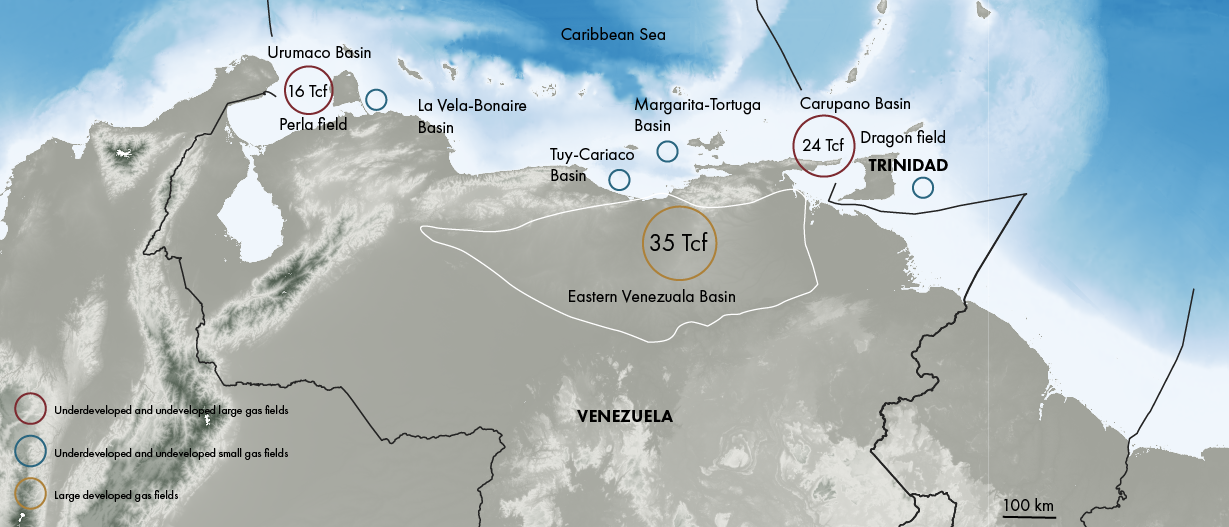
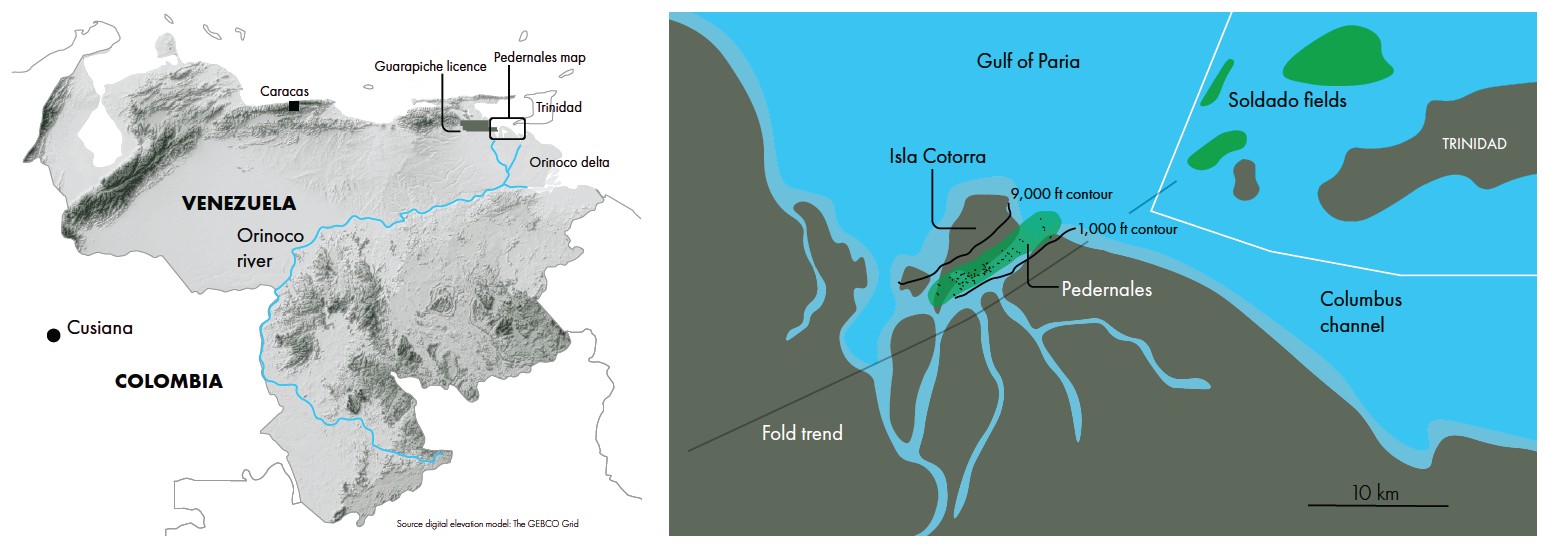
“The big next thing.” That is what Venezuela was going to be for bp when the country opened up in the early 1990s – the so-called Apertura. Tony Hayward, who had overseen the exploration successes in Colombia with the discovery of the Cusiana and Cupiagua fields in the Eastern Cordillera foothills, saw the potential. He believed that South America was going to be the next big thing. As such, he was a driving force behind securing acreage in a similar structural setting to what he had been exploring in Colombia: The fold and thrust belt of Serrania del Interior, and the northern Orinoco delta in the eastern part of Venezuela.
And bp succeeded; the company was awarded two licences: One big exploration block called Guarapiche, and a licence that covered the abandoned Pedernales field in the northeastern part of the Orinoco delta. This story is mainly about how the redevelopment of Pedernales unfolded, seen from multiple perspectives.
THE HISTORY OF PEDERNALES
The Orinoco Delta has long been known for its oil slicks. The story goes that even Columbus, on his travels to discover the Americas, had the hull of his ship tarred using oil that could be found locally.
It may have been the same slicks that ultimately led explorers to discover Pedernales. This took place in the year 1933 by Creole, Exxon’s affiliate in Venezuela. Remote as it is, at least the explorers did not need to venture into the delta far; the field is located just at the coastline of the Gulf of Paria on the island of Cotorra in the mouth of one of the Orinoco tributaries.
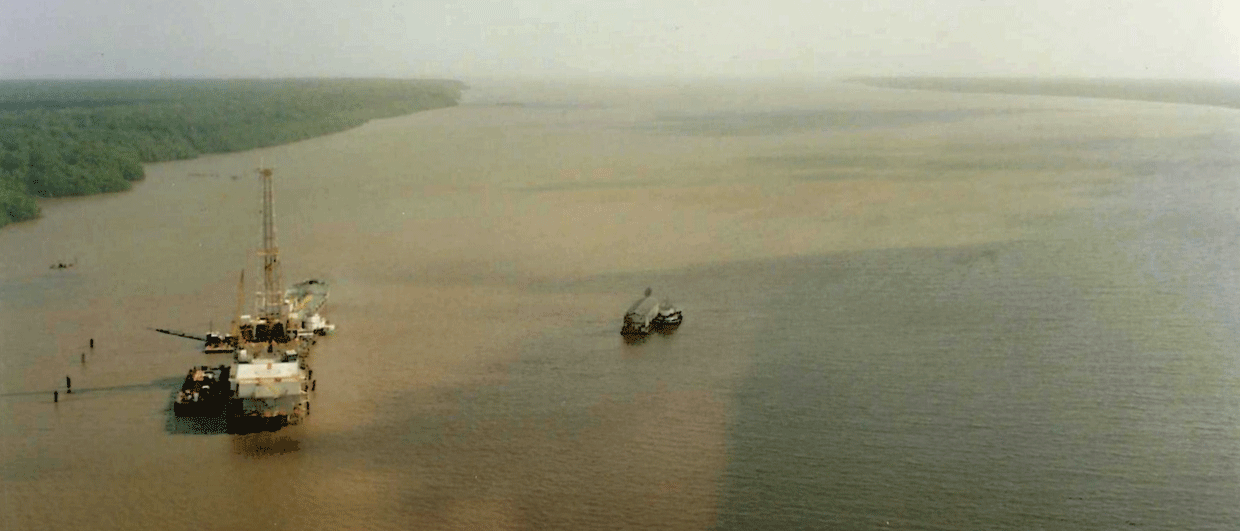
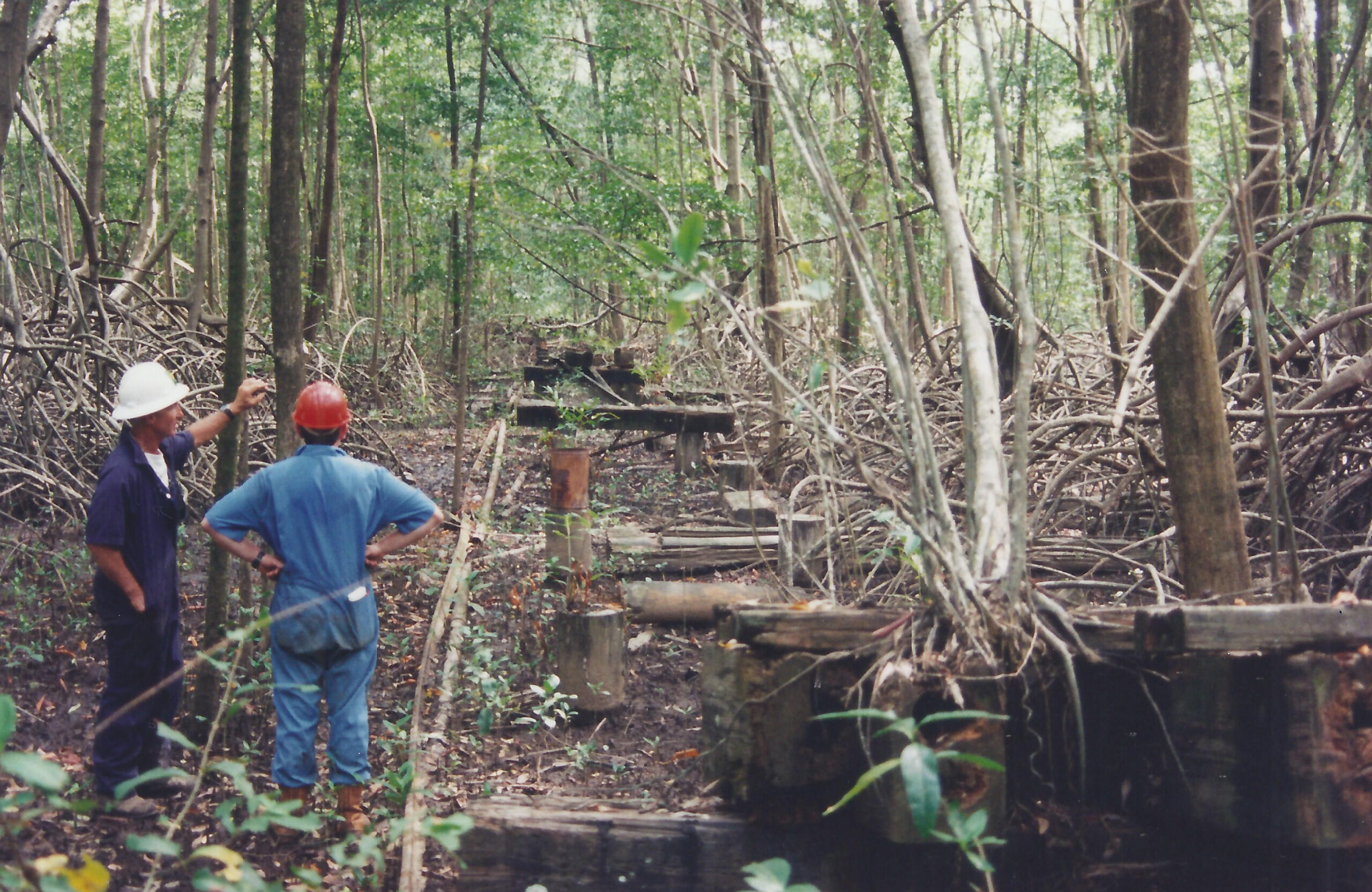
To facilitate drilling wells, Creole used an effective and inventive technology; they put a drilling rig on a railroad track that allowed quick movement from one drill location to another. Remains of this track can be seen in one of the photos included in this article.
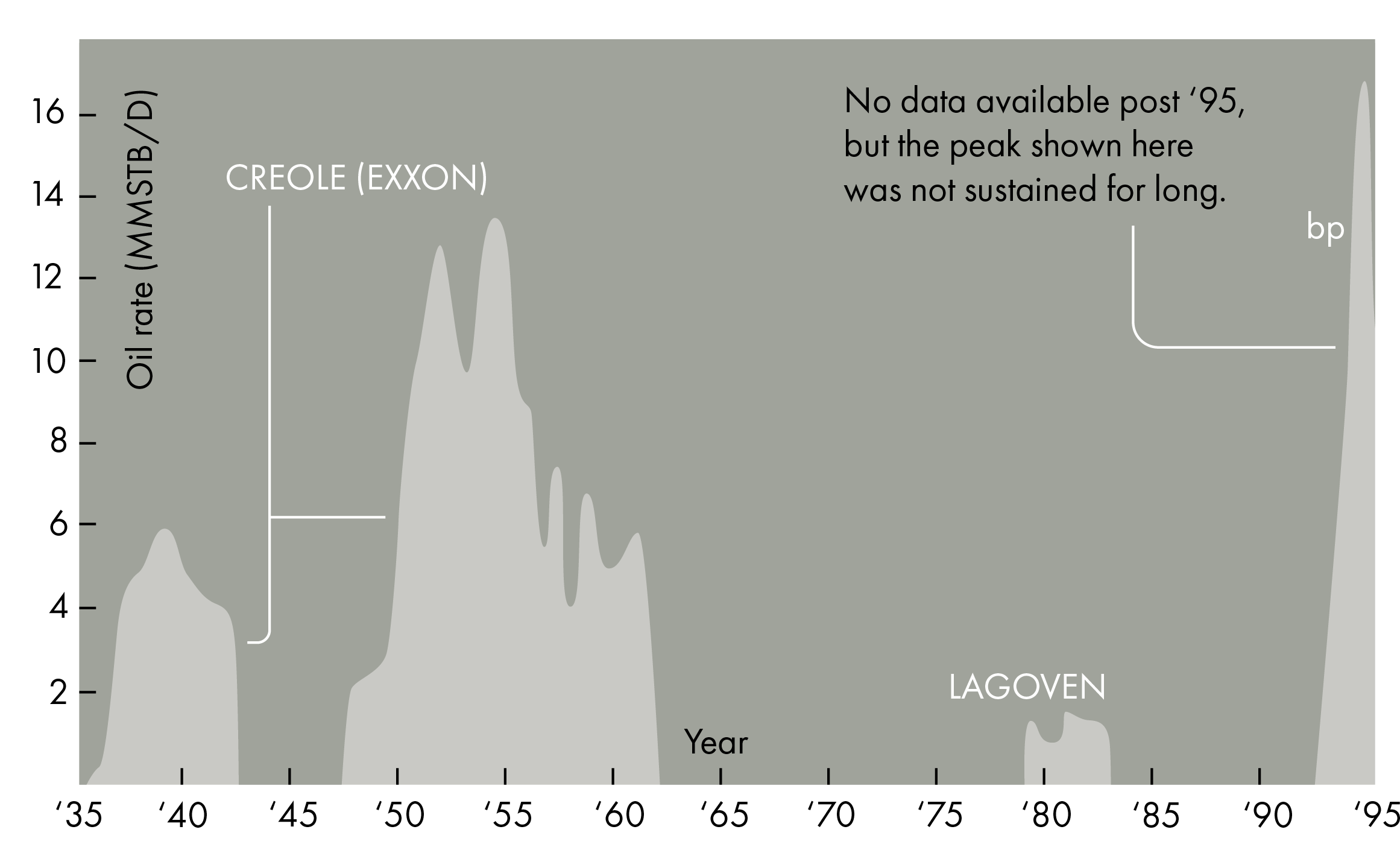
With a pause in production during the Second World War, German U-Boats were seen in the area. Creole produced oil from Pedernales from 1935 to the early 1960s, using 44 producers in total. Once the field was nationalised in the early 1970s, Lagoven, one of PDVSA’s affiliates, operated the field for about five years using 17 producers in the early 1980s. When bp came along in 1993, the field had been shut in for around ten years.
An interesting story about Pedernales is that Shell also had a look at the opportunity when the Apertura was announced. But they apparently dropped the idea once they had looked at legacy production figures. Did they already see that there were issues to be expected?
A rush development
“The first phase of the Pedernales development was a success,” says David Latin, who was in Venezuela to lead the reservoir engineering part of the second development phase for bp. “The first wells twinned the best of the past and were drilled at high angles from mobile drilling units. These wells were tied to a simple production barge with a total 20,000 bbls/day capacity. This initial success created a template for how things can subsequently derail.”
Followed by the first production success, there seemed to have been a rush to proceed to a more full-scale development. However, data to support this decision were not even ready yet; seismic had been acquired, but no drilling targets had been identified.
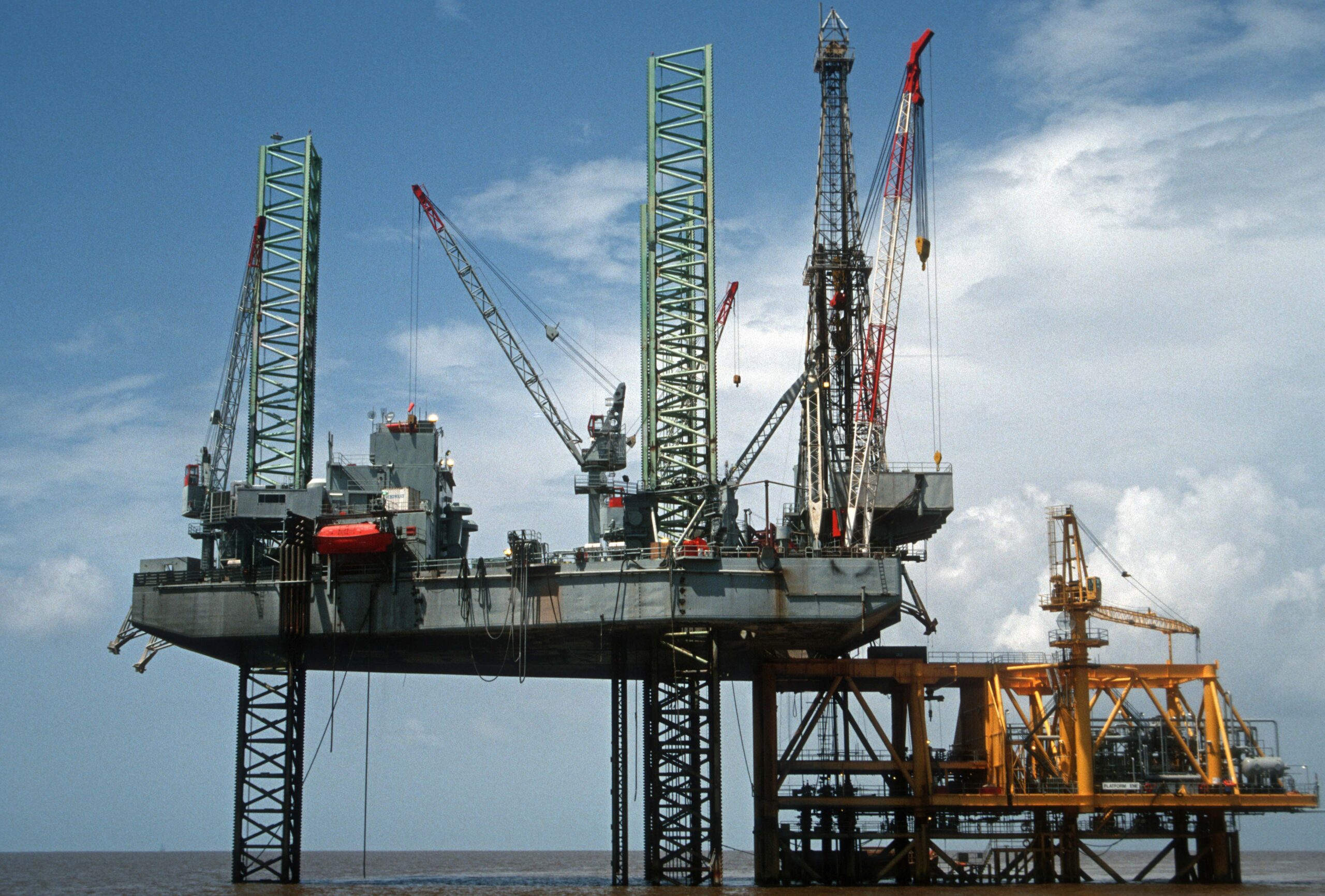
Still, the decision was made to progress with the second phase of the development, which was also going to be much more expensive: Jack-ups were towed to the field, with day-rates that did not justify the later output of the wells.
“And whilst I was playing catch-up to match old wells with the new seismic, the new wells were already being drilled,” remembers Graeme Bagley, who worked on Pedernales as a geophysicist from 1996 to 1999. “Which means that most of them were actually being drilled blind.”
In addition, production histories of wells from previous developments seem to have been ignored, too. In other words, the second phase of the development was too rushed, and probably more driven by an expectation that things were going to be big than by a solid understanding of how this would actually be realised.
Then, the first well results that came in as part of the Phase 2 development suggested that the field was heavily compartmentalised. This led to some eyebrows being raised for sure. It was the time when production geologist Dirk Bodnar joined the team.
THE PEDERNALES FIELD
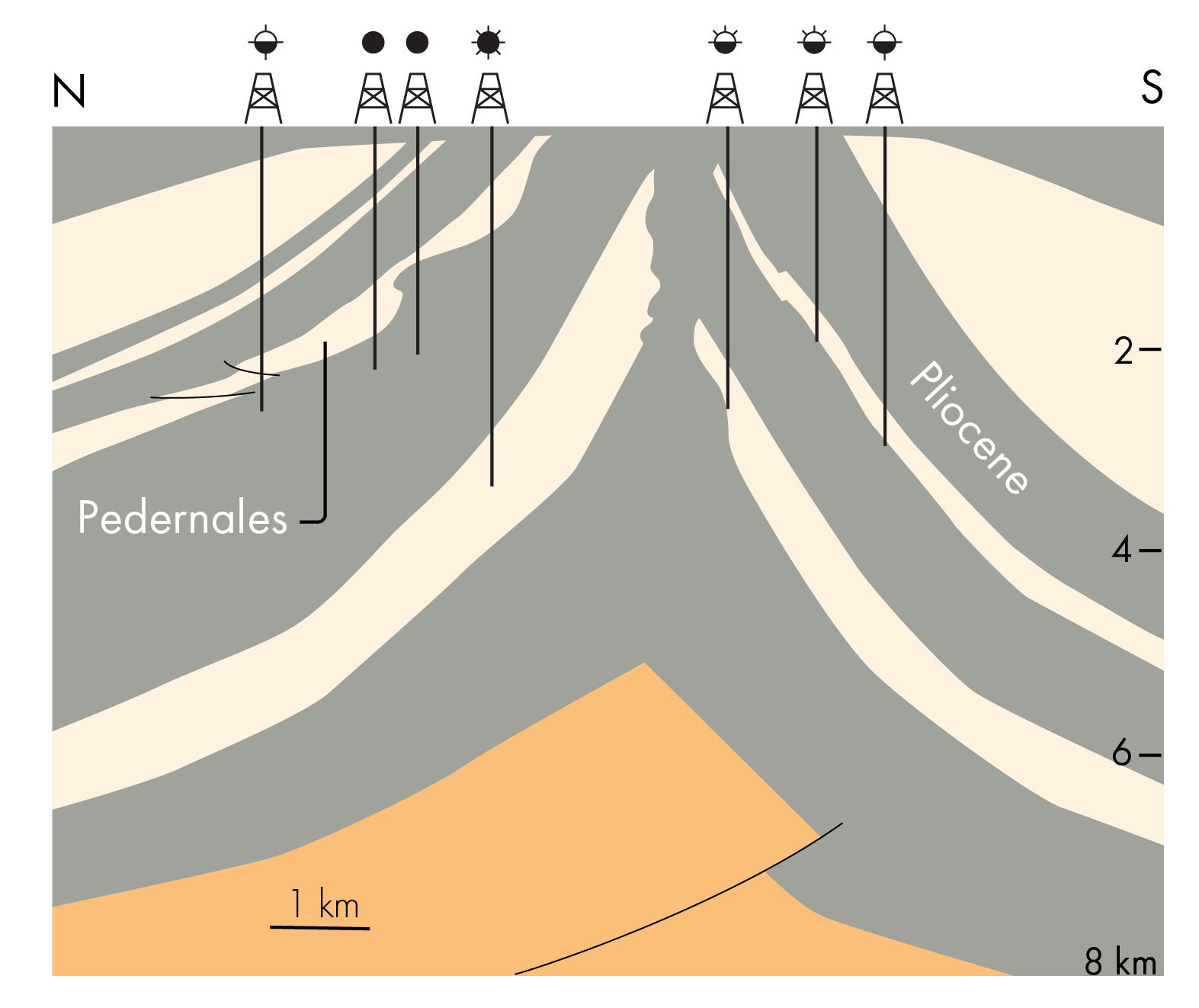
Oil in Pedernales is reservoired in Pliocene paralic sandstones deposited by the paleo Orinoco Delta. The field is situated in the northern limb of a steeply dipping (45°) and decapitated anticline, which trends in a WSW-ENE direction. The steep fold may have a mud diapir core, but a deep-seated thrust fault might also explain the structural style.
“One of the questions we had,” said Graeme Bagley, “was about the topseal. We could not really identify it, the more so because the top of the anticline was eroded. But in some ways, that question became less relevant because we saw that the slumping of the reservoir had created a lot of intermediate seals on the flanks. It didn’t need an ultimate topseal.”
A report from 1999 estimated that Pedernales had an OOIP of almost 1,000 MMbls, of which around 60 MMbls had been produced by the end of the 1990s. The oil has an average gravity of 21.5.
From Alaska to Caracas
“I was working on Alaska’s North Slope as a production engineer fixing wells for bp,” Dirk says. “Wireline, slickline and coiled tubing jobs. Then, I got a call from a colleague in Venezuela, when it was -45° C outside.”
His colleague gave Dirk a run-down of the average weather in Venezuela. “Oh, and by the way, we need a production geologist too,” he added. “But I have to warn you, the Pedernales field is known as the graveyard for production geologists…” “I’m always up for a challenge,” Dirk said, so he decided to pack his bags in Alaska and move to warmer climes.
Was it a graveyard job? Unfortunately, it was…
“We P&A’d all the old well heads from the Creole development,” said Dirk, “whilst drilling new development wells in the old Creole area at the same time. But when the new well data came in, the RFT data suggested that the pressures were way different, and the fluids were way different too. “We’ve got a bit of an issue here,” he said. “It’s not a good sign.”
In order to find out more about what was happening in this field, Dirk got an idea. “From the Pedernales area, we could see lights in Trinidad and wondered what was there. It turned out to be the Soldado field that was operated by Trinmar at the time. We flew over one day to visit the company and learn about their experience operating the field, as we expected it to be the same reservoir. When I was reading through the reports they allowed us look into, I quickly realised that they were having the same challenges. We should have come over a lot sooner.”
What was the issue?
Compartmentalisation. “The reservoir of the Pedernales field is a Pliocene paralic interval,” explains Dirk, “deposited by the paleo Orinoco Delta. And while the delta was prograding, there was a constant formation of little growth faults. It is all those little growth faults that separate the sands of the field into the compartments that we know exist through our production and RFT data. The seismic only revealed so much of this architecture, unfortunately.”
Graeme Bagley adds that it is not only the depositional growth faulting that proved detrimental to reservoir connectedness, it is also the faults that developed as the anticline formed. “As such, the reservoir is like a chessboard,” he says.
“We tried many different solutions to get more oil out of the wells, such as gas injection and huff and puff,” says Dirk. “But it didn’t work. You’ve got billions of barrels in place, but it is not economic to recover.”
“Years later,” continues Dirk, “I drove in the Henry Mountains in Utah, looking at the Upper Cretaceous Ferron Sandstone Formation and saw immediately that this was an analogue for Pedernales; mouthbars, all river-dominated sands, and a lot of small growth faults.”
Dirk used his experience on Pedernales a lot in subsequent training courses he gave for bp. And it was in there as an example of what you should not do.
The Pedernales story from a Venezuelan perspective
Pedernales was not the success that bp hoped for, but that doesn’t mean it had no impact whatsoever. It surely had an impact on the many locals who were hired by bp. I spoke to two of them, Juan Oropeza, who currently lives in Portugal, and Oscar Miron, who has been based in Edinburgh for a long time. Both joined bp in their early careers.
“It was amazing to join an international operator like bp,” says Juan when we meet on Teams. With a background in mathematics, Juan initially joined PDVSA in 1995. “I was hired by Lagoven,” Juan says, “which was one of the three PDVSA operating companies.”
At Lagoven, Juan took part in a two-year training programme for new entrants, with mentoring from the company’s top specialists, reviving an idea pioneered by the former Creole Oil Company of Venezuela. “In other parts of the business, we were jokingly called “La Escuelita de Lagoven”, or “The Little School of Lagoven.” But it was great,” he says. “It was an intense but meaningful programme, with the additional benefit that we were submerged in an English-speaking environment.”
With that in mind, when bp came to the country and started advertising for jobs, Juan didn’t need to think long. “Everything aligned,” he says, “as they were specifically asking for people with some experience but not too much. So, I applied and got the role.”
“One of the main reasons why it was so insightful,” he says, “was the fact that I became part of an international operator rather than a national one. That meant that I was suddenly exposed to people who had experience in the North Sea, in Canada and in the Middle East, and to hear these stories was just brilliant. In addition, information was very openly shared. In PDVSA, economic data were not really shared.”
“In international companies,” Juan adds, “there is more of a portfolio that is competing against each other.” He particularly remembered the system of peer reviews in bp. “When you present something about the field you are working on as part of a peer review meeting, they don’t only check your technical capabilities, but also how it compares to other assets around the world. That is an insight that you didn’t have in PDVSA, because everything was local. Your biggest hurdle was the minister.”
“It was not easy to make the Pedernales field economic,” Juan continues. “Whilst we were familiarising ourselves with new tools and new ways of drilling, I knew that the bosses were getting headaches around the question of how to make this field work.”
“Until you have your first measurements, you just have an aspiration. And that became a challenge when people started to realise that the wells did not sustain the initial production rates very long at all, with some dying in a couple of years.”
“The idea of drilling long deviated wells to tap into multiple compartments at the same time was good on paper, but the reality was different,” adds Juan. “Lots of things happened that compromised the wells, such as tool failure and fishing, water breakthrough, gas, and hole instability, with costs escalating with each intervention that was needed. There was the technological promise, but it was beaten up by reality.”
Oscar Miron joined the Pedernales team almost straight from university. “I worked as a wellsite geologist for PDVSA for three months,” says Oscar, but when I saw bp was recruiting it seemed a really good opportunity, as I found the corporate speed at PDVSA quite slow.”
Oscar was thrown in at the deep end and started interpreting the seismic data that had just been acquired. “It was a challenging dataset to interpret,” he says. “Land data is always tricky, but in this case, the way the data had been acquired didn’t add to that. Instead of cutting straight lines through the forested island, it was somehow decided to do it in a step-wise manner, such that you wouldn’t see a long line cut through the forest and potentially damage the fragile environment. Maybe with the best intentions,” says Oscar, “but when you know how quickly vegetation re-establishes itself in that part of the world, it is a bit silly to try and make your path less visible. The more so because this way of acquisition had a detrimental effect on the quality of the seismic processing.” Graeme adds to this that much longer offsets would have been required to image the steep limbs of the Pedernales anticline better.
Oscar had to plan the locations of new wells to be drilled based on the seismic data he was looking at. But because the imaging was simply not good enough to map the individual sands, drilling a new well could be considered a blind test,” he says. “Sometimes we found sands, sometimes we didn’t.”
“VENEZUELA HAS SHAPED ME”
Below are a few excerpts from a short impression David Latin wrote following his experience in Venezuela.
Caracas, back in the mid 1990s, was a very exotic, chaotic, exciting place to be. A delightful mix of massive old American cars, new Toyotas and multi-coloured buses. A real melting pot of indigenous Amazonian and Caribbean, deep-seated European and more recent North American influences, which spread to clothing, music, cuisine and sports – everything..
The bp office was in El Rosal, on the large street Francisco de Miranda. A pack of us used to go and get coffee and empanadas every morning from “The Miserable Git” and at the end of the day wind up quite often in one of the local tavernas for a Polar beer or two. Just along from the office was a highly fashionable and expensive Lido shopping centre, which contained the Lido Day Spar, a fitness gym. It was here that we used to go at lunchtimes to stay fit for our regular excesses and enjoy mixing with the locals and aspiring Miss Venezuelas. It was here that I met my wife and mother of three daughters, in an aerobics class!
The weekends and holidays were marvellous. Trips to the nearby village of El Hatillo, with its sloths, small shops and pizzerias. Adventures further afield included going to the German-influenced Colonia Tovar, or seeing the Andes in Merida or the beautiful white-sanded islands of Los Roques, or Morrocoy to drink Cuba Libre (Rum and Coke) and eat arepas filled with shredded shark or “reina pepiada” – chicken with avocado.
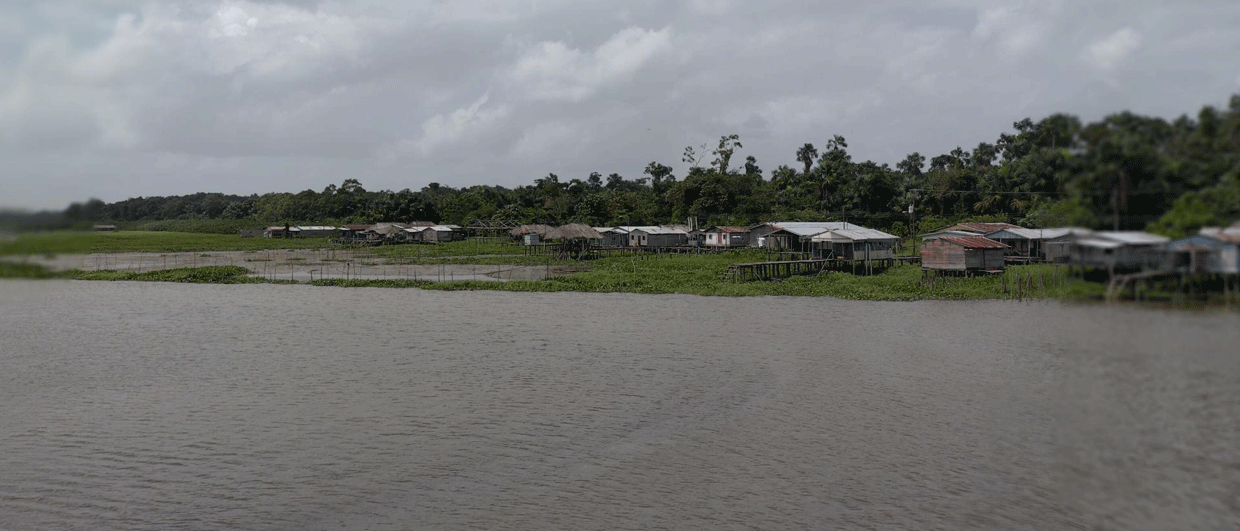
For me, working on Pedernales reminds me of river banks and mangrove swamps, filled with scarlet Ibis, huge flying and crawling insects and giant snakes and where the waters hide sting ray, electric eel and pirañas. I felt like some sort of Indiana Jones when I used to go down there to visit “The Orgullo” (translated as “The Pride”), bp’s production barge. The first time I went, much to my embarrassment and the amusement of others, my mobile phone was lost in the swirling and murky currents below.
Exploration
As most of bp’s work was being absorbed by Pedernales, the company also had an exploration licence that covered the area immediately west of the field; the Guarapiche Licence. This area, which is just as wet and inaccessible as the area around Pedernales, was mostly selected because it also forms part of the Venezuelan fold and thrust belt, where bp had been so successful in Colombia. However, the terrain prevented drilling at any random location. “It was so difficult that the terrain more or less determined where a well could be drilled, rather than solely driven by subsurface data,” says Graeme. “I believe that there is still a hoover craft stuck in the delta somewhere, which was used to get bp executives to the rig site at some point.”
The end, or not?
In 2000, about six years after the start-up of production from Pedernales, bp sold its share in the field to Perenco. “Looking back,” David Latin said, “it would have been better to drill vertical wells and small bird-feeder style production facilities, instead of getting expensive rigs in.”
The timing of the sale to Perenco may have been a blessing in disguise. It was a year after Hugo Chavez came to power, which was the starting shot for most Western companies to ultimately leave the country anyway.
Most of the expats were sent to other parts of the world as bp ceased operations in Venezuela, but sadly, the majority of local hires were made redundant, including Juan and Oscar. Juan joined ConocoPhillips, the company that was one of the few that developed a new field from scratch, with good reserves and good production. “That’s why the company is still fighting in International Courts,” Juan says, “because it was all nationalised when the field was about to start production. It was one of the most controversial aspects of the nationalisation.”
“I hope that when companies return to Venezuela,” Juan concludes, “this collaboration will have a longer lifespan, allowing for the flourishing of a strong ecosystem of national entrepreneurs with talented people, providing services and innovation within the country. A local ecosystem that would serve as a breeding ground for future Venezuelan champions on the international stage. Unfortunately, this process was interrupted the first time around, and many didn’t survive the accumulation of unpaid debts with the new operators.”
But what happened to Pedernales following Perenco’s purchase? That part of the field’s recent history is actually not well-known. One website writes the following: “The Pedernales oil field is run by Petrowarao, a company which was created in 2006 with 60 % capital investment and ownership by Venezuela’s PDVSA and 40 % by the British-French oil firm Perenco. The field has 26 active wells and is largely based on floating platforms. In 2010 and before the recent collapse in oil production, Pedernales produced around 5,000 bbls/day.”
And when looking at recent Google satellite imagery, it even seems as if some of the Pedernales infrastructure is still there, and it doesn’t look as rusty as it might be. Maybe there is still some production ongoing? It could be the topic of another story.