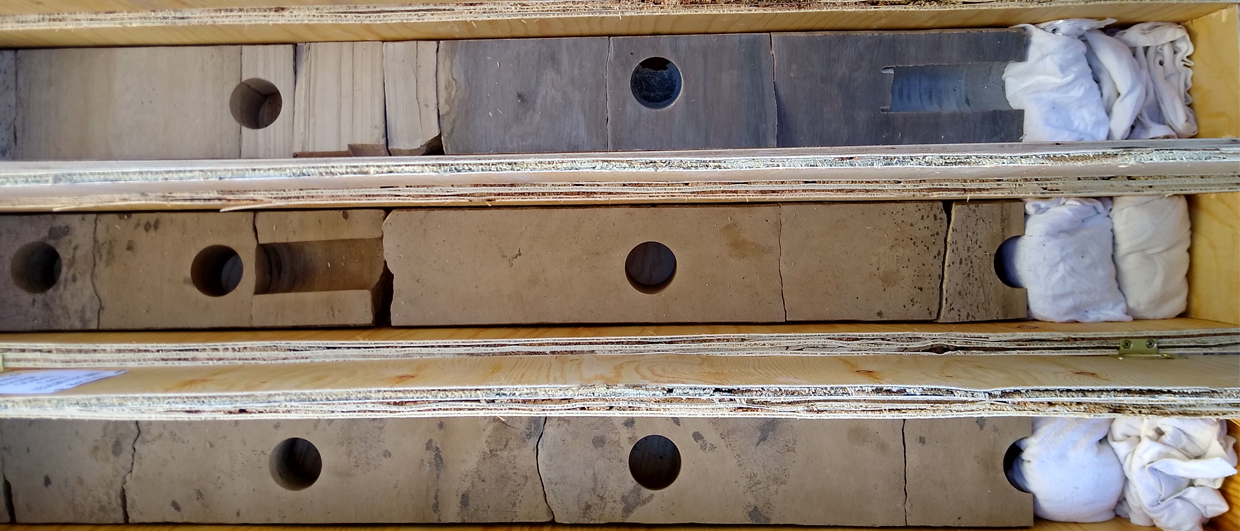

The Dutch subsurface is well known for its gas resources, hosting the world-famous Groningen field. What is less well known is that there is plenty of salt, too. These evaporites not only form a very effective seal for the Groningen gas; they also form a target in their own right.
The main geological strata hosting evaporites in the Netherlands are the Upper Permian Zechstein and the Triassic Röt Salt. In terms of thickness and volume, the Zechstein wins, but it is the Röt that formed the source for a large-scale salt solution mining operation in the east of the Netherlands for many decades, based on the Buurse and Twente-Rijn concessions. Here, the evaporites occur at a relatively shallow depth of around 400 m.
With room for expansion being limited, operator Nobian decided a few years ago to shift operations to the deeper Zechstein evaporites that are also found in the area where the processing facility is currently located. The depth of the Zechstein salts in this area (the Isidorushoeve concession) is around 900 m.
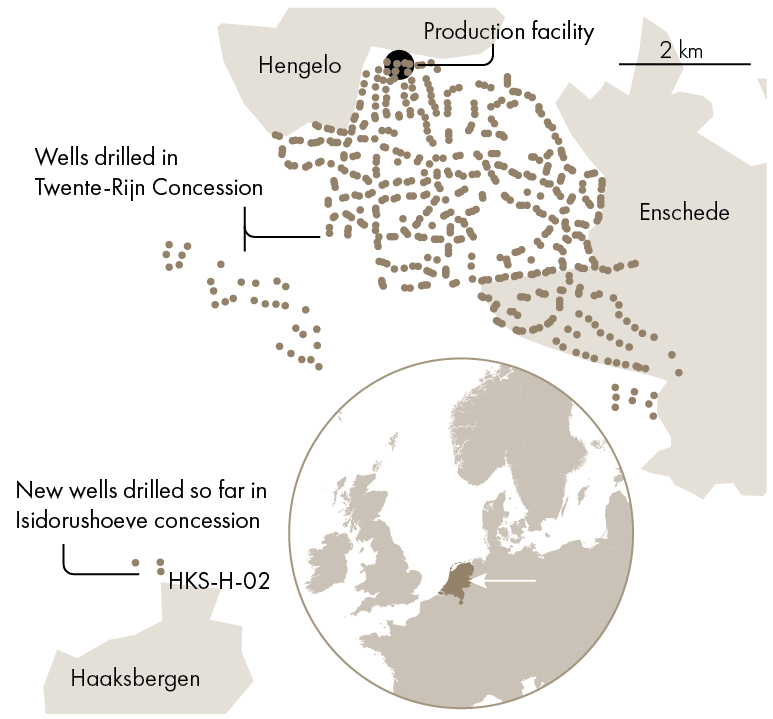
As such, the company has embarked on a project to drill and core a total of eight wells, targeting the so-called Z1 Werra Formation evaporite. The first well was drilled in July this year, with the final one planned for mid-2026. Similar to the Twente-Rijn project, the Isidorushoeve concession will rely on solution mining, with the brine being transported by pipeline to the processing facility in Hengelo. All the required infrastructure is being put in place at the same time as drilling the wells, such that production can start shortly after the wells have been completed.
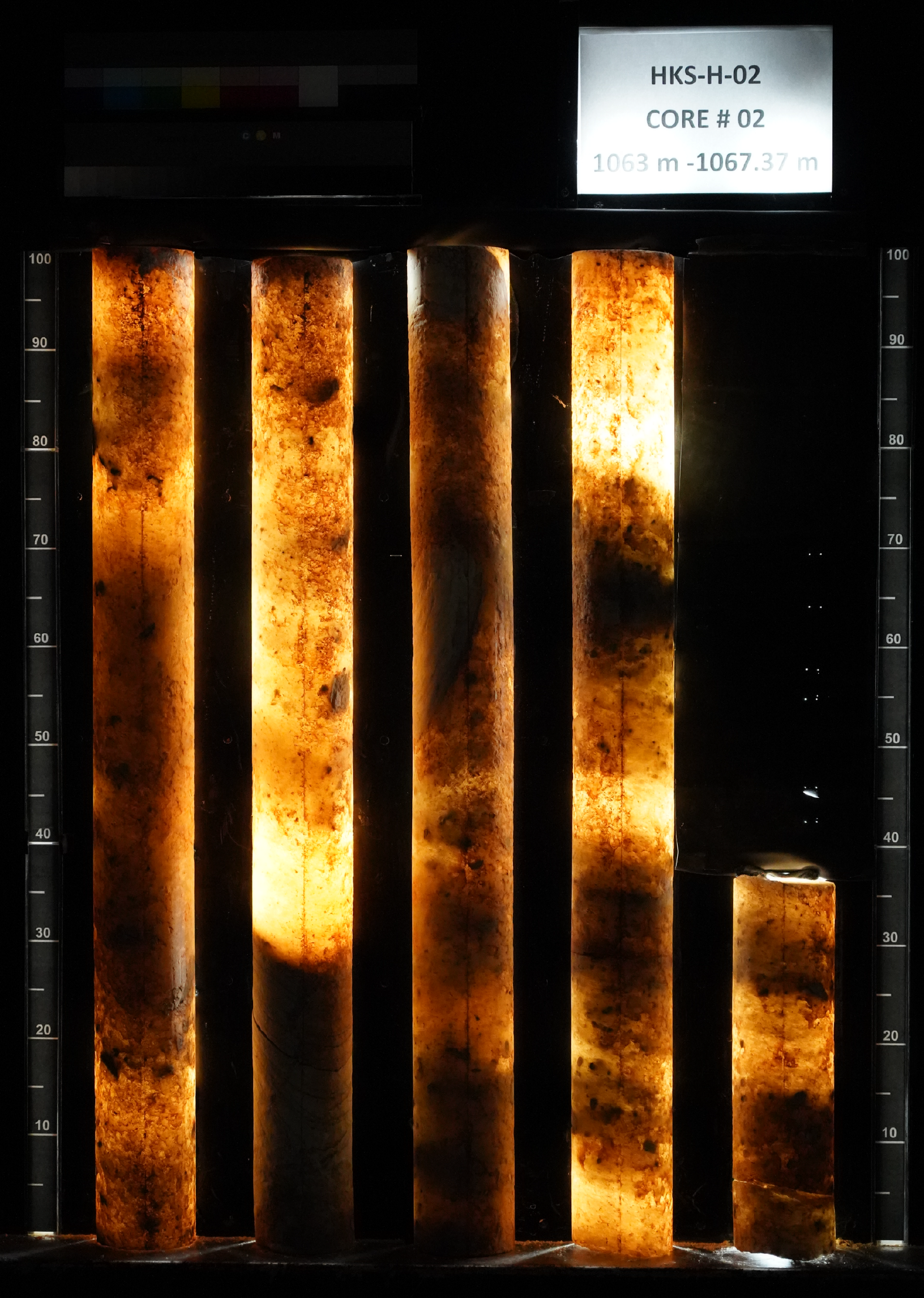
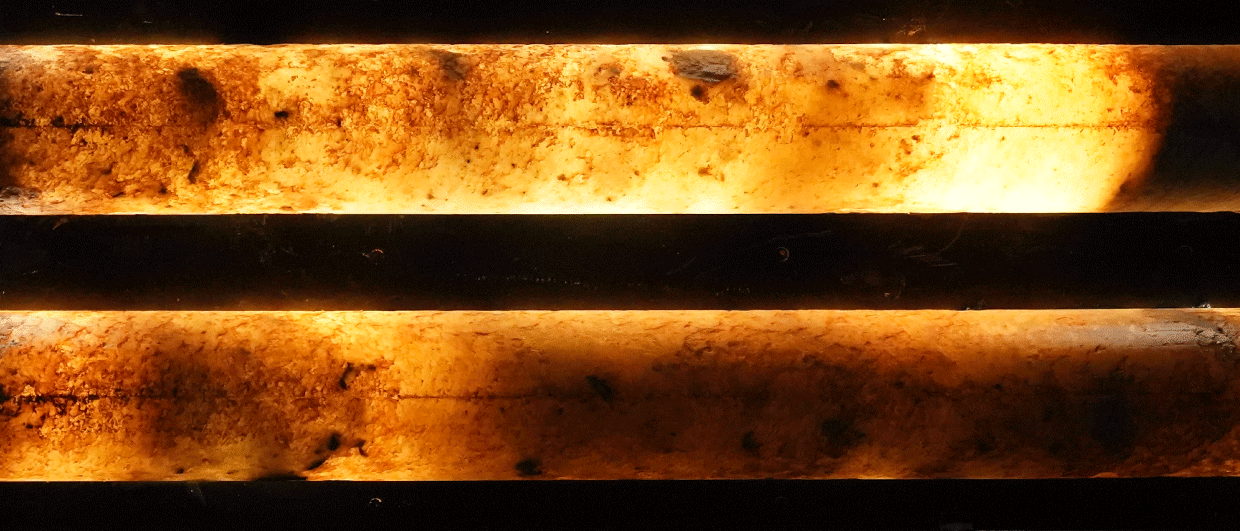
Geologist Martijn ter Braack from Nobian, who has been planning the wells and also closely follows the operational side of the project, shared a photo with us that beautifully captures the Zechstein halites in one of the cores they cut from the Zechstein salt target. Rather than illuminating the core from above and taking photos that way, in this case, the light source is placed below the transparent evaporite core, resulting in an almost artistic image. The darker zones in the cores represent a more anhydritic facies.