
The national Oceanic and Atmospheric Administration (NOAA), an agency within the US Department of Commerce, recently updated regulations regarding seabed mineral exploration and commercial recovery. The updated framework allows US companies not only to apply for a permit to explore for seabed minerals in areas beyond national jurisdiction, but also to commercially recover them.
In other words, qualified applicants can now submit exploration and commercial recovery information together, and may incorporate environmental, geological, and engineering data collected during exploration activities directly into commercial recovery permit applications.
One company responded to that change in regulation immediately. A day after the framework update came into effect, the US subsidiary of The Metals Company (TMC) submitted a consolidated application for an exploration licence and a commercial recovery permit for polymetallic nodules in international waters of the Clarion Clipperton Zone (CCZ) in the Pacific Ocean.
The Metals Company has already explored the CCZ thanks to its partnership with the Pacific Island countries of Nauru and Tonga, holding exploration licences issued by the ISA under UN law. But apart from a production test, these licences do not allow commercial production.
And to date, the ISA has not managed to come up with an agreed framework that offers guidelines on how companies can be awarded a production licence, much to the frustration of the industry. So, if NOAA grants its first commercial recovery permit to The Metals Company, it could mark the inauguration of commercial seabed mining in international waters.
In a 35-page response to these developments, the ISA stated: “Any commercial exploitation outside of national jurisdiction carried out without the authorisation of ISA would constitute a violation of international law.”
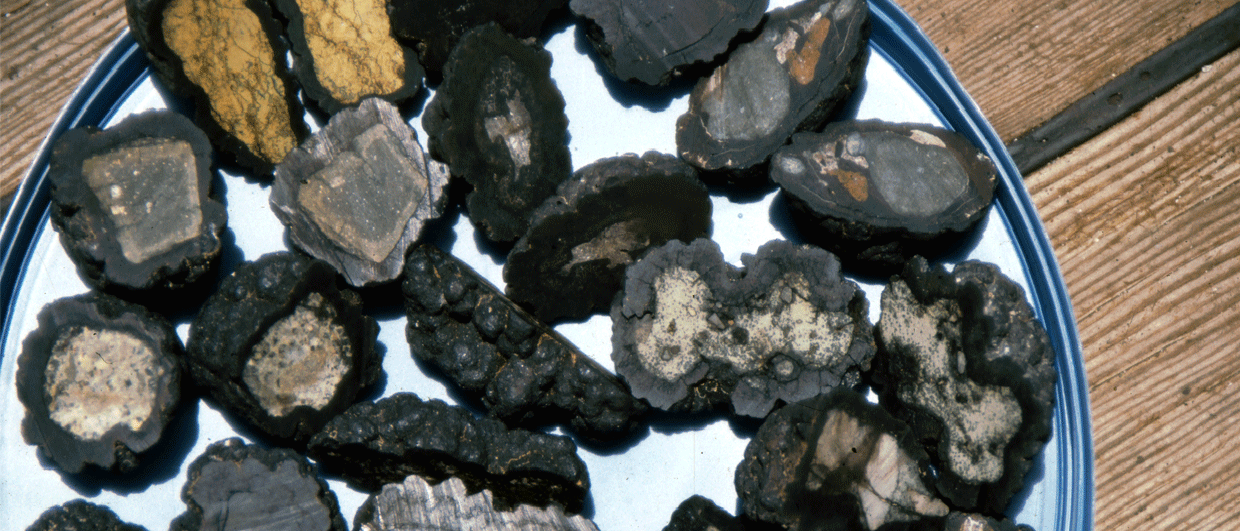
The CCZ is located between Hawaii and Mexico, and includes the Clarion fracture zone in the north, the Clipperton fracture zone in the south and the adjoining abyssal plain. It is rich in polymetallic nodules, loosely scattered on the seabed, that contain four base metals: cobalt, nickel, copper and manganese, in a single ore.
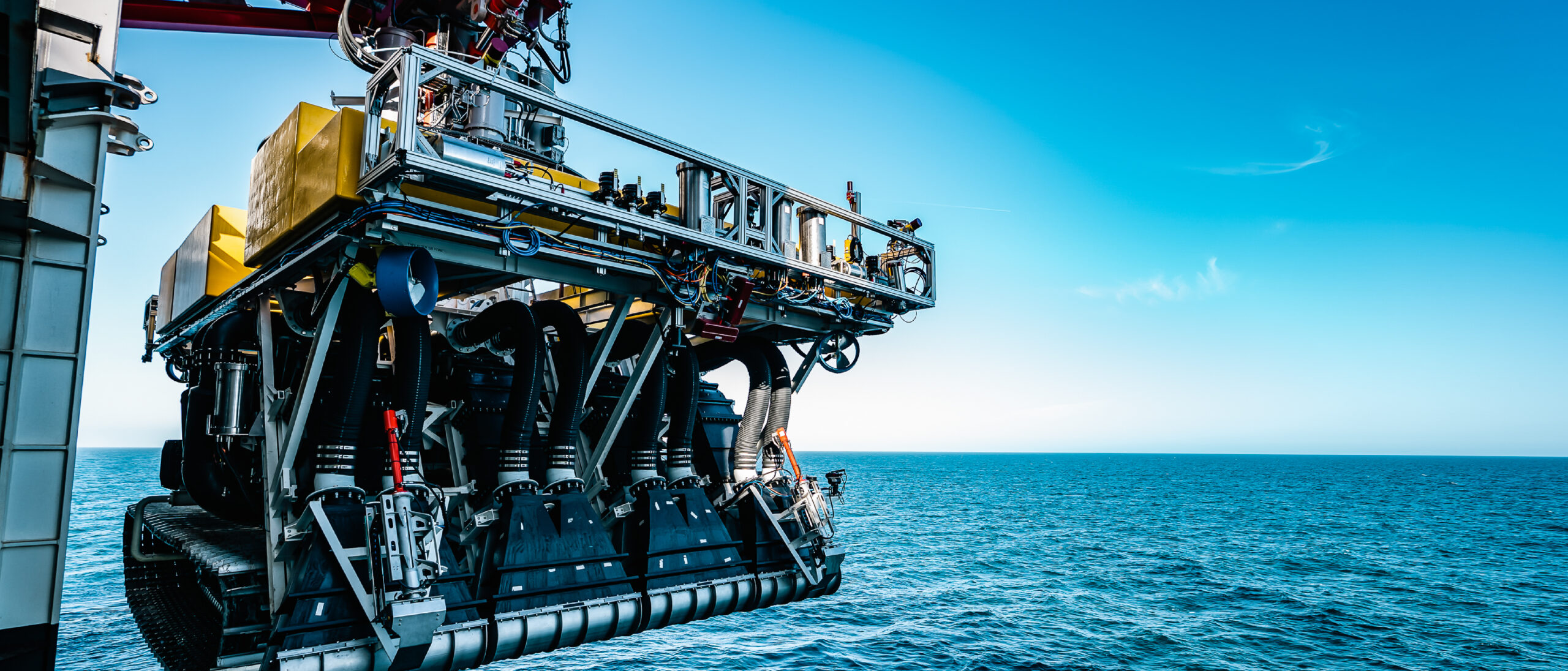
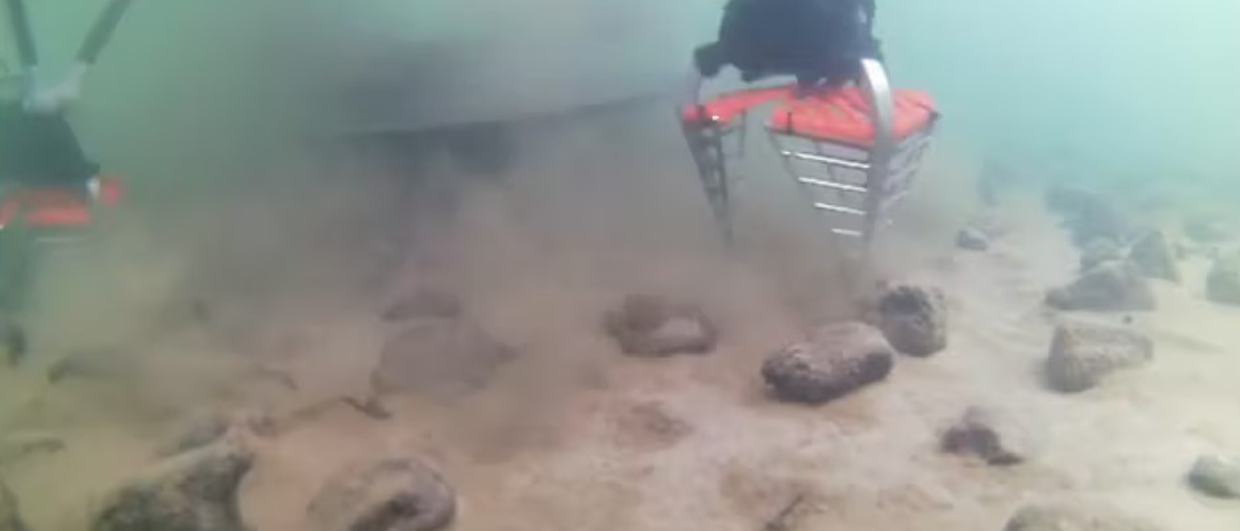
TMC designed a nodule collection system that creates a suction force to coax
the nodules into the collector without digging or dredging. The sediment is then washed off the nodules and deposited back on the sea floor before the nodules travel 4,200 m up the riser to the production vessel.
Once aboard, nodules are dewatered and residual water, sediment and nodule fines are sent back to a depth of 2,000 m via the return pipe. This is a strategically chosen depth, well below the productive upper ocean layers and bypassing 95 % of marine life. The polymetallic nodules will subsequently be processed onshore, leaving minimal tailings behind because most of the ore can be used.