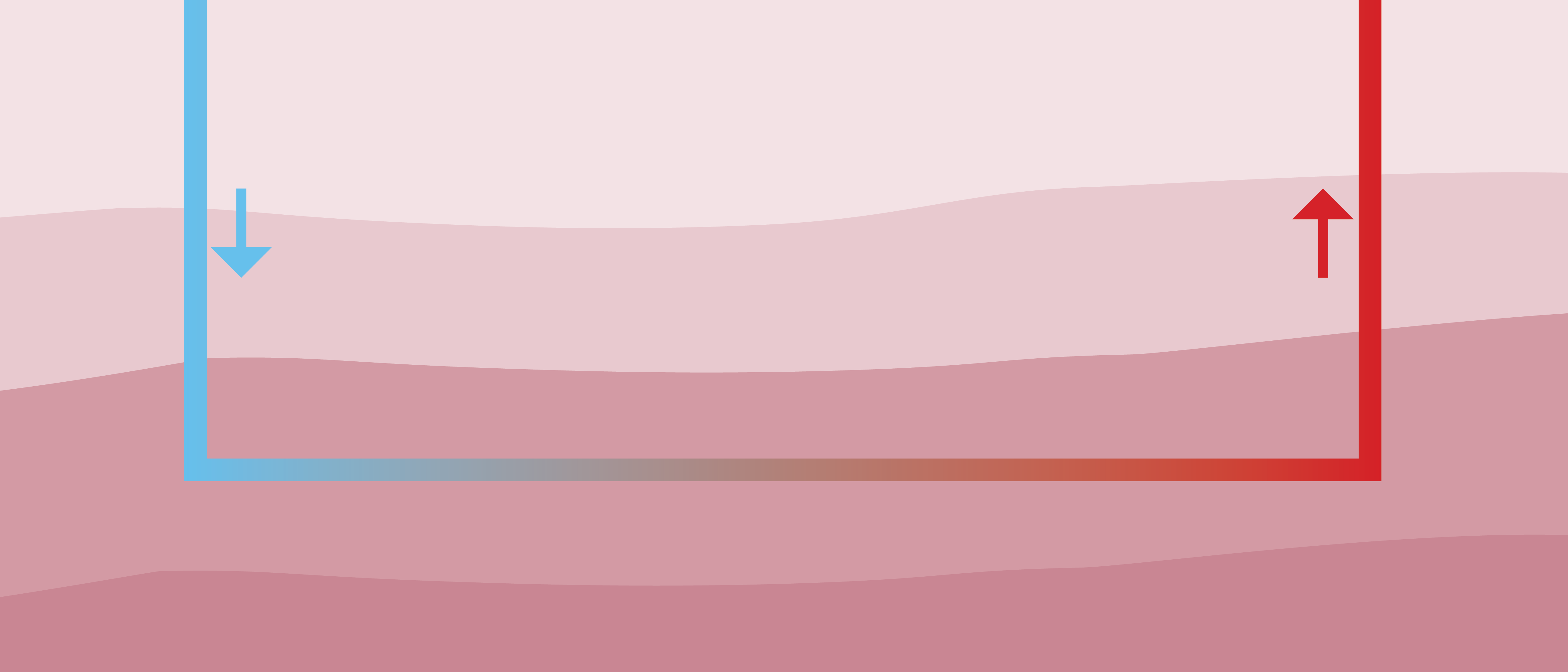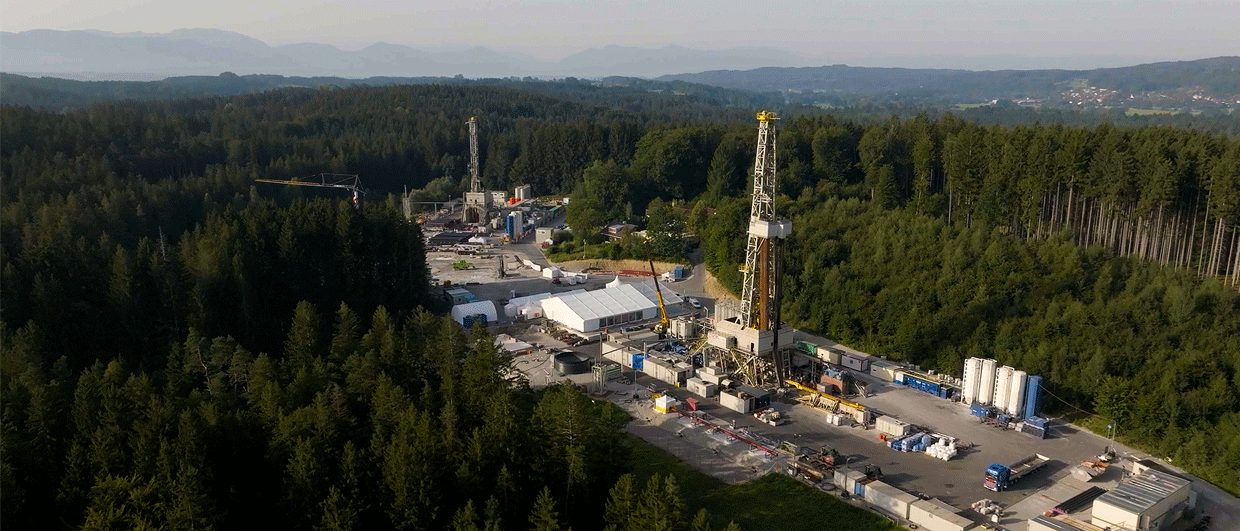

Early December last year, Eavor announced the start of electricity production from their Geretsried deep closed-loop project in the south of Germany, near the village of Geretsried. As expected, it led to a flurry of thumbs up. But how much energy it was actually producing was not mentioned in the press release, nor in subsequent articles written about how successful the project was.
Fortunately, the Germany-based “Informationsportal Tiefe Geothermie” hosts an article that mentions the electricity output; between 0.5 and 1 MWe. Through a contact of mine in Germany, who is well connected, I subsequently learned that the output is sitting at 0.5 MW at the moment, so at the bottom end of the range quoted in the article.
Granted, the energy being produced now is coming from just one loop. The plan is to drill three more, with the combined output anticipated to be 8.2 MWe. But given the results of the first loop being in now, the big question is how the output per loop will be 2 MWe where the first one suggests that it is more like 25% of that.
Jeanine Vany, co-founder and executive vice president of corporate affairs at Eavor, is quoted in this article, saying: “The advancements and lessons learned at Geretsried are translating into a competitive Levelized Cost of Heat (LCOH) along with a significant increase in energy output potential for future projects.” But she did not say how exactly.
So, looking at what we know now, it must be concluded that the energy output is very low indeed, especially when considering the sheer amount of work involved getting at this point; more than two years of drilling using two of the heaviest-duty onshore drilling rigs in Europe.
But working with the numbers we’ve got now, do the costs of drilling and completing these loops justify the output? In the article mentioned above, company spokesperson Alexander Land admitted that the costs of the project had already exceeded 350 million euros. As we don’t know by how much, let’s work with 350 million for four loops anyway. It means that if the 8.2 MWe will be achieved, which also sounds increasingly unlikely, the costs per MWe of this project is 42,7 million euros.
Let’s compare that against offshore wind. This website provides a detailed price breakdown for offshore wind projects in 2025. Since then, prices may have risen, as might be expected given the well-known commodity crunch, but the number quoted by the website amounts to 4 million euros/MW. In other words, offshore wind is about ten times cheaper than the deep Eavor geothermal closed-loop energy.
If we would, however, assume that the energy production from the currently operating loop is representative of what is to come, so 0,5 MWe, the price per MW rises to 175 million euros as a minimum. That means offshore wind is more than 40 times more affordable.
Sure, offshore wind does not guarantee the same constant energy production as geothermal does. That is certainly a drawback. But an investment that is between 10 and 40 times more expensive, for an output that can be produced by a fraction of just one single offshore wind turbine, I very much doubt if this is the way to go. Imagine, one single offshore wind turbine already generates between 8 and 15 MWe.
And even when looking at the net annual average energy production for an offshore wind turbine, which stands at around 4,200 MWh/year per MW, the current Geretried loop only just exceeds that number when assuming the current power production (4380 MWh/year).
The “Informationsportal Tiefe Geothermie” article also mentions that the expected start date for drilling the second loop is in March this year. Based on the observations pointed out here, I will see if this will actually go ahead. For now, my only conclusion is that this project is a very expensive fart in the wind.
Note: Two emails were sent to Eavor to enquire about the energy output of the first loop. No response was received.
Update based on new information received yesterday:
Some people argued that I was wrong by focusing on electricity production only. They said that the project is supposed to deliver 64 MWth as well, once the district heating network is in place. However, as it turns out, it is more likely to be either or, and not in addition. So Geretsried will produce either 8,2 MWe in electricity, or it can switch to delivering the equivalent in heat: around 64 MWth. See also this publication. The conversion factor to go from thermal to electricity is around 0.13 (13%), which is a fairly common number.
It is still unconfirmed if the 0.5 MWe now reported is gross or net. If it is the latter, we need to subtract the energy required by the plant before we know how much electricity is genuinely delivered to the grid. One person I was in touch with, who is well-connected, claims that it is a gross number, which means that even less is available to the public.