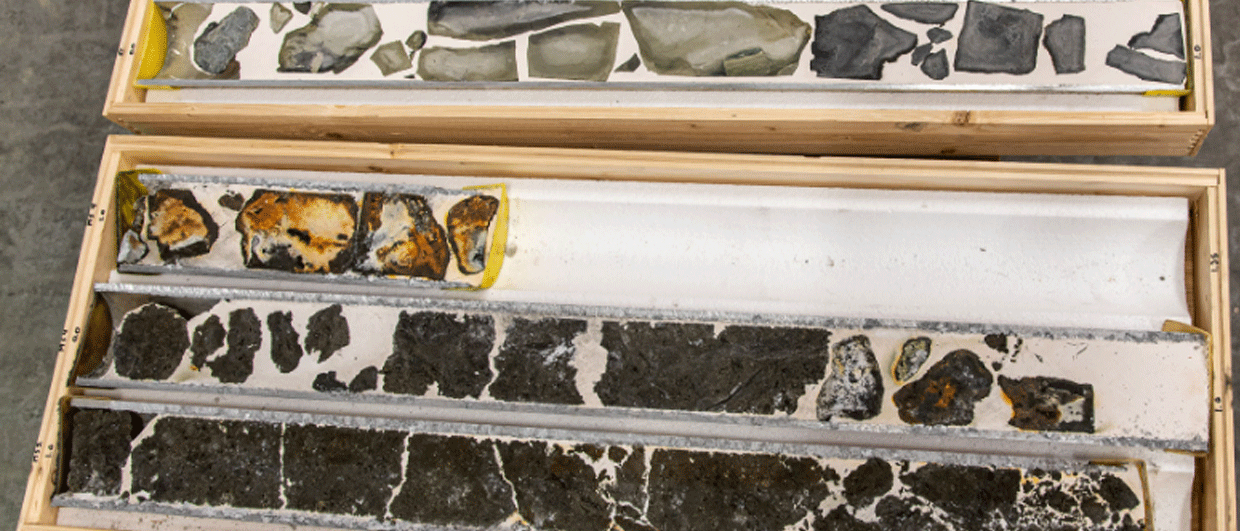
Resinated cores collected from a drilling campaign managed by the Norwegian Offshore Directorate at the Mohns Ridge in 2020. Darker areas are sulphide materials, while the lighter grey areas are basaltic rocks. Photo: Norwegian Offshore Directorate.
Norway stumbles at the finish line
Just as the first refined metals appear, and companies prepare themselves for further growth and innovation, the Norwegian government pulls the plug from seabed mineral activities

On the night of December 3, 2025, Norwegian parliament re-ached an agreement on the state budget for 2026. One point in the budget agreement reads as follows: The parliament asks the government not to announce the 1st licensing round for seabed minerals during this parliamentary term. Four years’ postponement, at least. For an industry in its early stages, this is dramatic.
Norway possesses some of the world’s most attractive deep-sea mineral resources
First copper
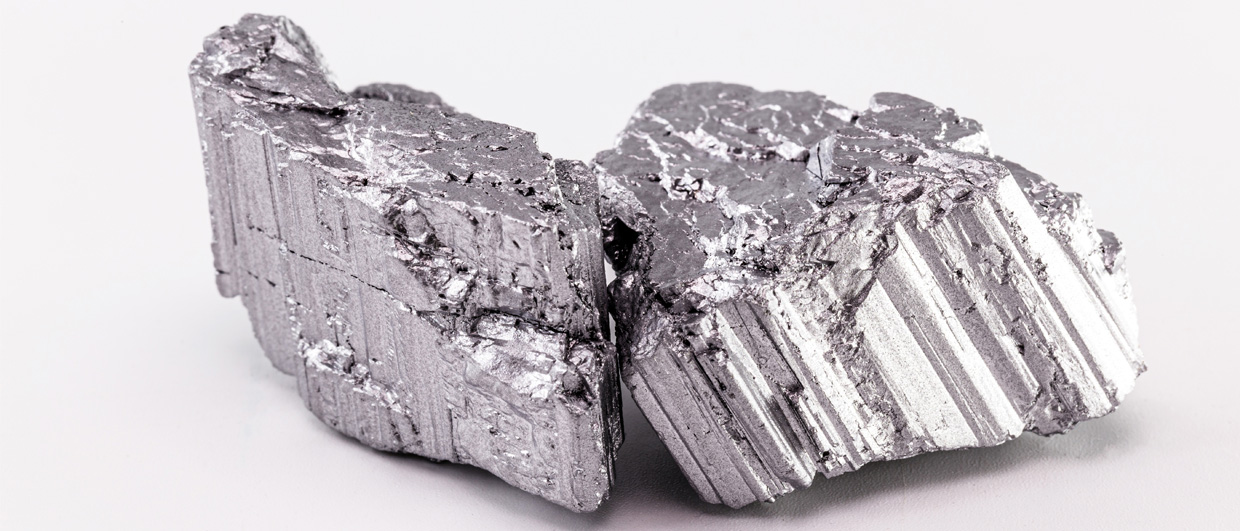
Over the past three years, academia and industry joined forces in the project EMINENT. The project’s aim was to increase knowledge of the deep sea and demonstrate a functioning value chain for seabed minerals in Norway. The 15 project partners have provided new insights into the environment, ecosystems, geology and resource potential of seabed minerals, and developed technology for exploration, production, processing and monitoring. At the project’s closing seminar on December 9, 2025, the tangible result was presented: The first refined copper extracted from Norwegian sulfide deposits.
This result should have been a springboard to continue data collection and further develop expertise throughout the first licence round for seabed minerals. “The political decision to postpone the licensing round puts both knowledge building and Norway’s position at risk,” says Anette Broch Mathisen Tvedt, CEO of Adepth Minerals and project manager for EMINENT.
Green minerals
The first licensing round had already been halted indefinitely in late 2024. The consequences have been clear: Loke Marine Minerals went bankrupt, Green Minerals had to cut staff significantly, and political unpredictability may have caused both Norwegian and international players to refrain from investing.
Green Minerals states that Norway “possesses some of the world’s most attractive deep-sea mineral resources,” and that the company has worked purposefully on plans for “environmentally responsible and profitable extraction.” As a result of the political uncertainty, Green Minerals has now announced that it will turn its attention to other regions. The company has signed a Memorandum of Understanding (MoU) for a license in the Clarion-Clipperton Zone (CCZ) in the Pacific Ocean – one of the world’s most promising areas for polymetallic nodules. The license is estimated to encompass 200 million tonnes of nodules, containing metals such as copper, nickel and cobalt.
There are still a few bright spots for Norway. Although the budget agreement pulled the Norwegian Offshore Directorate’s funding for mineral mapping, the organisation confirmed that it is still planning expeditions in 2026 and will present an updated resource assessment for the Norwegian Sea in the first half of the year.