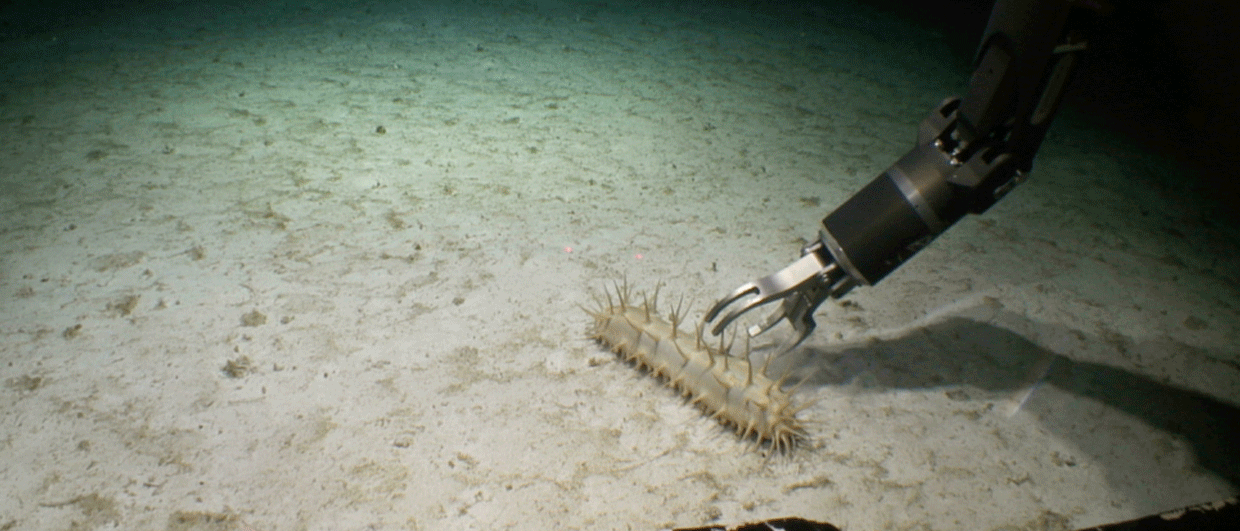
40cm long sea cucumber with 92 feet, found atop a seamount in the CCZ. Photo: NOAA.
Are sea cucumbers in a pickle?
The International Seabed Authority has wracked its brain over a fair and equitable mining code for years. Yet, it still can’t make up its mind about the future of seabed mineral exploitation. In the meantime, a study shows that megafauna like sea cucumbers actually prefer to settle in the areas where the seabed is disturbed

In March this year, the International Seabed Authority (ISA) member states met and negotiated over two weeks in Kingston, Jamaica, to discuss the future of seabed mining. But yet again, the council concluded without adopting a mining code or approving seabed mining in international waters.
Major stumbling blocks during the negotiations were environmental concerns and establishing a model to distribute financial and other economic benefits among member states. The deep seabed is recognised by the U.N. as ‘common heritage of humankind’; it is to be governed collectively and should not be dominated by those with the greatest financial or technological advantage.
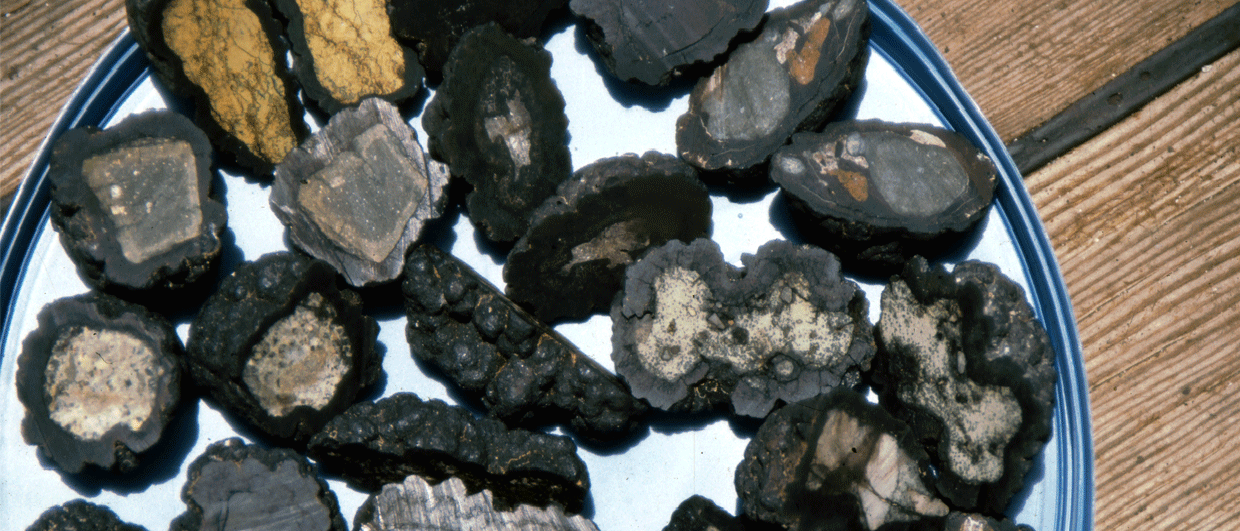
The ISA council also raised concerns over the US’s unilateral decision to potentially award exploitation licences to its nationals. The USA is not one of the 172 member states of ISA and seems willing to break international law to award recovery permits. The Metals Company (TMC) applied for such a permit, hoping to start commercially collecting polymetallic nodules in the Clarion-Clipperton Zone (CCZ) in the Pacific Ocean. Until now, TMC has been able to legally explore the CCZ thanks to a partnership with the Pacific Island countries of Nauru and Tonga. Both nations were granted exploration rights by the ISA.
As an ISA exploration contractor, TMC has collected a wealth of environmental data, which has been submitted to ISA’s DeepData catalogue. The open-source database has been accessed and analysed by countless researchers to study the abyssal plain ecosystems and the effects of deep-sea mining. This has resulted in a threefold increase in the number of new species described in the CCZ. Scientists estimate that more than 6,000-8,000 species are found in the region, around 90 % of which are yet to be described.
It is thanks to these studies that a better picture is being built of the environmental impact of nodule mining. And in contrast to what opponents might want, the results don’t always look too gloomy. One study on the long-term impact and biological recovery of seabed damage due to nodule mining in the CCZ found that after four decades, organisms have begun to re-establish despite persistent physical changes to the seafloor.
Megafauna, such as sea cucumbers, had migrated 10 m from the disturbed seabed to the plume area, where sediment agitated during nodule collection resettles. In addition, significantly higher numbers of megafauna were found in the plume area than in the undisturbed area further away.
Despite these encouraging observations, the Deep Sea Conservation Coalition calls on governments to adopt a moratorium on deep-sea mining. So far, 40 countries have signed and are in support of at least a pause in mining activities until certain environmental conditions can be met. In other words, it seems the mining companies are in a pickle while sea cucumbers live their best life.