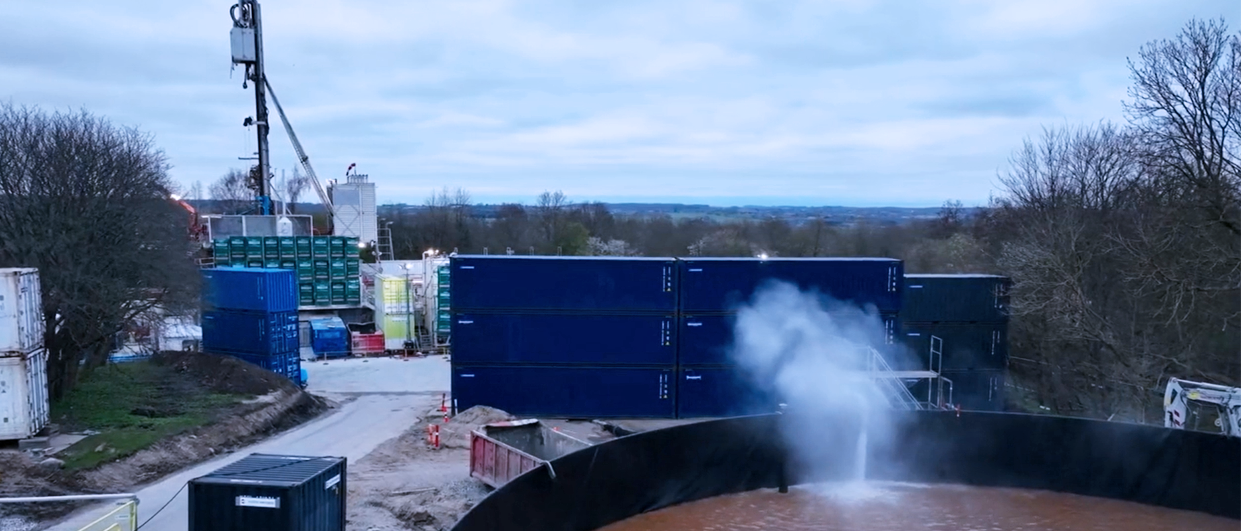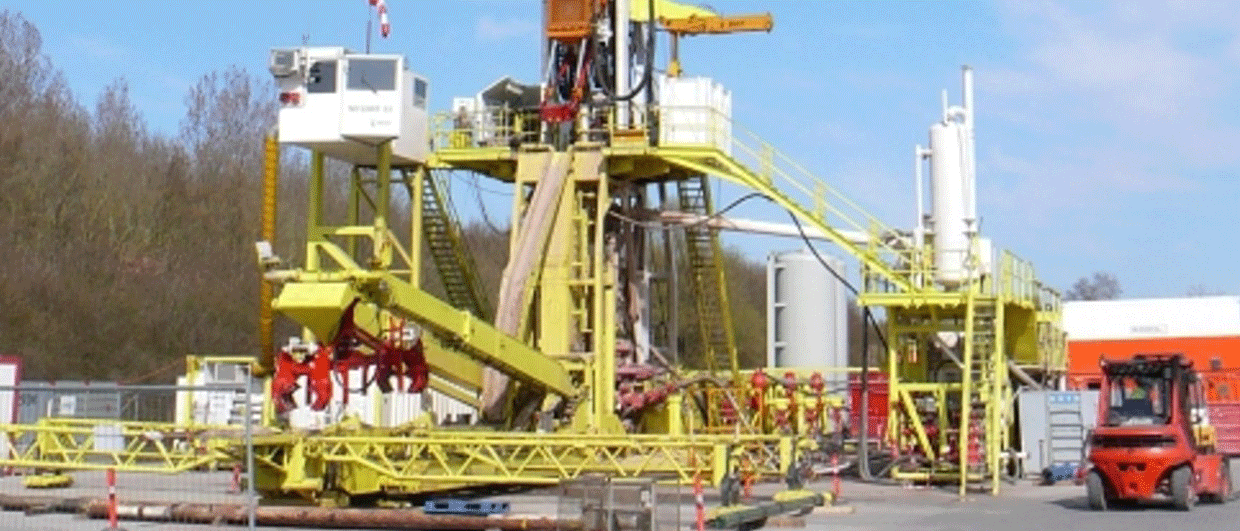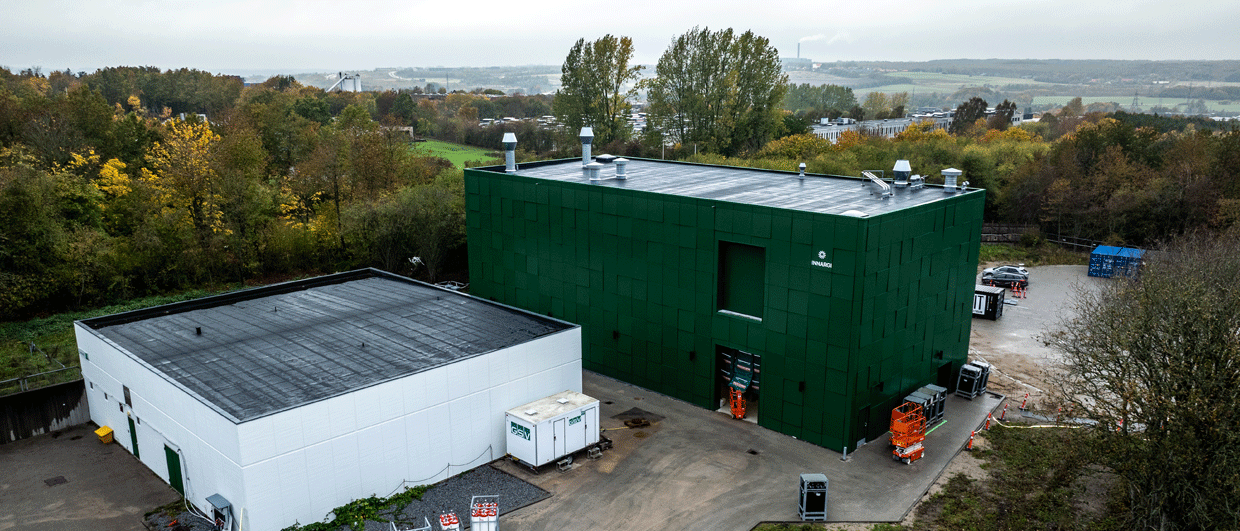
The Skejby production site, Aarhus, Denmark. Photo: Innargi.
If plans come to fruition, the Aarhus geothermal project in Denmark may almost deliver what was promised
Innargi’s flagship geothermal project reports energy output from its first operational doublet, with a possible five more to be completed. We look at the numbers in a little more detail following a request for information

The Aarhus geothermal project in Denmark, developed by Innargi, has been a flagship project since it was announced in 2022. One of the most differentiating things Innargi did in order to revitalise geothermal development in Denmark, where district heating systems already exist in many places, was to take on the subsurface risk that comes with drilling deep wells. This risk can be seen as one of the main drivers behind the seve-ral geothermal projects in Denmark that failed prior to commissioning the Aarhus project.
The original plan in Aarhus was to drill up to 17 wells, producing 110 MWth for the local district heating network – 20 % of total demand.
Fast forward to the start of 2026, the initial results are in after the first months of commercial heat production from the first doublet have passed. What is the verdict? Has the project met expectations? Of course, my view on the project is limited, but Innargi has been answering some of my questions properly and seriously, which is something that needs to be emphasised.
The site now produces a total of 17.5 MWth from a single doublet, a company spokesperson shared. One of the main questions related to this output, as expressed in this article, was how much of this number is actually heat or energy coming from the Triassic Gassum sands. Innargi did install a series of heatpumps at the production site, which are being used to bring the fluids to a certain spec temperature. Innargi shared that more than 85 % of the thermal power delivered to the heating network comes from geothermal energy, so that means we have a doublet that produces around 15 MWth in geothermal energy.
That is a good start, but still quite far off the target of 110 MWth. What will be done next?
Innargi now plans to drill more wells as part of the Phase 2 development, the company shared. Two more wells – an injector and producer – will be drilled at the current production site at Skejby, and two doublets (four wells) at the Halmstadgade site, where a new geothermal facility will be built. The drilling campaign is planned to start in the first half of 2027. A subsequent Phase 3 includes another two doublets at the Bautavej site.
If all of this comes to fruition, and we can use the energy production from the Skejby site as an indication in terms of what is to come, we could expect the project as a whole, when six doublets are in operation, to deliver 105 MWth (gross) and 90 MWth (net). That is not too far off the initial target of 110 MWth. However, we have to be a bit patient, as Phase 2 is not even commencing this year.