Photo: Henk Kombrink.
Not too many, not too few
A look at a cored section from the Shewashan oil field development wells in the Kurdistan region of northern Iraq

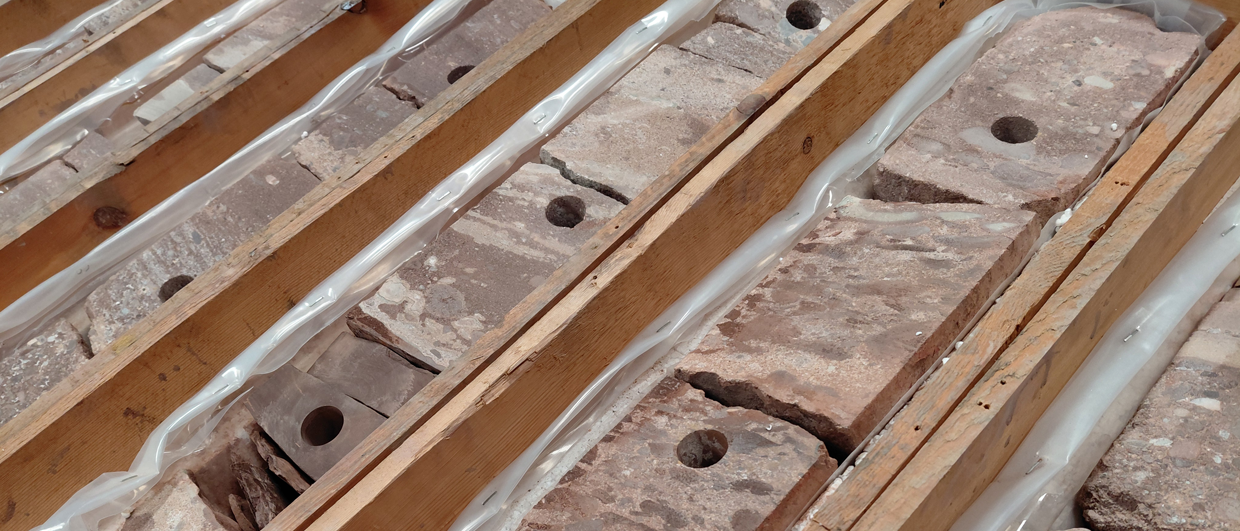
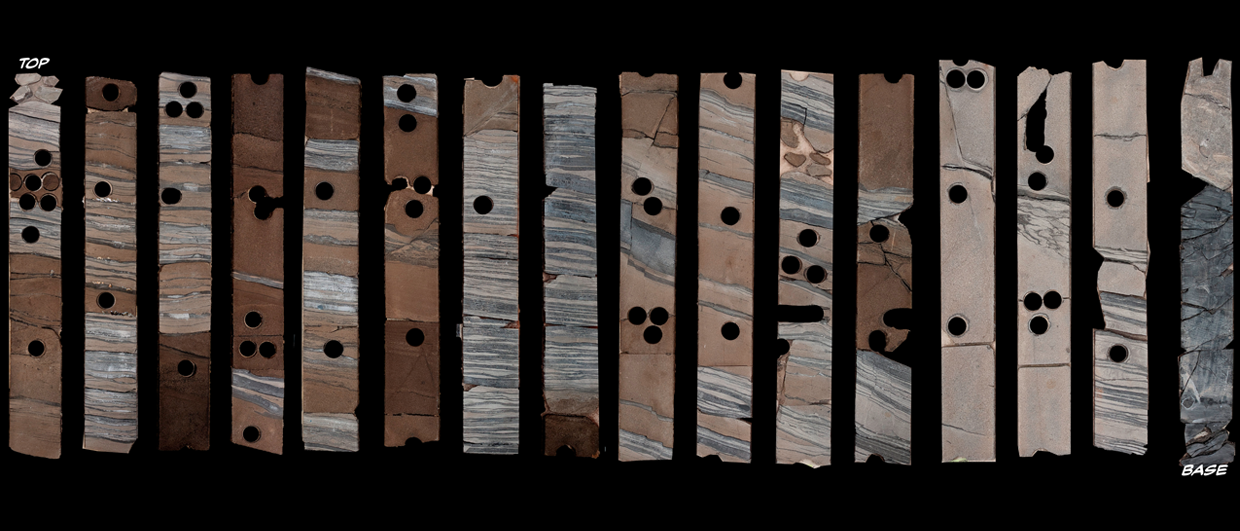
The Shewashan oil field is located in one of the world’s most famous petroleum provinces – the Zagros fold and thrust belt – not far from the major Kirkuk field. Here, we show a bit of core from the Shewashan-4B well that was drilled by Gas Plus Khalakan in 2016. It formed part of a multi-well development of the oil field that took place around that time. Hopes were high that Shewashan was going to produce 10,000 bbls/day by the end of 2016. But was it?
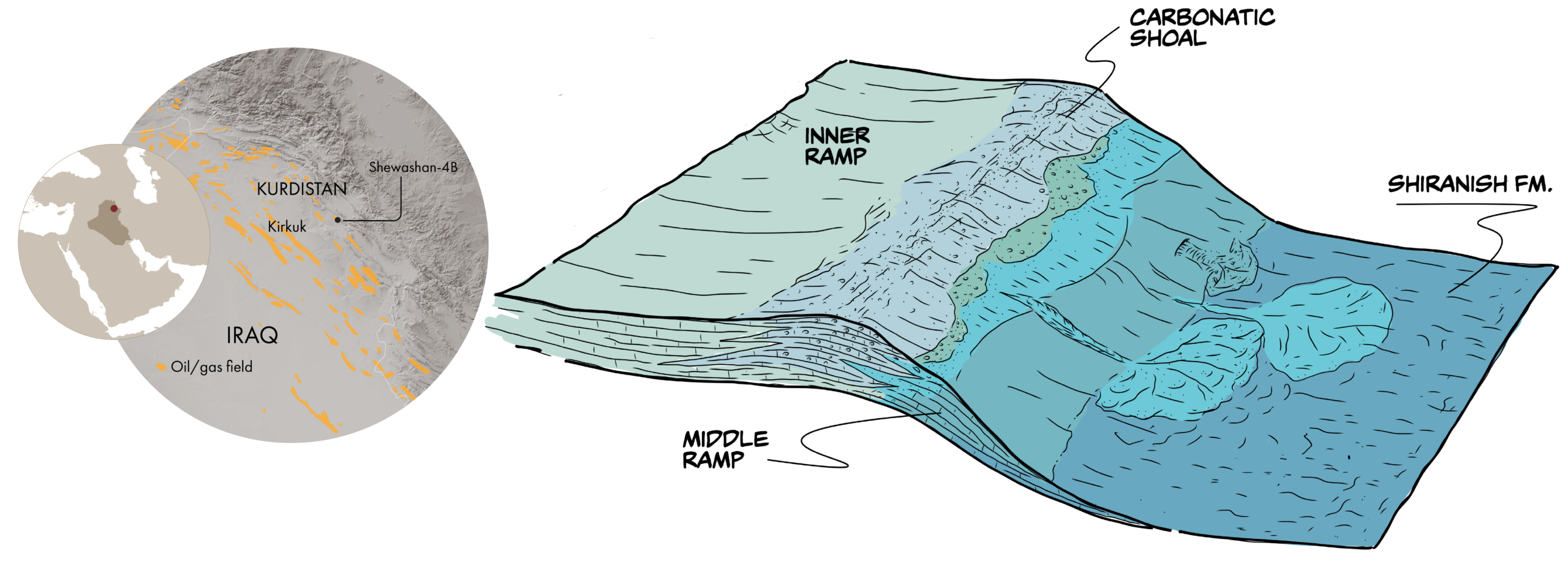
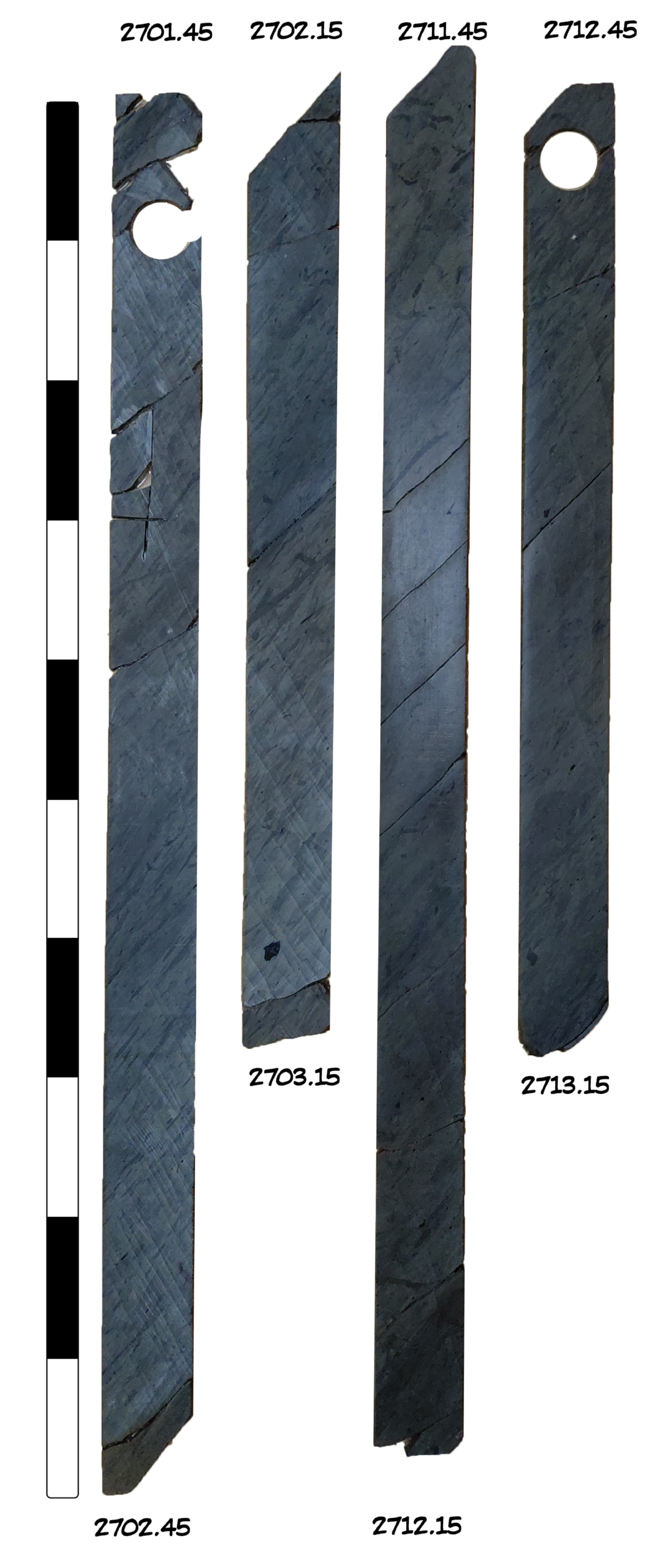
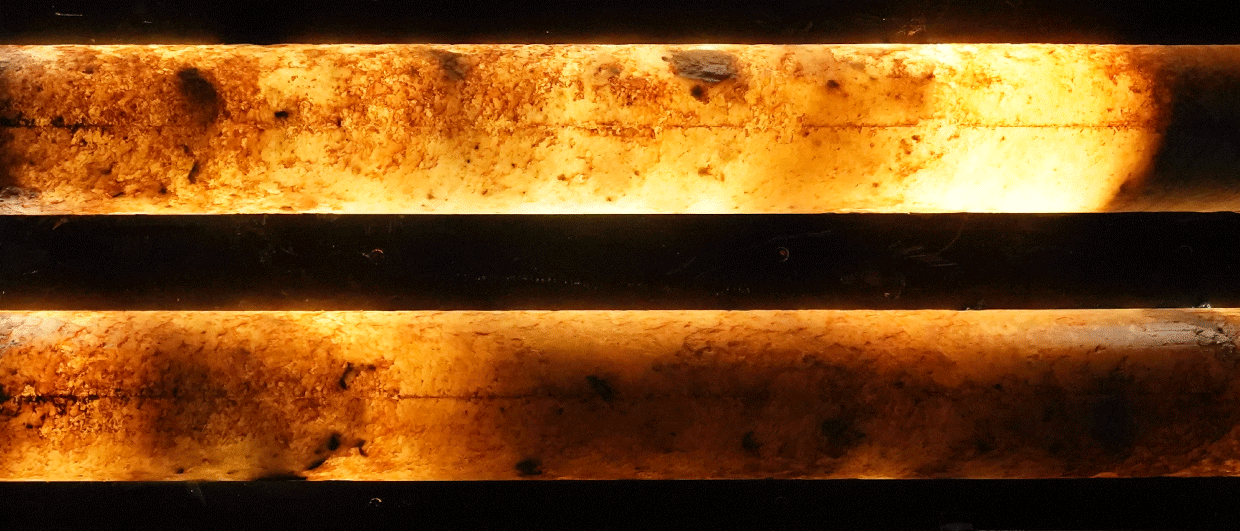
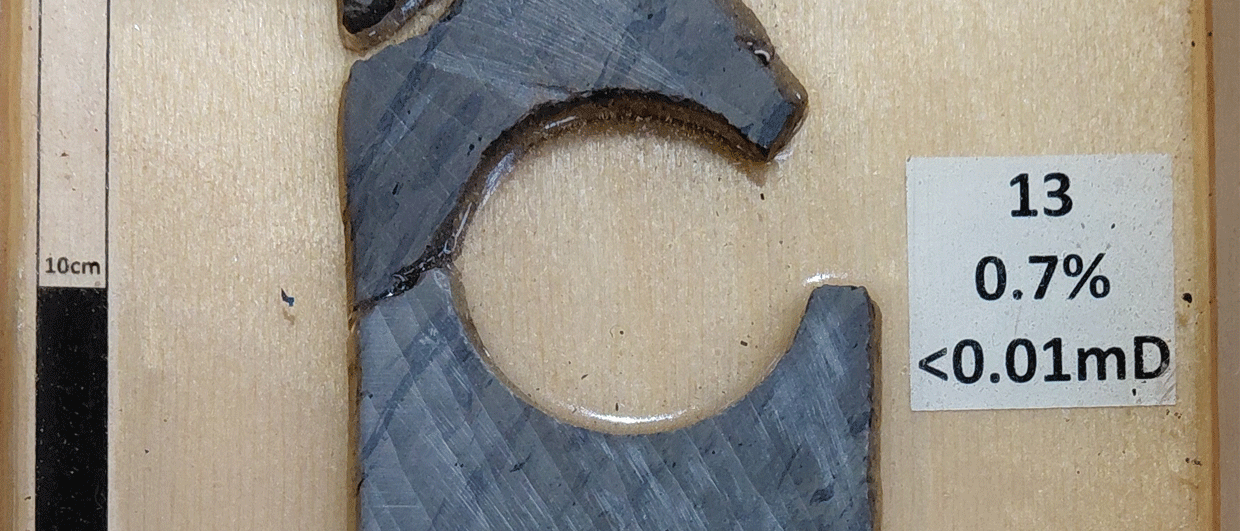
As the keen observer can spot in the core photo, the limestone reservoir looks quite fine-grained. This core is part of the Shiranish Formation, which records distal pelagic sedimentation during the Late Cretaceous, relatively far away from the carbonate platforms that existed in the area around the same time. Is this one of the reservoirs that would contribute to the expected 10,000 bbls/day?
Early 2018, Gas Plus Khalakan issued an update on the Shewashan field. One of the main messages was that production from the field was significantly lower than anticipated. The deeper Qamchuga Formation reservoir of Aptian/ Albian age turned out to be so heavily fractured that water breakthrough took place sooner than foreseen. In contrast, the statement also mentions that the Shiranish reservoir production had been limited because of a tight matrix, which the core photo indeed suggests. In addition, where the fracture matrix is too good in the underlying Qamchuga, it is poorly developed in the Shiranish Formation.
The Shewashan field was shut in later in 2018, and Gas Plus Khalakan reportedly walked away from the field in 2019. Breakeven field economics were estimated to be 2,152 bbls/day at a $50 USD oil price, but the field was producing only less than half of that. In a way, the core already gives away part of the challenge this field was facing. Fractures are great, but they mustn’t be too extensive, nor too sparse either. Especially when the reservoir matrix is tight.