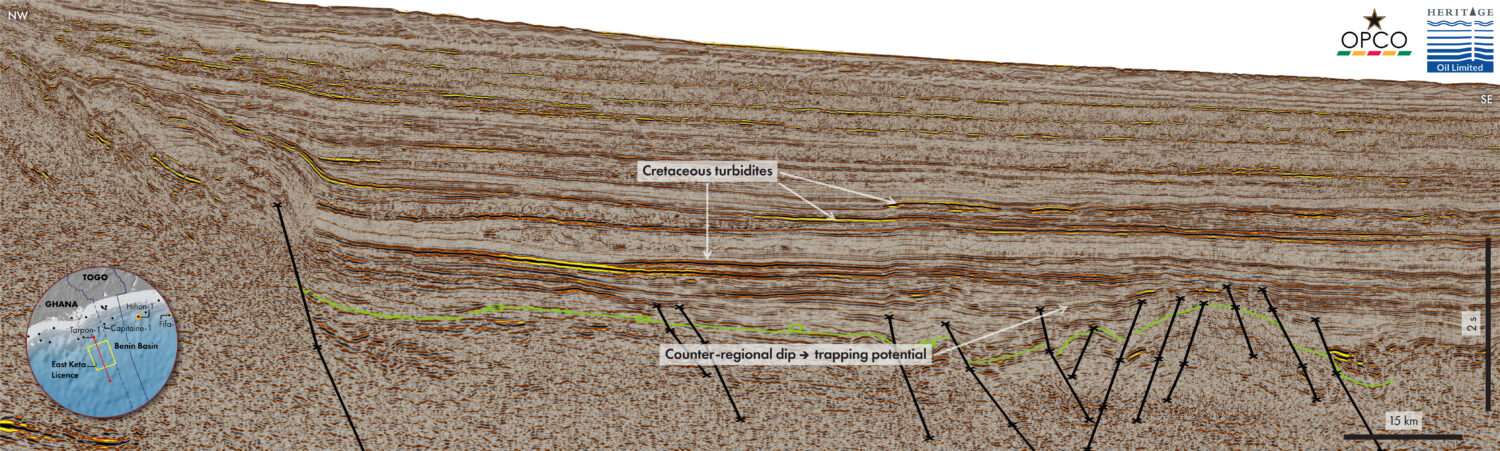
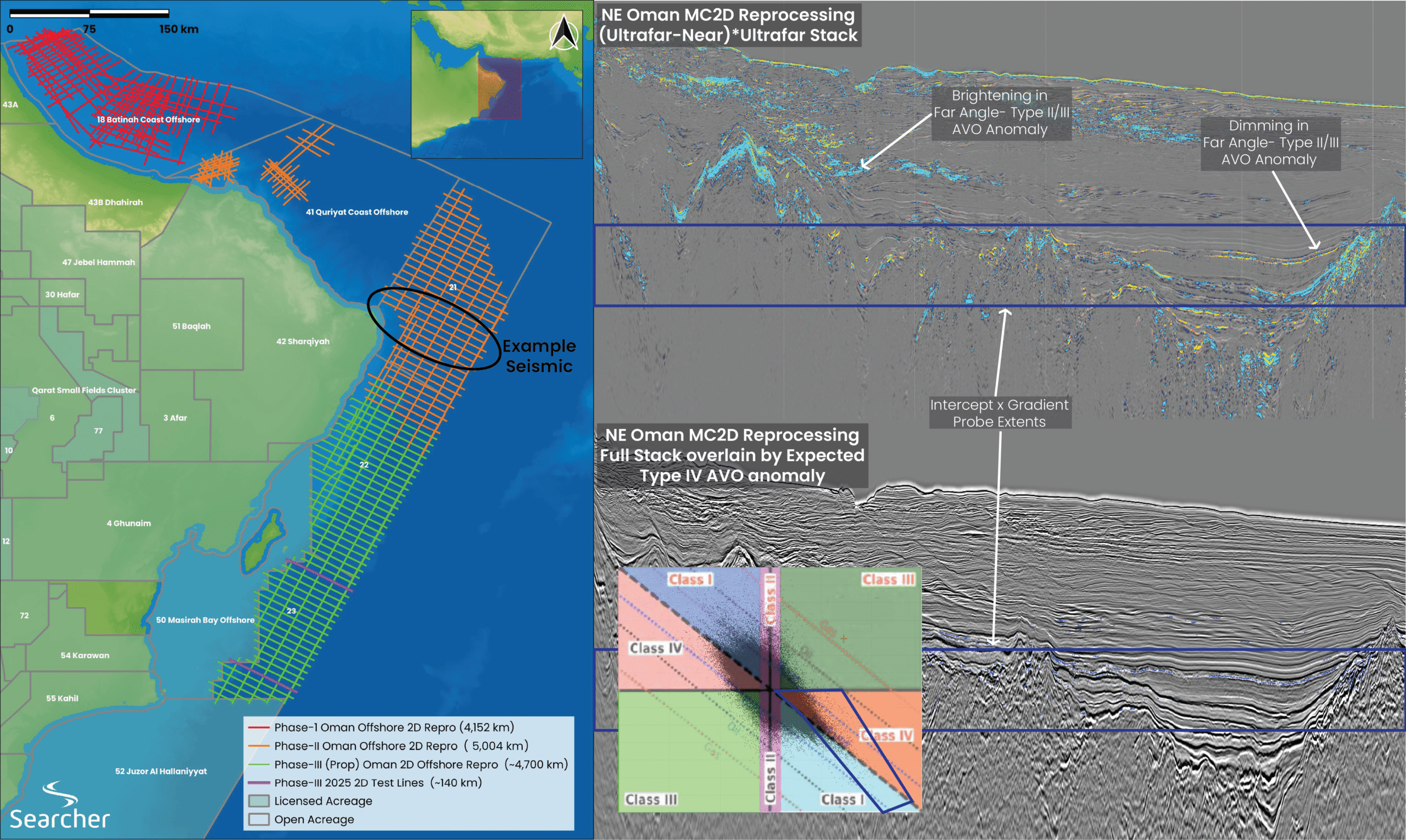
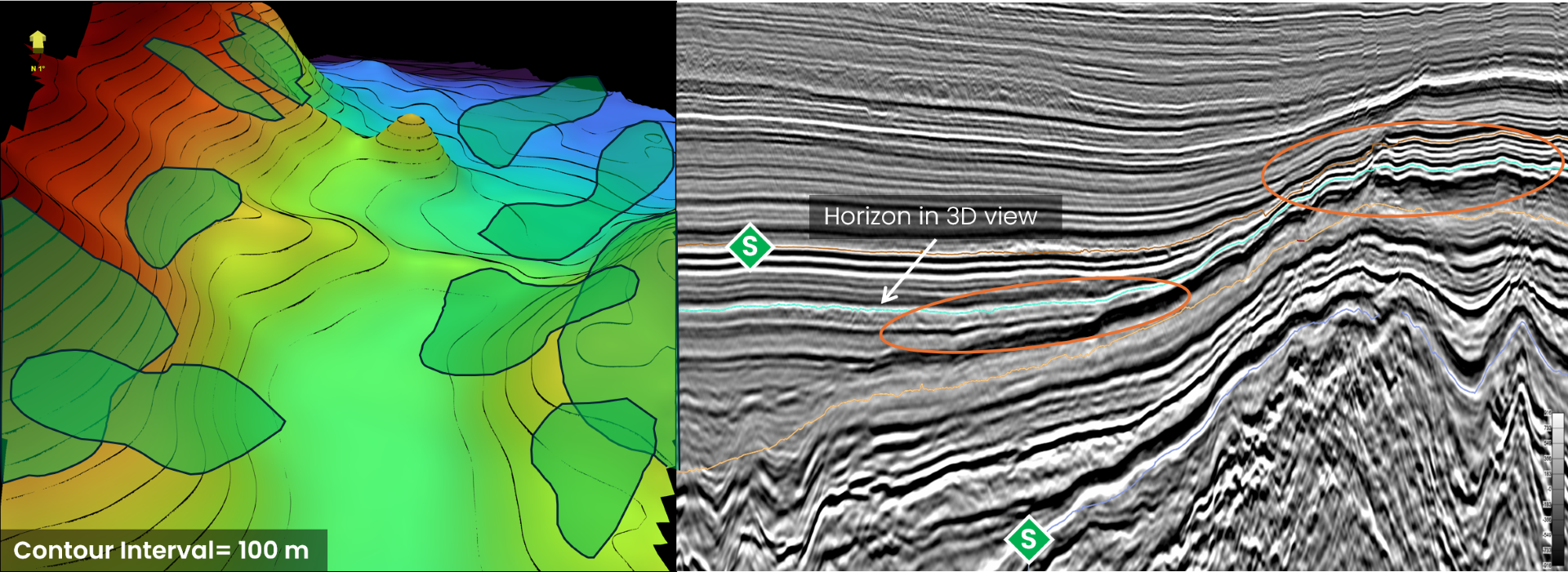
Around 375 BC, Plato used the “Socratic Method” to ask philosophical questions that led to deeper understanding of what it means to be Human. In 2025 Searcher reprocessed legacy seismic data from Oman’s Indian Ocean margin, seeking to challenge conventional exploration models. What we found was a brave new world of source rocks and trapped hydrocarbons that challenge what it means to be an Explorer. Karyna Rodriguez describes how improved data resolution facilitating new technological inquiry in Oman’s Indian Ocean is turning “flickering shadows on the cave wall” into high-definition images of unexpected source and reservoir In Plato’s Allegory of the Cave (Book VII of The Republic), prisoners (you and me) spend their lives chained in front of a wall in a cave where all they observe are shadows cast by people walking past the cave mouth in the light. Imperfect understanding ensues; a powerful allegory for the world where only partial interpretations can be made because all one can observe are imperfect, partial images. Reprocessing legacy seismic data through a modern deghosted PSDM sequence not only brings the prisoners out into the bright light of clear vision, but it also supplies them with a smartphone. In 2021 our understanding of the Tethyan petroleum systems of the Oman Sea off Oman’s North Western coast was revolutionized by the imaging of Searchers’ Reprocessing that underpinned the 2024 License Round. Now in 2025, Searcher has finalized reprocessing phase 2; 5,000 km of 2D in the Indian Ocean, and the results on Block 21 are truly surprising. As we are released from the “poor imaging cave”, we can see stratigraphy in the syn-rift, a new stratigraphy and unexpectedly source rocks amongst clastic AVO responses that shine a light on directly indicated hydrocarbons. The sweetness attribute (see the Foldout) has played a major role in the identification of unsuspected working petroleum systems, and this is especially powerful when combined with angle stack data (particularly the ultra-far angle stack). Sweetness is calculated as instantaneous amplitude (reflection strength) divided by the square root of the instantaneous frequency, and discriminates for low-frequency, hydrocarbon or organic-rich rock responses. All observations are further calibrated with an extensive BSR (Bottom Simulating Reflector), interpreted to be the base of a methane hydrate zone, which overlies high-amplitude soft kicks of the free gas zone. The Indian Ocean margin of Oman was a relatively abrupt Gondwanan passive margin on the southern Tethys, lying north of what would become the Indian subcontinent until some 200 Ma when Gondwana began to fragment. Syn-rift sediments of Triassic and Jurassic sediments were deposited as India initially separated from Africa, moving south, and then began its celebrated northern migration to scythe past Oman along the amazing Owen’s transform. This strike-slip motion has created extraordinary, transpressional inversion folds to the south of Block 21, and even scraped an ophiolite slice across the syn-rift in the location of the Yumnah oil field south and west of Block 21. On this incredible transform margin, India slid past Oman and the closing Tethyan ocean, docking with Asia in the Late Cretaceous, and consuming most evidence of the Oman conjugate margin beneath the western Himalayas. During the collision, though, it temporarily and partially closed the Sea of Oman in the Early Tertiary, allowing a restricted marine source rock to be deposited. During the Later Tertiary, the SW Oman margin opened onto the Indian Ocean and connected to the global ocean. Clastics being deposited into the closing Oman Sea were continually washed eastward to be deposited on the slopes of Oman’s Eastern margin into counter regional dip traps (Figure 2) or down to and across the abyssal Owen transform. Whilst it had been thought that sediments coming off the eroding Oman Mountains (the Tethyan Ophiolite) might be basalt rich, the wadis flowing off the mountains rapidly cut through the ophiolite to erode granites generating quartz rich clastic deposits (Andy Racey, 2023). It is these sands that offer the high quality reservoirs of both stacked slope channel and basin floor sediments that we will chase using the newly reprocessed 2D. It has become common practice to use the sweetness attribute as a first pass in hydrocarbon prospectivity evaluation. This is greatly illustrated by the Orange Basin, where it was used to successfully identify the prolific Aptian source rock as well as the Mopane-3x (Galp discovery) and the Capricornus and Volans (Rhino discoveries). Offshore Oman, the unexpected surprise was to see up to three candidate source rocks standing out with this attribute. Only one could have been suspected with the tectonostratigraphic evolution models. These events are extensive, with a decrease in acoustic impedance at the top and further corroborated with angle stack evaluation showing a clear AVO Type IV response where the high amplitude is seen dimming in the ultra-far angle stack (Figure 1). Two more source rocks were identified using this methodology. And as can be seen in Figure 1, several AVO Type II and III anomalies were also confirmed. The AVO Type III response of the free gas associated with the BSR can be used to calibrate similar anomalies seen deeper in the section. Thrillingly, as seismic reprocessing allows the generation of ultra-far-angle stacks (36-48° for this dataset), AVO Type II anomalies are being identified and drilled successfully in deep water settings. Here, very large anomalies have been identified for the first time ever and mapped using this dataset. Some are clearly associated with structural highs (Figure 2). Staggering back into the cave to share the knowledge from the reprocessed data, we bring with us three blazing torches for illumination. First, the sweetness and AVO studies reveal at least three source rocks. Secondly, AVO Type III anomalies can be calibrated with the free gas below the BSR and the shallow gas anomalies and are found in the stacked basin floor sands below these. And lastly, most intriguingly, AVO Type II anomalies have been revealed on the ultra-far angle stacks, a trend observed in recent discoveries in the Orange Basin, where they indicate the presence of light oil. In our global search for hydrocarbons to power the future world through its energy transition, we have escaped the bonds of incomplete illumination to find new truths that will set us all free.
Sweetness and light in Oman’s Indian Ocean
 NW-SE final PSDM line in depth displayed with the sweetness attribute (instantaneous amplitude (reflection strength) / square root of the instantaneous frequency).
Bringing the light to Oman’s India Ocean hydrocarbon-rich future
The cave – a regional evolution model and limited data
The sweet escape – source rocks come to light
The return to the cave
Related Articles