A Brief Overview of Gas E&P Activity in the Eastern Mediterranean

The Eastern Mediterranean theatre has become a pressure point for high stakes energy politics between Europe and the Levant, and by proxy Russia and the West. The stage is set, with mega-gas basins and hungry markets. Gas is the hydrocarbon of choice for many policy makers aiming to hit tough carbon targets. The protagonists are warming up: Israel and Egypt are developing recent large gas discoveries; Lebanon is jostling for the drill bit, with Total planning to drill soon; Cyprus is sparring from the centre ground with undeveloped gas at Aphrodite and Calypso; Turkey is impressing a strong independent footprint over the northern area, bringing Libya in as a strategic partner; whilst Greece will play a pivotal role in keeping a lid on, and letting the gas out, of this simmering crucible.
The Scramble for Gas
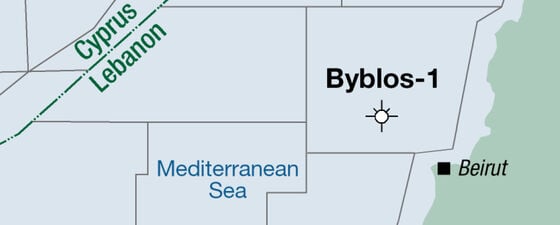
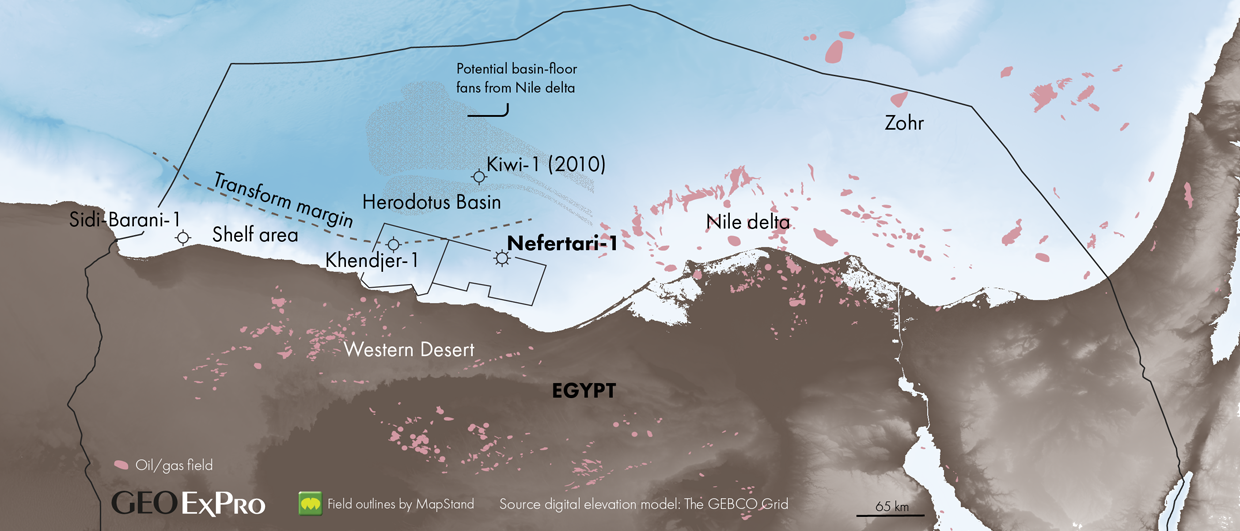
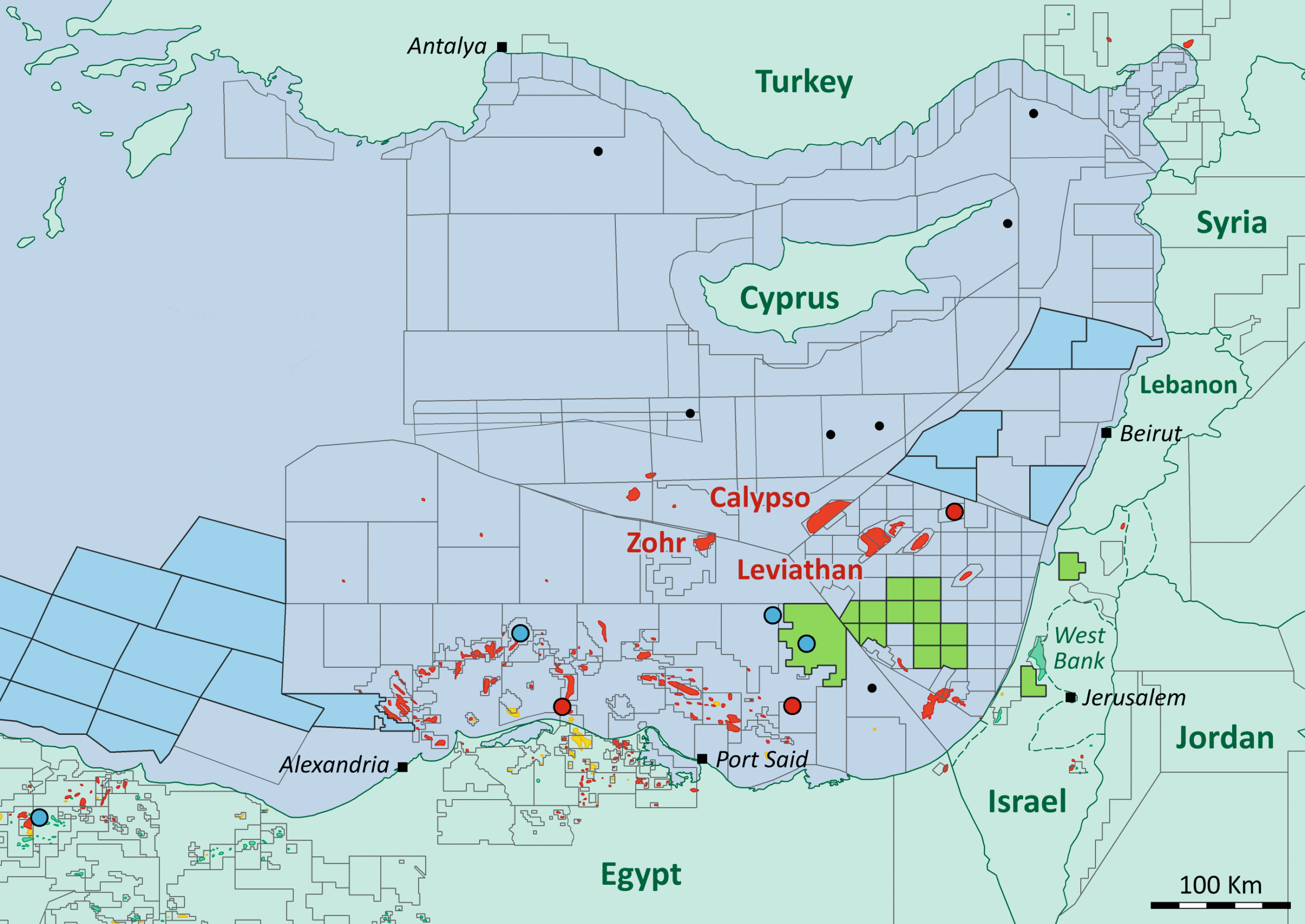
Licensing and wildcat activity is currently focused on the offshore basins of Egypt, Lebanon and Israel. Total, Eni and Novatek have committed to drill the first offshore well in Lebanon this year in Block 4, with a second licence round underway in the country. Pharos, Cairn, Energean and Ratio took acreage offshore Israel in the 2019 bid round, and Energean, a rapidly growing energy presence, found substantial new gas reserves at Karish North in 2019. Mixed results off Cyprus have deflated the search for the Zohr lookalikes bubble, at least for now, but Egypt has come back to the fore, with Shell, Eni, Energean (as the purchaser of Edison) and soon ExxonMobil looking to reveal multi-Tcf fields in deepwater Nile Delta acreage.
Meanwhile, Turkey is conducting its own seismic and drilling campaigns including over acreage claimed by both Cyprus and Turkey: three wells are believed to have been drilled to date, results unpublished. Turkey has also allied itself with Libya, which may result in seeing further acreage awarded over contested areas, including some currently being promoted by Greece.
The Race for Exports
This exploration activity may well discover further significant volumes of gas ready to stir up the energy politics of these major and minor littoral countries. Israel has announced its first gas exports to Egypt and Jordan, with Leviathan now onstream. Reversing gas through the Ashkelon-El Arish line (from Israel to Egypt) is the first step to larger gas sales through new pipelines in the future. Energean wish to see gas sales to Greece over time. Israel, Greece and Cyprus are agreed on a new EastMed 1,900-km gas line from Israel to Greece, picking up Cypriot gas along the way. Turkey and the EU are exchanging diplomatic warnings in response to the EastMed pipeline as vested interests surface, with the Turkey-Libya axis challenging the dominance of Israel-Egypt-Cyprus for long-term gas and LNG exports, and Greece likely to be the common gas recipient. Egypt in the meantime plays a fascinating role like a pressure regulator, importing and exporting gas as the country and its gas supply, demand and infrastructure all develop. Egypt went from exporter to importer during the Arab Spring, but now with gas from Zohr and Leviathan, the Idku and Damietta terminals are once again sending LNG cargoes abroad.
The corporate potential winner from this fast moving energy saga is Energean, who in a few years has gone from a small independent with a field in Greece to a regional energy force, in the process of buying Edison, and now positioned to supply gas from three jurisdictions with stakes at either end of the gas value chain – and exposure to political outcomes.