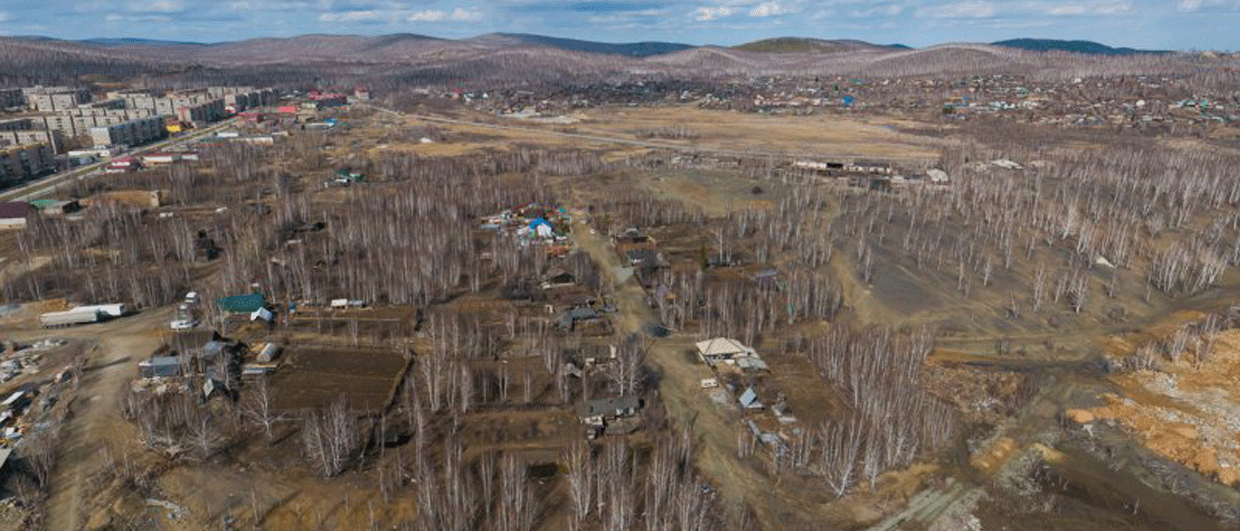

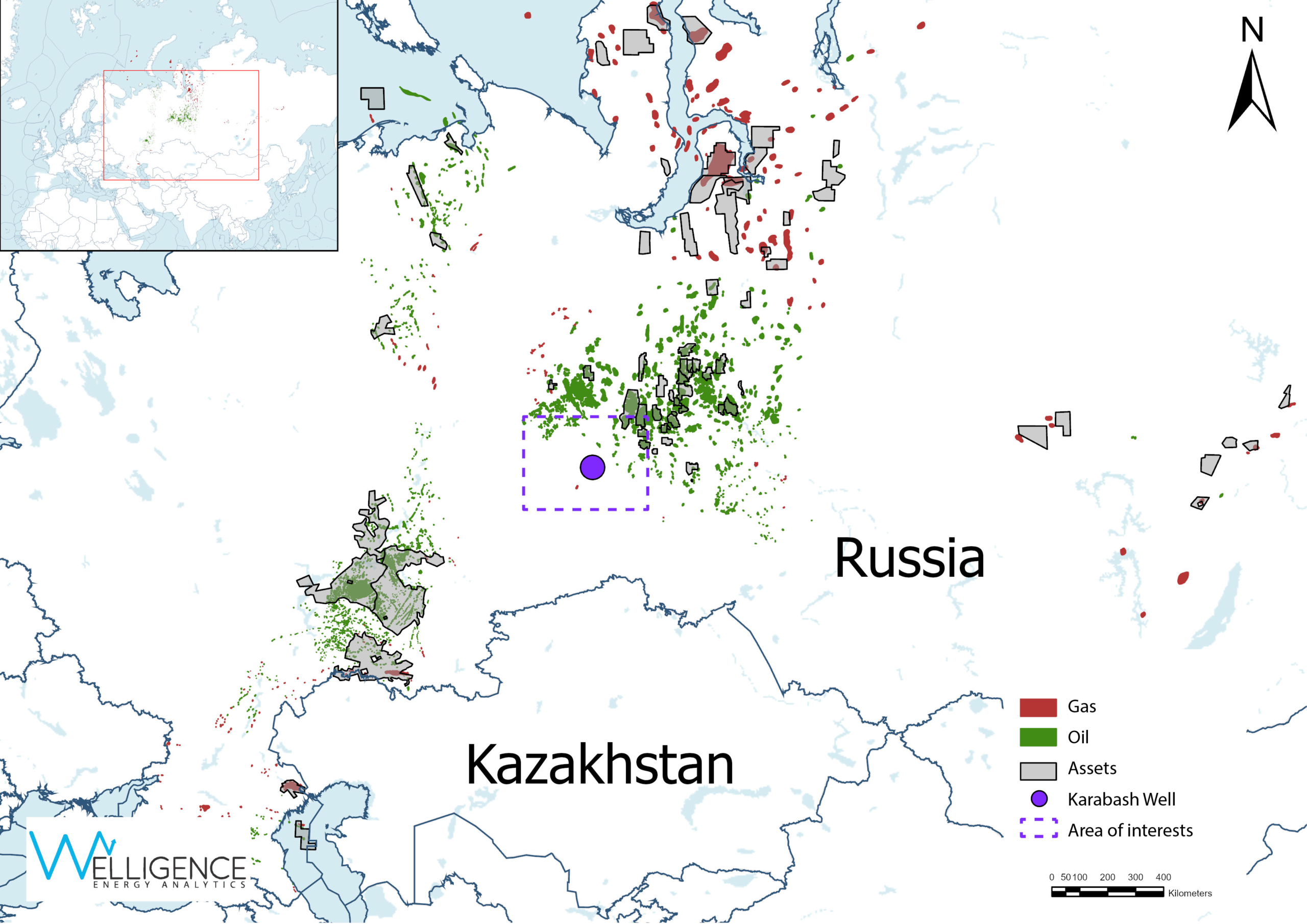
The region of Karabash sits in the southern part of Khanty-Mansiysk and Tyumen. Historically, oil and gas developments have been more limited in this part of West Siberia, as the region is underlain by a series of grabens which have compromised the large four-way closures that form the supergiant fields to the north and west.
A more recent focus on regional exploration saw the 2021 drilling of a new well called Zaozernaya #1. Initial results were disappointing, with the conventional Jurassic reservoirs of the Bazhenov Formation being either tight or lacking trap integrity. This heterogeneity and atypical properties led to the interval being termed the “anomalous Bazhenov”.
The disappointing early tests prompted a plan for an enhanced stimulation for the Bazhenov zone as the next step, given that core analysis indicated the reservoir was oil-bearing.
Fraccing the Bazhenov
The frac job of the Bazhenov Formation achieved a fracture length of about 570 m, a vertical height of 30–35 m and averaging 2.2 mm in width. Zaozernaya #1 subsequently saw a sustained oil flow, alongside small amounts of associated gas from the horizon – the first time Bazhenov has seen sustained flow locally. The presence of gas also indicates that hydrocarbons are lighter and more thermally mature than previously anticipated.
Core analysis found localised reservoir-quality features, such as natural fractures and porosity streaks, which can hold movable oil. Such reservoir pockets are low in permeability and discontinuous, which explains why standard tests historically yielded little flow. The reinterpretation is that the Bazhenov is not uniformly “tight” – it includes patchy high-TOC, low-resistivity reservoirs that were previously misidentified or underestimated. In other words, the Bazhenov Formation in Karabash may behave as a shale-oil play, requiring stimulation but holding significant oil in place.
The data from the Zaozernaya #1 well indicate that the resource potential can now be quantified with more confidence, confirming the existence of a working petroleum system. It suggests that untapped “shale oil” resources underlie broad areas of Karabash, not just conventional structural traps. Moreover, the well data are being used to understand if the “anomalous” Bazhenov was deposited in a different facies or underwent anomalous diagenetic conditions.
Rising levels of exploration
In addition to the possibility of a large unconventional play that could substantially add to Russia’s resources, Zaozernaya 1’s results are likely to aid better targeting of conventional reservoirs within the region. The discovery of the 176 MMbbl C1C2 conventional Ervye / Ouryinskoye oil field in 2013 proves that substantial conventional potential still exists. On the back of that, exploration interest and activity in the Karabash zone have risen over the last few years, with 34 license blocks issued to various companies as of mid-2025.
Significant development of the Karabash zone, especially its Bazhenov shale, still presents challenges, including those related to technology, tax reform, cost-optimisation and infrastructure. The level of recent operator interest, however, suggests that it remains an area to watch over the coming decade.