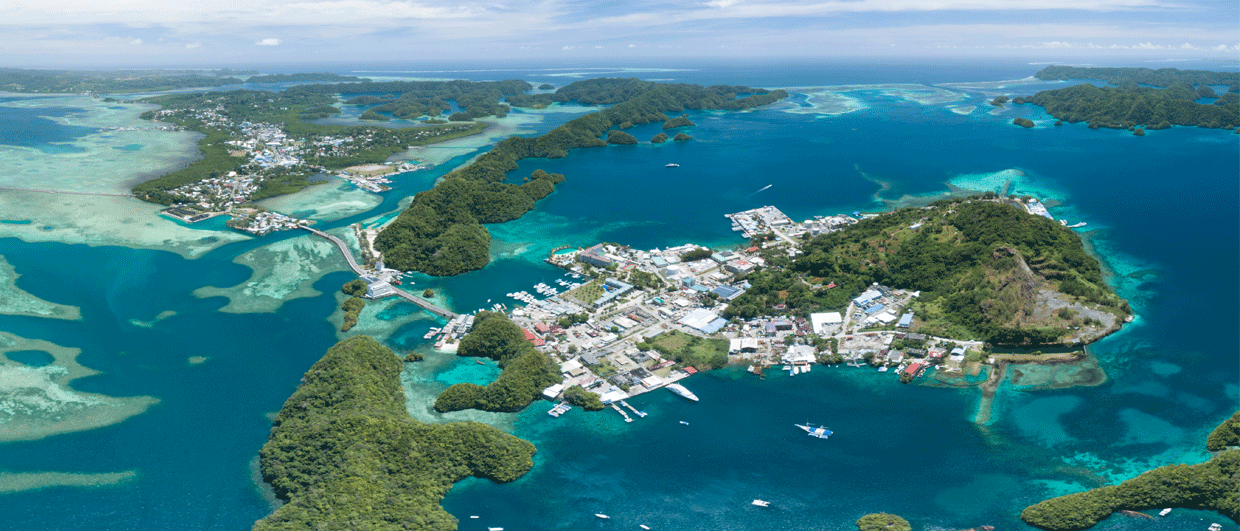

Texas-based Palau Pacific Energy (PPE) is the operator of the North Block Concession, off the northern part of the Republic of Palau, east of the Philippines, and is planning the first wildcat drilled in Oceania for a while. Palau saw its first exploration activity in 1977, when US company Yates Petroleum was awarded a licence and acquired seismic, and later TMBR/Sharp held a permit. The area was subsequently licensed to PPE. The target of PPE’s wildcat is a large Miocene reef, designated the Velasco Bank Prospect, in 40 m of water; Pliocene gas sands are a secondary objective. The prospect is well-defined on 2D data and drill-ready. A 2022 resource report by Gaffney Cline & Associates (GCA) shows impressive volumes of over 700 million barrels of unrisked, prospective oil resources. Forward plans, after a successful test, may include the acquisition of 3D seismic.
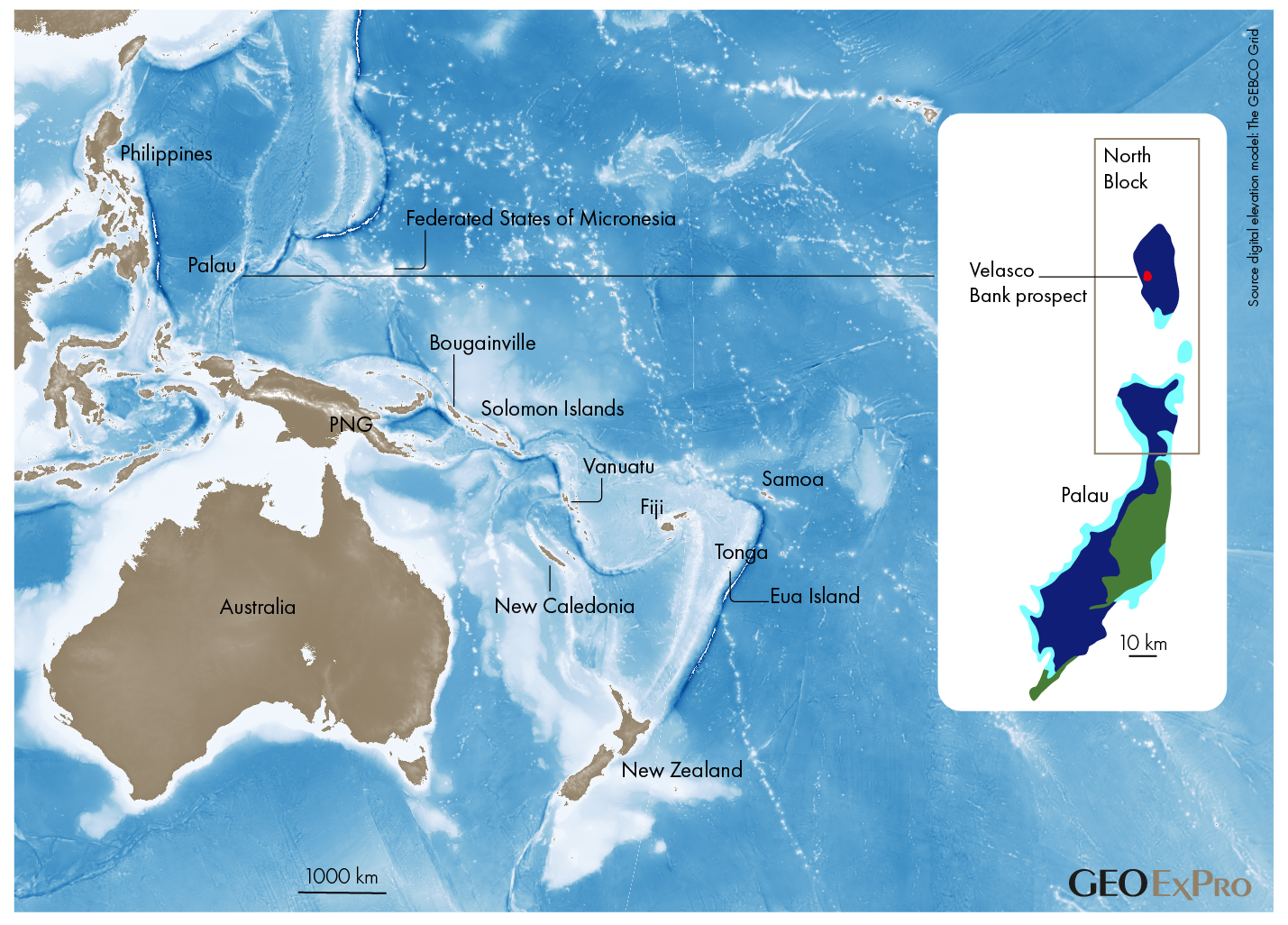
Looking at the other remote islands in Oceania, Fiji saw a series of on- and offshore wells drilled in complex geology between 1980 and 1982. Operators included Chevron, a Worldwide Energy consortium led by Pacific Energy & Minerals, and Bennett Petroleum. After a lull in activity, Australian company Global Petroleum held blocks in the mid-2000s, and in 2009, Chinese-funded Southern Cross and Seu Tuinavatu Petroleum Mines & Minerals were awarded blocks that were subsequently revoked, following an apparent failure to fulfil work programmes. In 2019, there were reports that Fiji-based Akura, with some New Zealand backing, was negotiating for onshore acreage in Fiji, having previously held a position in the country between 2009 and 2014. A 1993 South Pacific Applied Geoscience Commission (SOPAC) publication highlights over 20 reefal leads of Late Miocene and Pliocene age.
The Solomon Islands have been the venue of a number of seismic surveys, including those undertaken by majors Shell and Mobil in the 1970s. No wells have, however, been drilled, although Shell’s 1975 L’Etoile-1 wildcat, off the Papua New Guinea (PNG) island of Bougainville, is close to the Solomon marine border. Encouraged by the discovery of oil seeps on Eua Island, Tonga saw a flurry of activity in the early 1970s, when the Tonga Oil Exploration Consortium (TOEC) acquired seismic data and drilled two onshore wells. Later in the 1970s, a US company drilled three onshore wells. More recently, between 2014 and 2017, Baringer Oil & Gas held licences in Tonga, with a plan to drill wells, possibly targeting large Eocene reefs. However, the wells were not drilled, and the contracts expired.
New Caledonia saw some of the earliest exploration activities in the region, with the government-controlled Société de Recherche et d’Exploitation de Pétrole drilling onshore wells in the 1950s, on the Gouaro Anticline. In 1999, Victoria Petroleum drilled the Cadart-1 well on the same anticline, drilling deeper in the West Coast Basin, and discovering gas in a tight Cretaceous section. Despite the wells on the anticline having encouraging hydrocarbon shows, there have been no further drilling activities in New Caledonia.