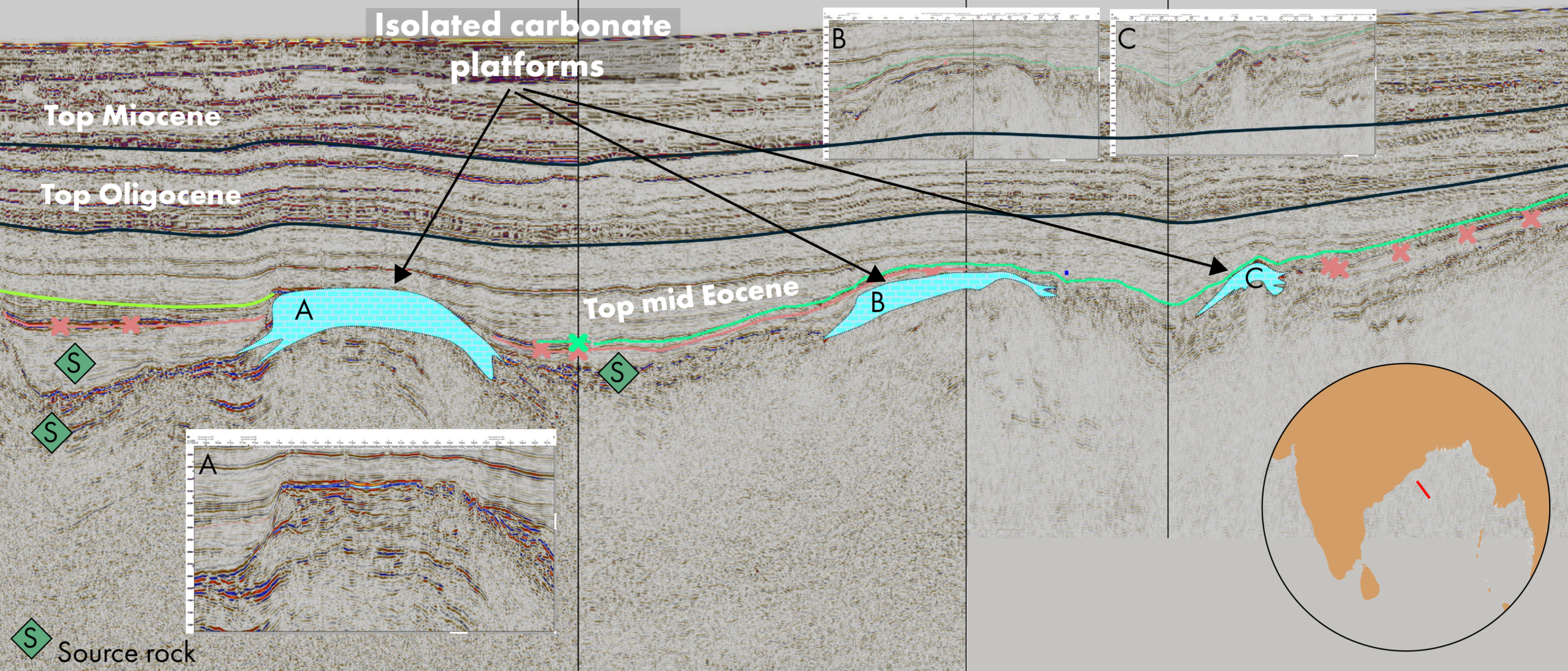
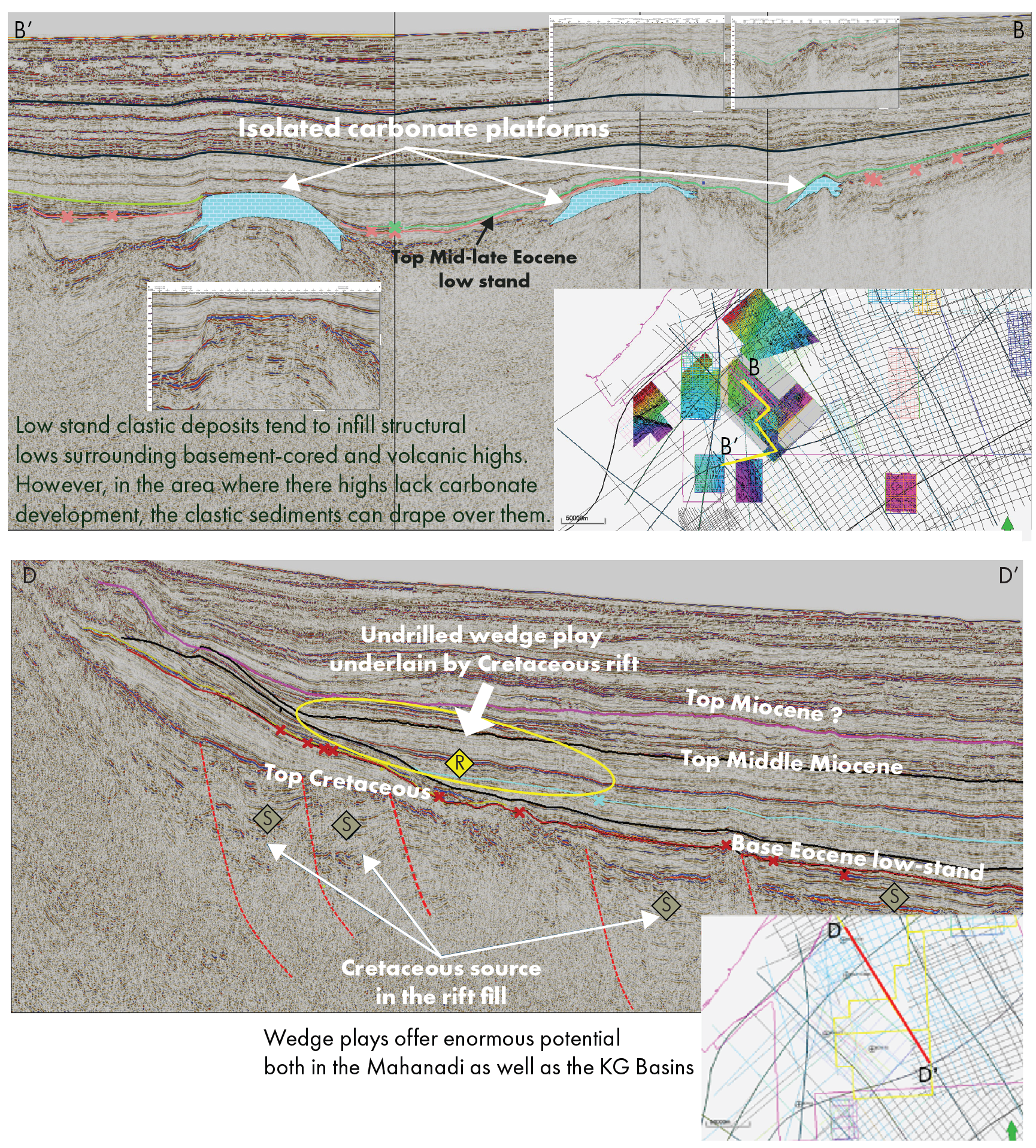
Low stand clastic deposits tend to infill the structural lows surrounding basement-cored and volcanic highs. However, in areas where these highs lack carbonate development, the clastic sediments can drape over them.
Unlocking the deep offshore potential of the Mahanadi Basin
New clues from Paleogene isolated carbonate banks and turbidite deposits

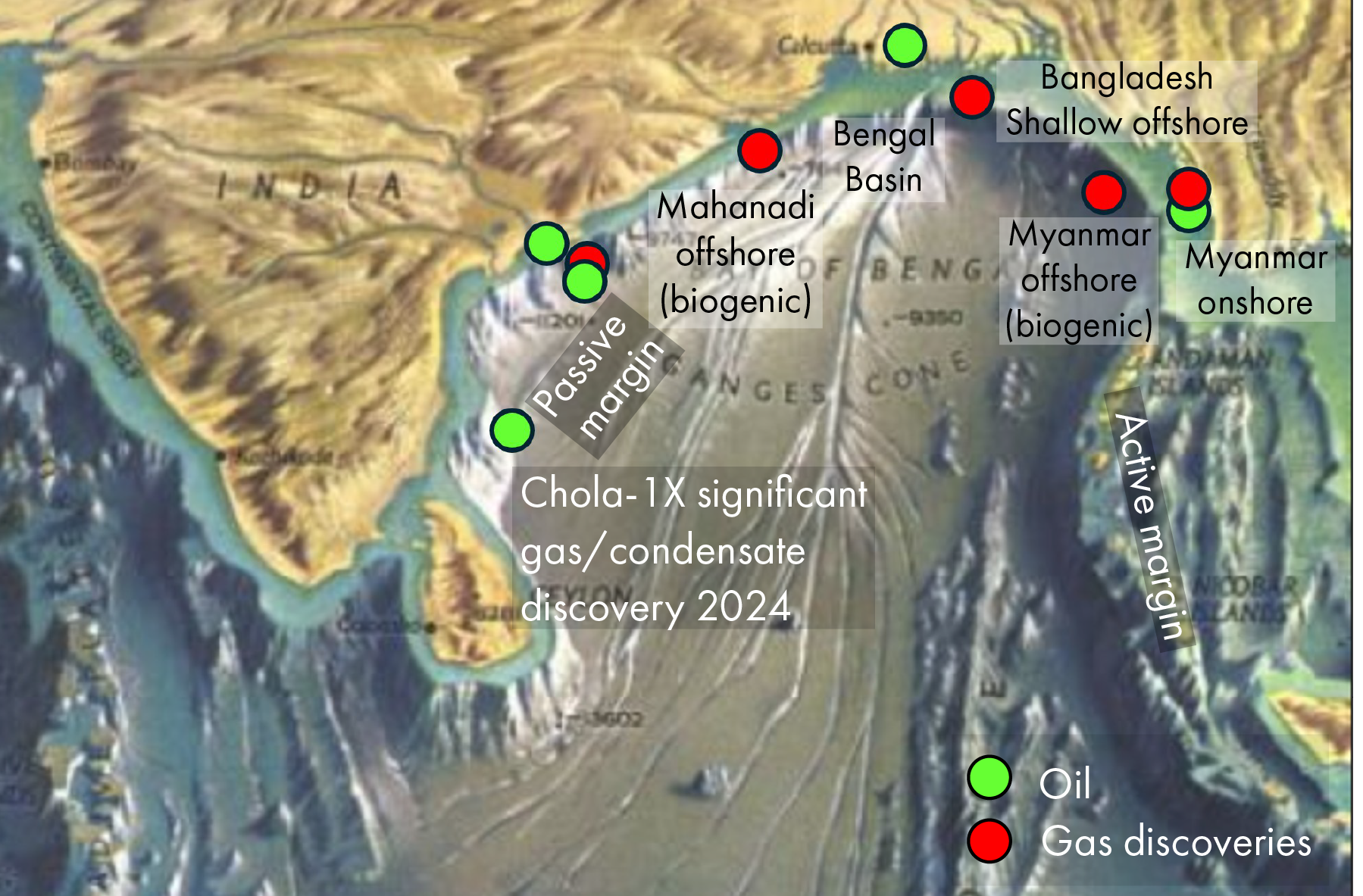
The eastern Continental Margin of India (ECMI) is a 2,500 km long passive margin that comprises the following peri-cratonic basins from south to north, the Cauvery, Krishna-Godavari, Mahanadi, and Bengal Basins, of which the deeper parts remain largely underexplored. Currently, exploration operations are conducted in onshore and shallow water zones of peripheral basins. Oil and gas discoveries in the Krishna Godavari and Cauvery peri-cratonic basins demonstrate the potential for a functioning petroleum system in shallow- and deep-water settings. In contrast, in the Mahanadi Basin, discoveries are limited to biogenic gas within Neogene reservoirs. However, its deeper Eocene succession remains untapped, mainly offering substantial promise for thermogenic hydrocarbon exploration.
Source rocks along India’s East Coast Margin, linked to existing hydrocarbon finds, span the Early Cretaceous, Paleocene, and Eocene periods. Regionally, the Cauvery, Krishna Godavari, and Bengal Basins provide potent analogs, with well-established Cretaceous, Paleocene, and Eocene source intervals. These intervals are expected to be even more prominent in the deep offshore regions of the Mahanadi Basin. Given the shared geological evolution and depositional history across the eastern offshore basins, the presence of similar Paleocene and Eocene source facies in the Mahanadi Basin is highly plausible, reinforcing its potential as a future exploration hotspot. The basin features extensive carbonate platforms, including both shelf-attached platforms and isolated deepwater banks, reflecting a complex depositional setting. Most drill wells are in shallow offshore waters, and a few extend into the deep offshore. However, none of the wells have penetrated the Paleogene isolated carbonate banks and the low stand turbidite deposits.
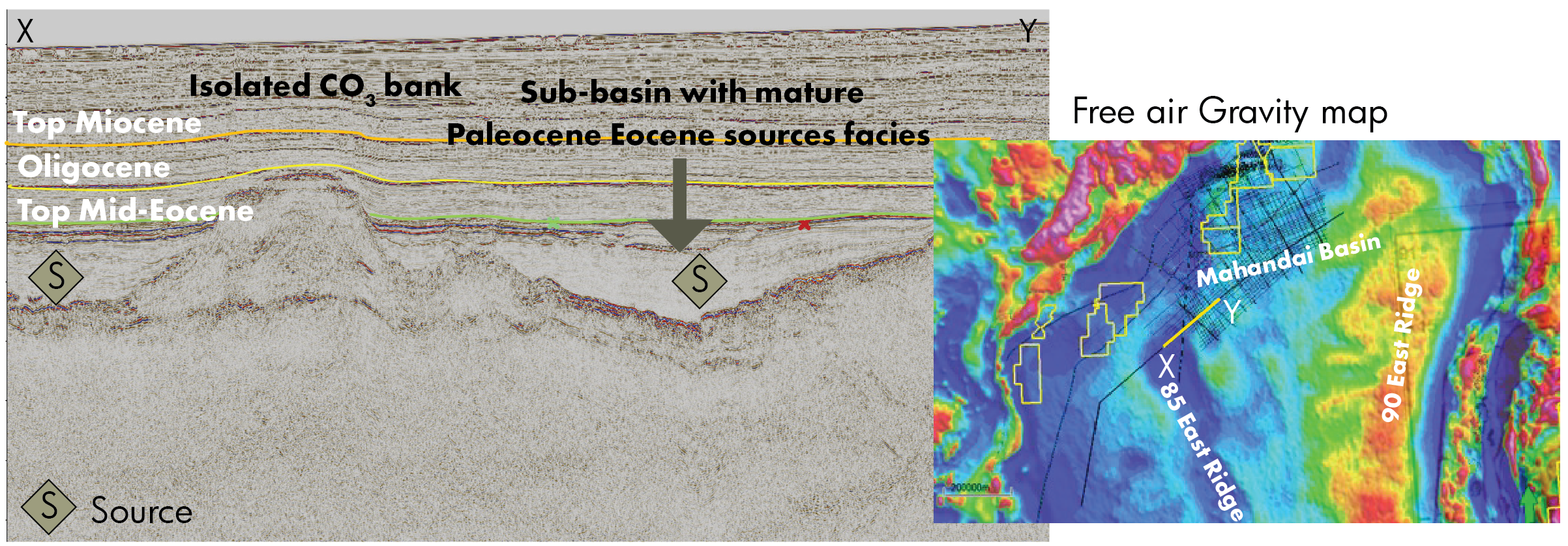
Structurally, it is divided into sub-basins bounded by the volcanic highs of the 85° E Ridge, further complicating its tectonic and stratigraphic architecture. Together, these geological attributes and regional parallels position the Mahanadi Basin as a compelling candidate for deeper, thermogenic hydrocarbon exploration. This article aims to highlight the deep offshore potential through an integrated analysis consisting of detailed seismic interpretation, well log analysis, detailed lead and prospect mapping, basin modeling, and volumetrics.
The passive continental margin of East Coast India developed following India’s breakup from Antarctica. The breakup occurred around 136-132 Ma (Rao, 2001). Three distinct phases of evolution marked this passive-margin continental margin: An intracratonic rift, post-rift thermal subsidence, and a passive continental margin. From north to south, the four important basins are the Bengal, the Mahanadi, the Krishna-Godavari, and the Cauvery. Oil and gas discoveries occur onshore and shallow offshore within these basins (Figure 1). Recently, a few biogenic gas discoveries have been made in both the shallow and deep offshore Mahanadi Basin. Biogenic gas discoveries are limited to Neogene reservoirs. However, much of the deep offshore and the Paleogene and Cretaceous successions are largely unexplored (Srinivasan et al., 2023). The key to unlocking the potential lies in a strong understanding of the petroleum system elements, which we believe exist in this vast, underexplored area. The University of Houston-Directorate of Hydrocarbons India collaboration, through an integrated state-of-the-art analysis, has unlocked the potential in the deep offshore.
Source rocks
Fundamental to a working petroleum system and basin-opening discoveries is the presence of robust source rock intervals. Rifting history and regional geological understanding indicate the presence of multiple source rock intervals, including the lower Cretaceous Aptian.
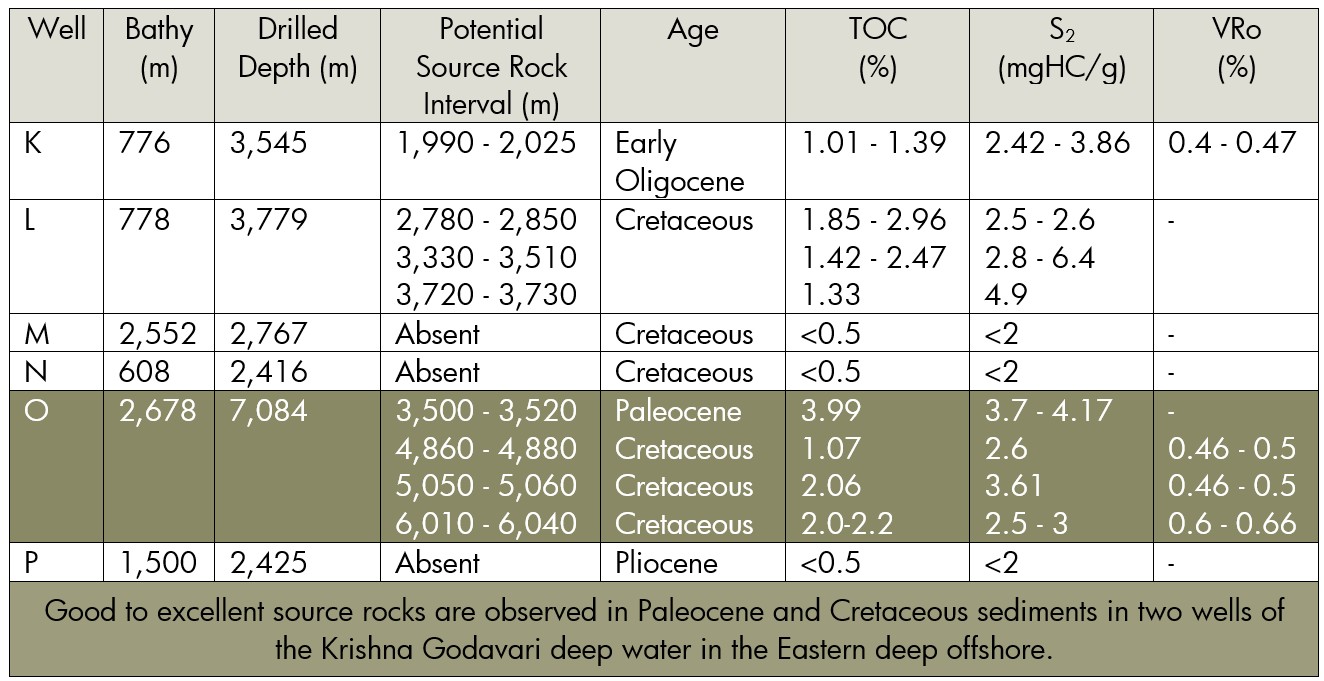
The Mahanadi Basin is straddled between the Krishna Godavari, Bengal Basin, and the Assam shelf, where oil and gas discoveries are linked to the Paleocene / Eocene: The Ravva oil field and deep-water oil and gas discoveries in the Godavari Basin. Similarly, onshore oil and gas discoveries in the Bengal Basin and the Assam Shelf are associated with Paleo-Eocene source facies. Given the similarities in the stratigraphic succession, we anticipate the existence of Paleocene / Eocene source rocks deep offshore the Mahanadi Basin. Pande et al (2008) provide supporting evidence for the existence of Paleocene-Eocene source facies with excellent TOC content deep offshore. The Paleocene-Eocene epochs are known for two significant hyperthermals: The Paleocene-Eocene Thermal Maximum (PETM) and the Eocene Thermal Maximum 2 (ETM2). While these events are not formally classified as Oceanic Anoxic Events (OAEs) in the same way as those of the Cretaceous period, they did feature ocean deoxygenation and black shale deposition, which are characteristic of OAEs. The oil and gas discoveries in the greater ECMI region, linked to Paleocene-Eocene source rocks, support the presence of Paleocene-Eocene in the deep offshore. Restricted-basin conditions facilitate the deposition of source facies. The Mahanadi Basin in the Paleocene-Eocene likely experienced restricted basin conditions (Figure 2) in response to the emplacement of the 85 East Ridge and 90 East Ridge volcanic highs. Both ridges were from a hotspot that was emplaced during the upper Cretaceous.
A 1D basin model wherein we simulated two pseudo-wells deep offshore beyond the OCB. Three scenarios – low (0.5 %), medium (1.5 %), and high (5 %) – were modeled for TOC. All the cases highlighted an active petroleum system in the deep offshore areas. In cooled oceanic basement, the maturity of organic-rich intervals occurs at burial depths > 3 km (Cunha et al., 2018). Our detailed mapping and depth conversion reveals that we have the necessary sedimentary thickness (~5 km) to drive maturity deep offshore in the Mahanadi Basin.
Isolated carbonate banks and low-stand turbidite deposits
Much of the deep offshore Cretaceous succession is dominated by low-stand deposits derived from the hinterland drainage systems, including those of the Krishna-Godavari, Cauvery, and Mahanadi rivers (Bastia, 2007). However, in contrast, the early Paleogene highlights fundamental stratigraphic differences: The Mahanadi Basin was dominated by widespread carbonate deposition. The shelf setting was marked by the development of a ramp to a rimmed shelf carbonate platform. The deep offshore was characterized by isolated carbonate banks that nucleated on basement-cored highs and volcanic mounds associated with the 85 East Ridge. Detailed interpretation of 2D and 3D datasets has enabled us to characterize the early Paleogene carbonate deposits of the Mahanadi Basin. The Middle Eocene was marked by an influx of coarse clastics as indicated by incised valleys and slope channels. Our interpretation reveals that the low stand turbidites were funneled deep offshore. This low stand likely coincides with the late Middle Eocene global relative sea-level fall.
The depositional motif changed in the early Neogene. The prograding Bengal Fan from the north dominates the depositional systems. Broad, deep-water distributary systems likely constitute reservoirs for the Neogene succession across all the basins of the east coast margin. The biogenic gas discoveries of the Mahanadi Basin are within the Neogene reservoirs.
Play types & prospects
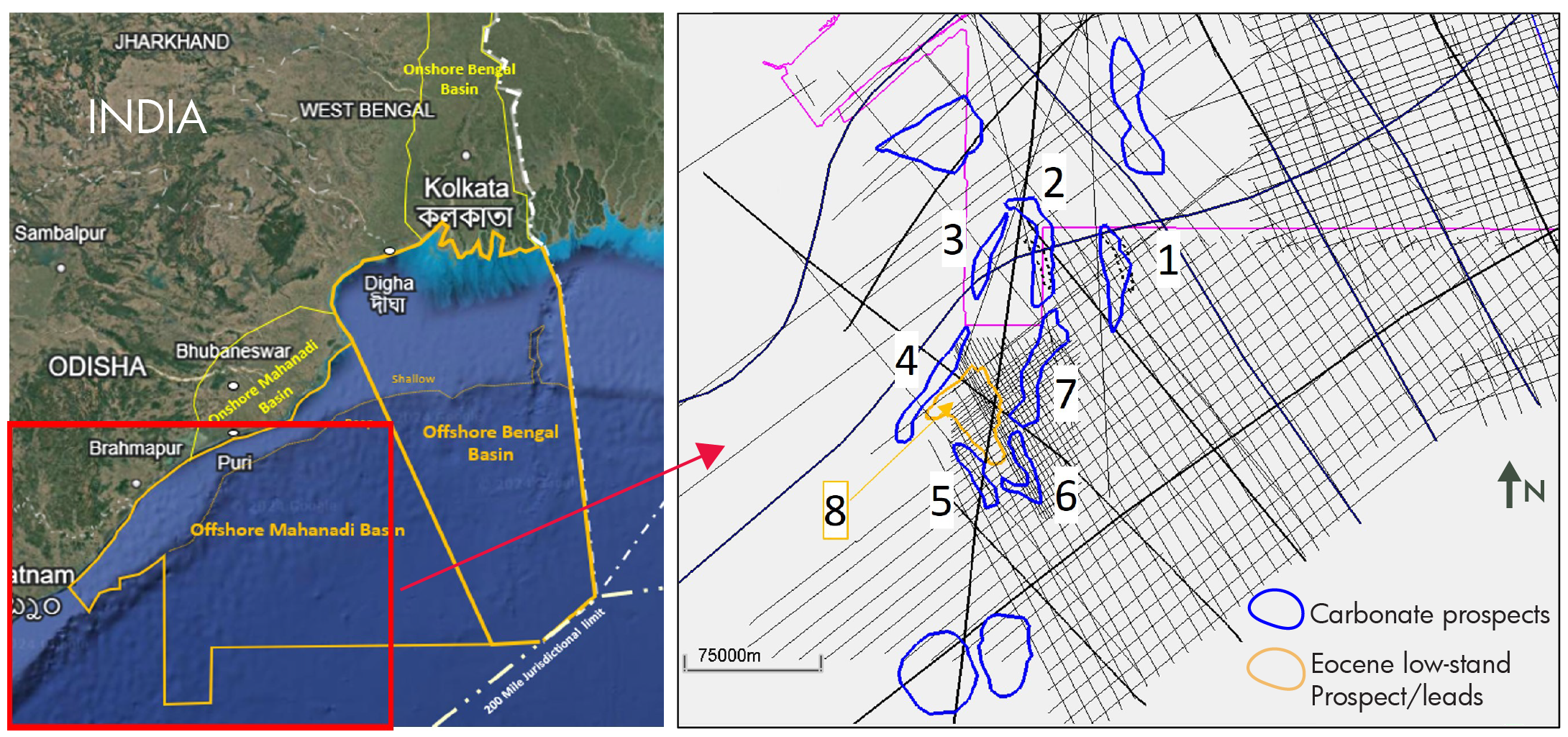
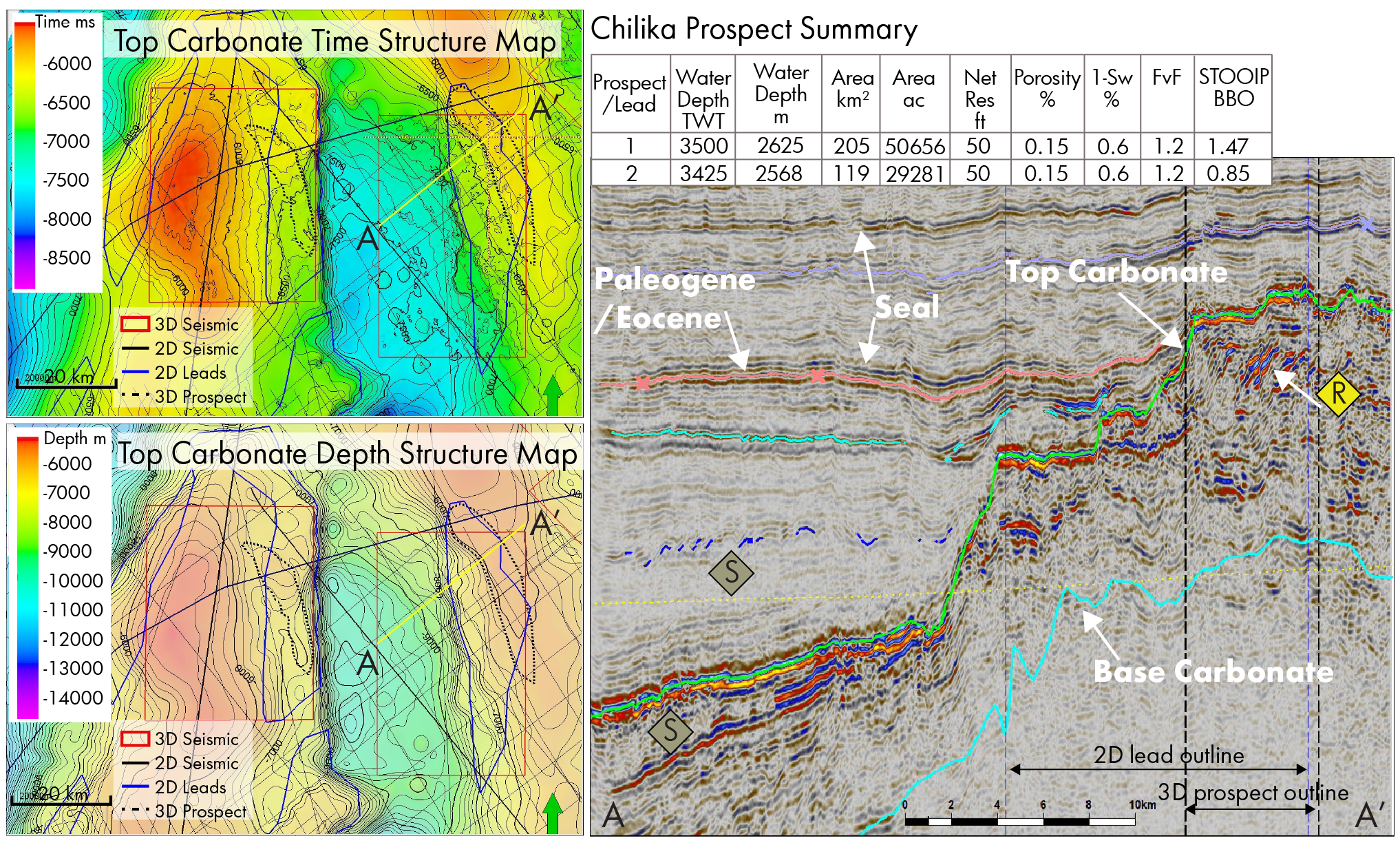
We have identified several carbonate prospects and leads, as well as turbidite leads. The carbonate leads are isolated carbonate banks that grew on basement-cored highs and volcanic highs. Typically, these isolated carbonate banks form four-way closures with the source facies in the adjacent deeper parts of the basin. We have identified middle Eocene (?) incised valleys that serve as conduits for the delivery of coarse clastics into the deep offshore. These coarse clastic intervals have been mapped deep offshore. Drill well, MDW10 found thermogenic pay in a 2-meter clastic interval within the interpreted Eocene incised valleys (Das et al., 2012). Trap types include both structural and stratigraphic traps, including large four-way closures, low-stand wedge pinch-outs, and strati-structural entrapments (Figures 3, 4 and 5). Hydrocarbon migration occurred from mature Paleo-Eocene source rocks along faults and carrier beds, forming significant accumulations. Volumetric analysis illustrates a resource of 22 BBO distributed across multiple prospects and leads.
Summary
Robust play elements likely characterize the deep offshore Mahanadi Basin. Our integrated analysis highlights new insights into the deep offshore succession. We have identified and mapped eight distinct carbonate prospects and leads deep offshore. These isolated carbonate banks typically form four-way structural closures, with source facies located in adjacent deeper basin areas. Based on preliminary estimates, these features may hold volumetrically significant potential. In addition, we have delineated several turbidite leads associated with middle Eocene low stand deposits in the deep offshore. These features represent additional exploration targets with potential for hydrocarbon accumulation. Our volumetric analysis reveals an in-place resource of 22 BBO distributed across multiple carbonates and turbidite prospects and leads.