Image: Adobe Stock.
France’s first stimulated natural hydrogen project
Vedra Hydrogen aims to prove its technology of generating and producing clean hydrogen subsurface from a mature oil reservoir near Paris

Clean hydrogen production from electrolysis remains expensive and difficult to scale, leaving industry without the reliable, affordable supply needed for substantial decarbonisation. Vedra Hydrogen has embarked on a complementary approach: Converting mature oil reservoirs into underground reactors that generate clean (carbon-neutral) hydrogen while permanently storing CO₂.
The Vedra method injects air into reservoirs containing residual crude oil and brine, stimulating low-temperature oxidation that produces hydrogen-rich syngas. Imperial College, other laboratories and Vedra have proven in lab tests on the reservoir fluids that this method works and can be scaled, whilst Vedra’s IP is protected.
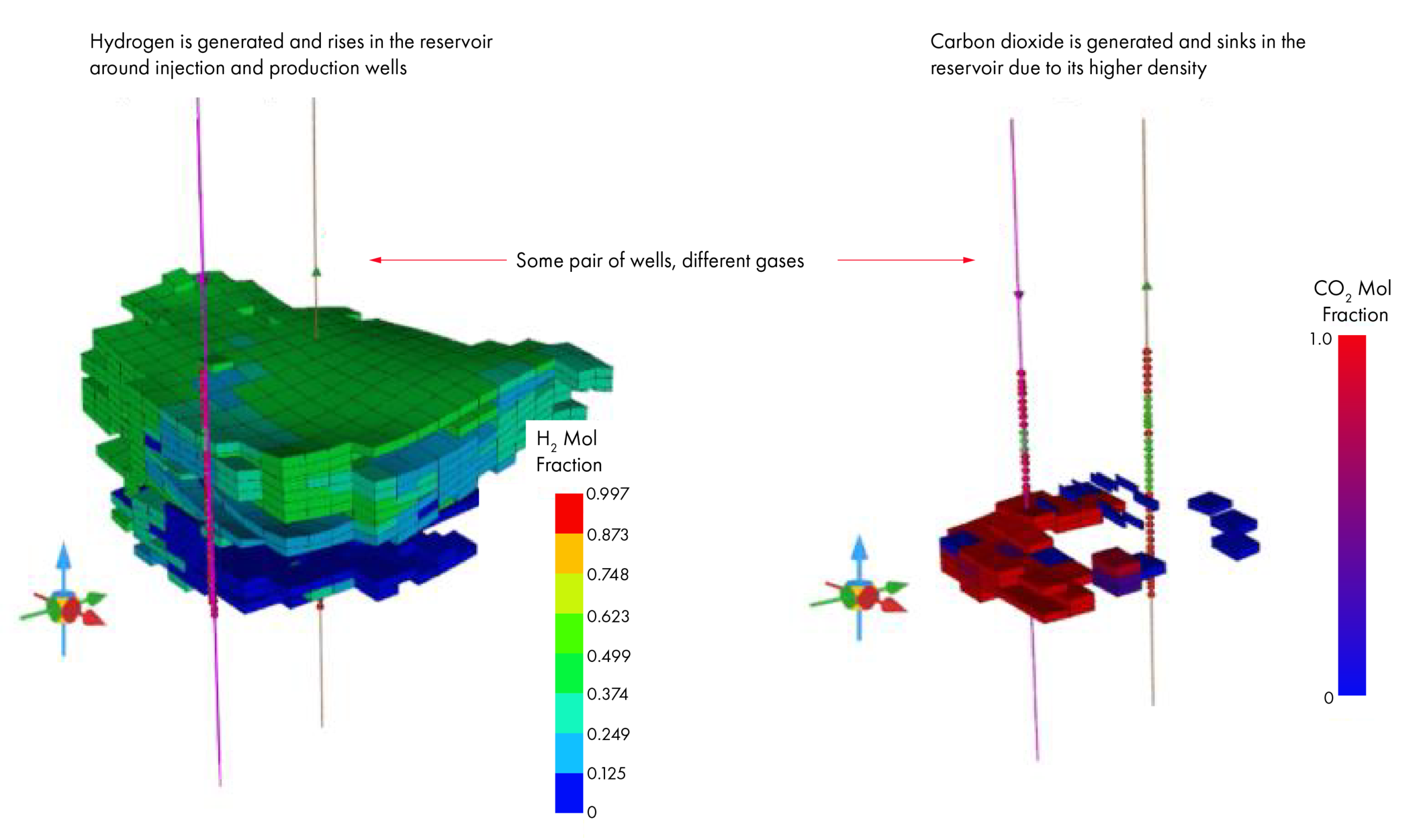
Oxygen entering a mature reservoir reacts with residual oil and formation brine through oxidation and gasification, converting long-chain hydrocarbons into syngas: Primarily hydrogen, carbon monoxide, and CO₂. Compositional reservoir models show that hydrogen migrates to production wells preferentially to CO₂, augmenting the natural separation due to buoyancy as hydrogen is 22 times lighter than CO₂. Simulations indicate that hydrogen rises to the production perforations, while CO₂ sinks and is permanently stored in the original container over a one-hundred-year run period.
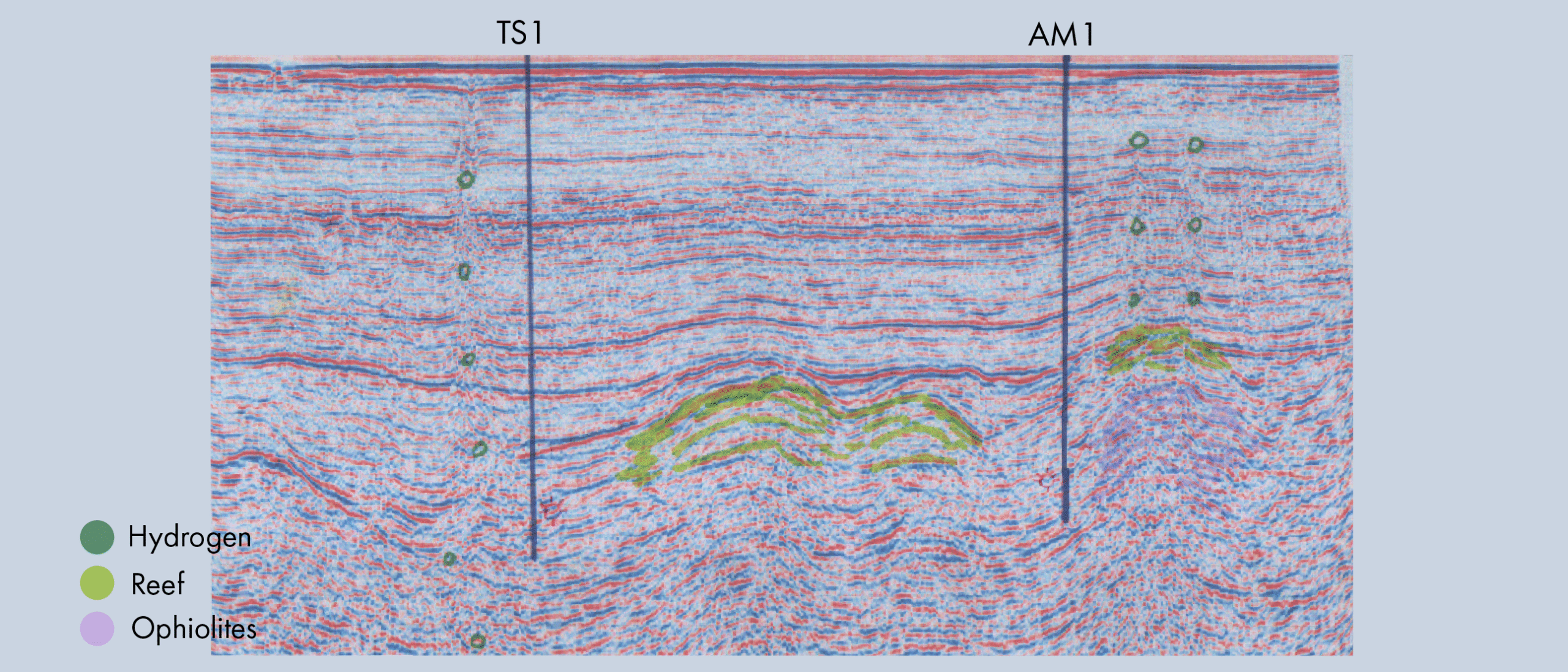
The success of the project depends on careful reservoir selection. Residual oil in ideal candidates is 25 – 60 % of original oil in place. Other properties such as brine saturation, pressure, temperature, porosity and permeability are important. A robust seal is required, as well as existing infrastructure with integrity. Selected mature oilfields meet these criteria after decades of production and millions of years of safe containment.
The process sweep efficiency depends on the reservoir volume contacted by injected oxidants, which in turn determines the hydrogen yield. Careful well selection and optimised injection strategies, informed by downhole monitoring, maximise reaction residence time. Clean hydrogen can be produced for decades per development plans, with additional well clusters scaling and extending project life.
A demonstration project 40 km from Paris – near a cluster of major industrial demand – is in its final regulatory approval stage. Following the successful pilot, the method will be scaled commercially across multiple well clusters, then replicated across Europe and beyond. France banned oil exploration permits in 2017 and set a legislative phase-out of domestic production by 2040. If the remaining producing fields can be repurposed to clean hydrogen production, instead of oil, the benefits to energy security, employment, deferred abandonment, and domestic hydrogen supply are game-changing.
The hydrogen economy requires a portfolio of solutions, including stimulated natural hydrogen generation. It brings impact; transforming yesterday’s oilfields into tomorrow’s clean energy assets, complementing electrolysis, and delivering the affordable, scalable clean hydrogen supply that heavy industry urgently needs. The Vedra method is estimated to deliver clean hydrogen at one-third of the cost of flagship electrolyser projects like Shell Rheinland/REFHYN II, which reportedly is targeting 3 €/kg. The Vedra method can deliver a near-term, large, affordable clean hydrogen supply, building early demand with high impact to meet supply goals.